
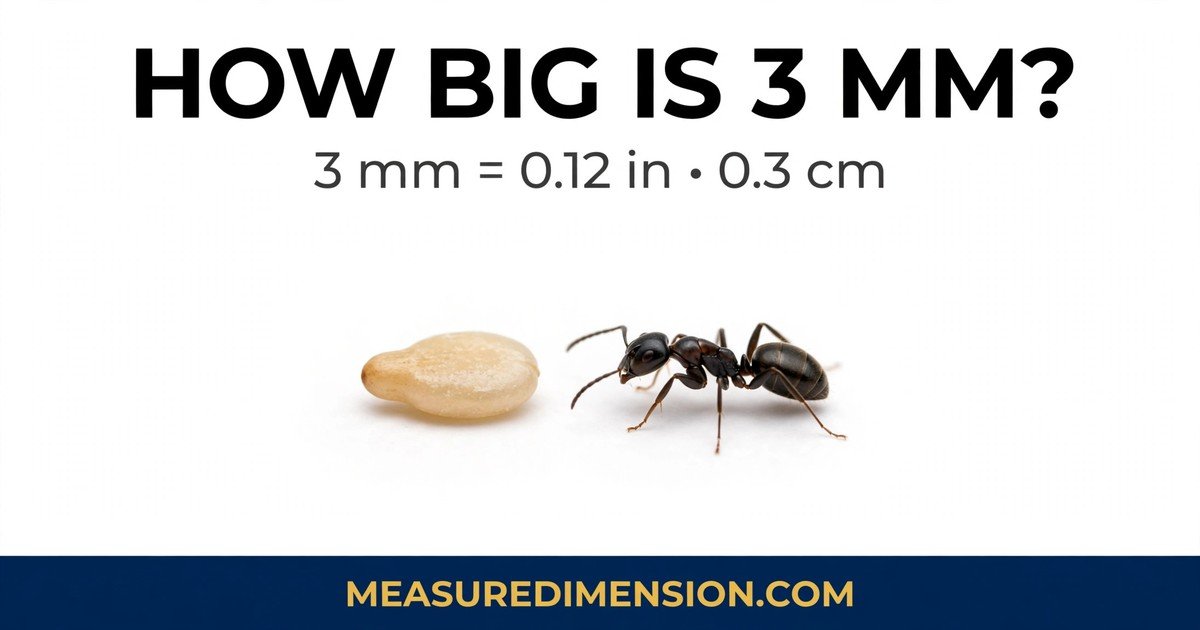
How big is 3 mm? It is 0.118 inches (about 0.12 inches), or 0.3 centimeters — roughly the length of a single sesame seed, a small garden ant, or a fruit fly. It is 3,000 micrometers wide, and about 8.5 of them would fit side by side across a single inch.
Three millimeters is one of those sizes that sounds simple but is hard to picture. It is too small to measure with your fingers and too big to ignore when a screw, a drill bit, or a craft bead has to fit exactly. The good news is that you already know what 3 mm looks like: it is sitting in your kitchen, on your desk, and probably on your shirt right now. A sesame seed on a hamburger bun is about 3 mm long. A little black ant walking across the counter is about 3 mm long. The head of a matchstick is just a hair wider than 3 mm.
In this guide, you will see exactly how big 3 mm is in inches, centimeters, and everyday objects, how to measure it without a ruler, and where the size shows up in real life — from M3 screws to 3 mm drill bits. Once you know the answer to “how big is 3 mm”, you will start spotting it everywhere — on screws, on beads, and on your breakfast table.
3 mm at a Glance
| Measurement | Millimeters | Inches | Centimeters |
|---|---|---|---|
| 3 millimeters | 3 mm | 0.118 in | 0.3 cm |
| 1 millimeter (for reference) | 1 mm | 0.039 in | 0.1 cm |
| 5 millimeters (for reference) | 5 mm | 0.197 in | 0.5 cm |
| 10 millimeters (1 centimeter) | 10 mm | 0.394 in | 1 cm |
| 17.91 millimeters (US dime diameter) | 17.91 mm | 0.705 in | 1.791 cm |
| 25.4 millimeters (1 inch) | 25.4 mm | 1 in | 2.54 cm |
Quick tip: If you have ever wondered how big is 3 mm, here is the picture: it is smaller than the width of a grain of rice and about the same length as a sesame seed. If you can picture a sesame seed on a bun, you can picture 3 mm — and 3 mm is also 3,000 micrometers, 0.003 meters, and 0.0098 feet.
How Many Inches Is 3 mm? The Exact Answer
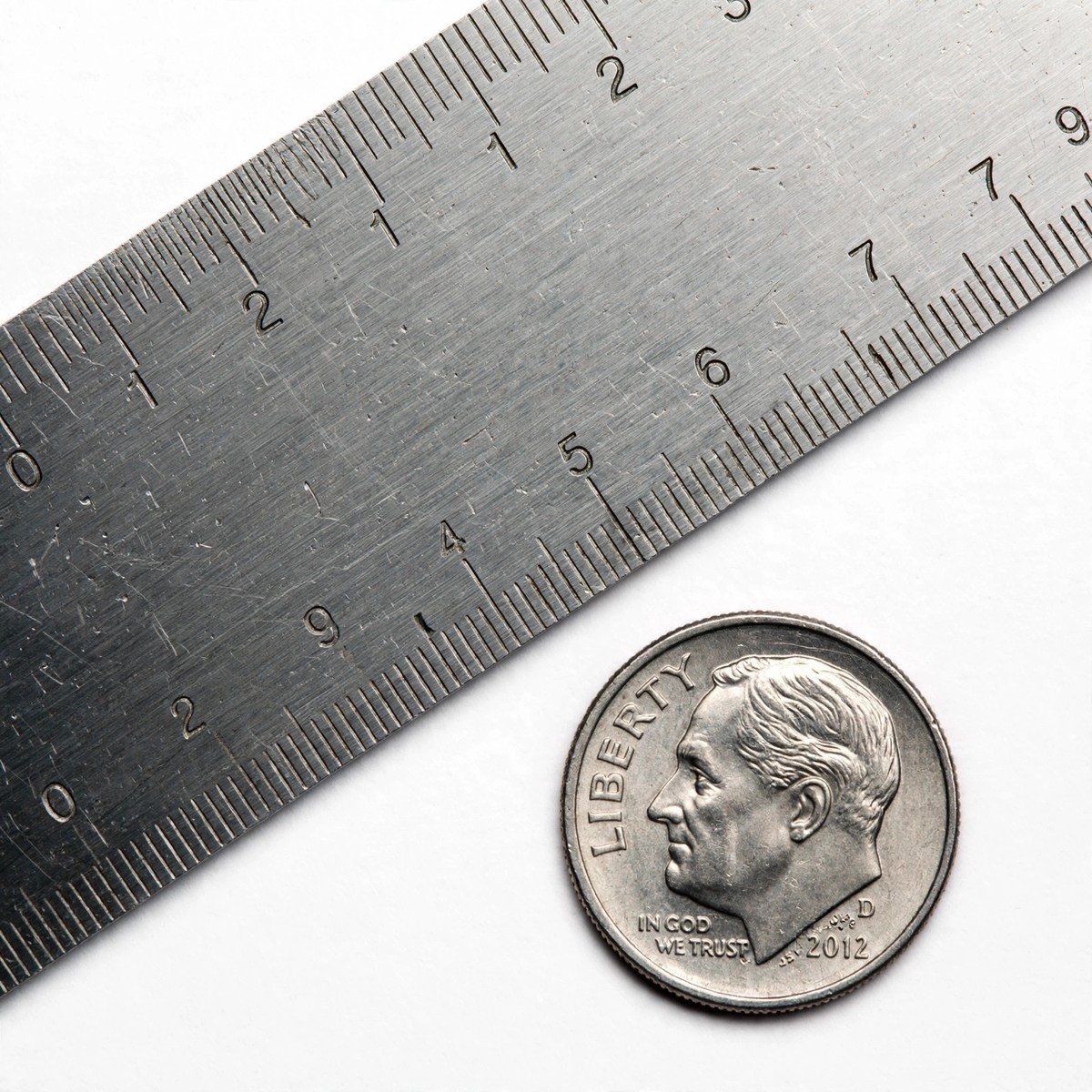
How big is 3 mm in inches? Exactly 0.118 inches, which most people round to about 0.12 inches, or just under one-eighth of an inch. One-eighth of an inch is 0.125 inches, so 3 mm is only 0.007 inches short of that mark — a difference you could not see with your eyes.
The conversion is simple. One inch is exactly 25.4 millimeters, so you divide millimeters by 25.4 to get inches. So, how big is 3 mm in inches? 0.118 — just under one-eighth of an inch, a difference of only 0.007 inches:
- 3 ÷ 25.4 = 0.11811 inches, rounded to 0.118 inches
- 1 ÷ 25.4 = 0.03937 inches, rounded to 0.039 inches for a single millimeter
- 10 ÷ 25.4 = 0.39370 inches, rounded to 0.394 inches for a full centimeter
To go the other way, multiply inches by 25.4. So 0.12 inches × 25.4 = 3.048 mm, which is why “about 0.12 inches” is such a handy everyday answer for 3 mm. For everyday use, how big is 3 mm in inches? Call it 0.12 inches and you will be within a hair of exact — only 0.048 mm off the true value.
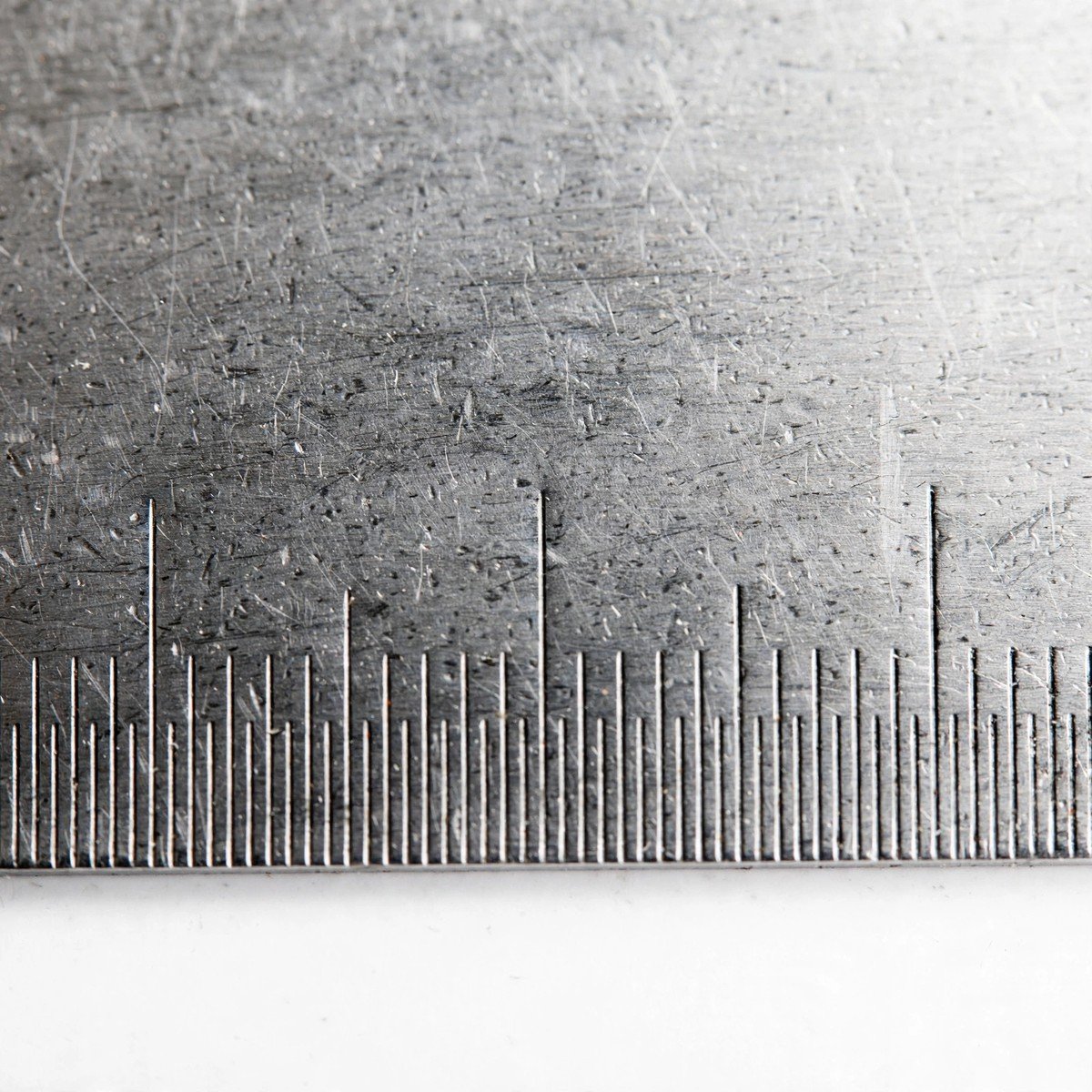
It also helps to know how 3 mm stacks up against an inch. About 8.5 lengths of 3 mm fit side by side across one inch (25.4 ÷ 3 = 8.47), and 3 mm is only 11.8 percent of an inch. If you look at a ruler, 3 mm is the third tiny mark past zero on the metric side — the small marks between the numbered centimeter lines are each one millimeter apart.
3 mm in Centimeters, Meters and Micrometers
Millimeters are part of the metric system, so converting 3 mm to other metric units is just a matter of moving the decimal point. Here is the full picture:
- 3 mm = 0.3 centimeters. There are 10 millimeters in a centimeter, so 3 ÷ 10 = 0.3 cm. That means 3 mm is 30 percent of a centimeter, and about 3.3 lengths of 3 mm fit across a single centimeter (10 ÷ 3 = 3.33).
- 3 mm = 0.003 meters. There are 1,000 millimeters in a meter, so 3 ÷ 1,000 = 0.003 m.
- 3 mm = 3,000 micrometers. There are 1,000 micrometers in a millimeter, so 3 × 1,000 = 3,000 µm. A micrometer is also called a micron, so 3 mm is 3,000 microns.
- 3 mm = 0.0098 feet. Since 3 mm is 0.118 inches and there are 12 inches in a foot, 0.118 ÷ 12 = 0.0098 feet — about one-hundredth of a foot.
For most everyday purposes, the two numbers worth remembering are 0.12 inches and 0.3 centimeters. Everything else in the list above follows from those two by moving the decimal point. The short version of “how big is 3 mm” in metric units: 0.3 cm, 0.003 m, and 3,000 microns.
How Big Is 3 mm Compared to 1 mm, 5 mm and 10 mm?
Millimeters are easiest to picture in a row. Ask yourself, “How big is 3 mm?” and put it next to its nearest neighbors on the ruler, and the answer is obvious.
- How big is 3 mm compared with 1 mm? Three times as big. One millimeter is 0.039 inches — about the thickness of a paperclip wire — and three of them laid side by side make 3 mm.
- How big is 3 mm compared with 5 mm? About 60 percent of it. Five millimeters is 0.197 inches, so 3 mm is a little more than half of 5 mm (3 ÷ 5 = 0.6).
- How big is 3 mm compared with 10 mm? Just 30 percent. Ten millimeters is a full centimeter (0.394 inches), so 3 mm is less than a third of a centimeter (3 ÷ 10 = 0.3).
Put together, the scale reads like this: 1 mm is a paperclip wire, 3 mm is a sesame seed, 5 mm is a little more than half a centimeter, and 10 mm is a full centimeter. Once you can place 3 mm on that ladder, you can estimate any small size at a glance.
How to Measure 3 mm Without a Ruler
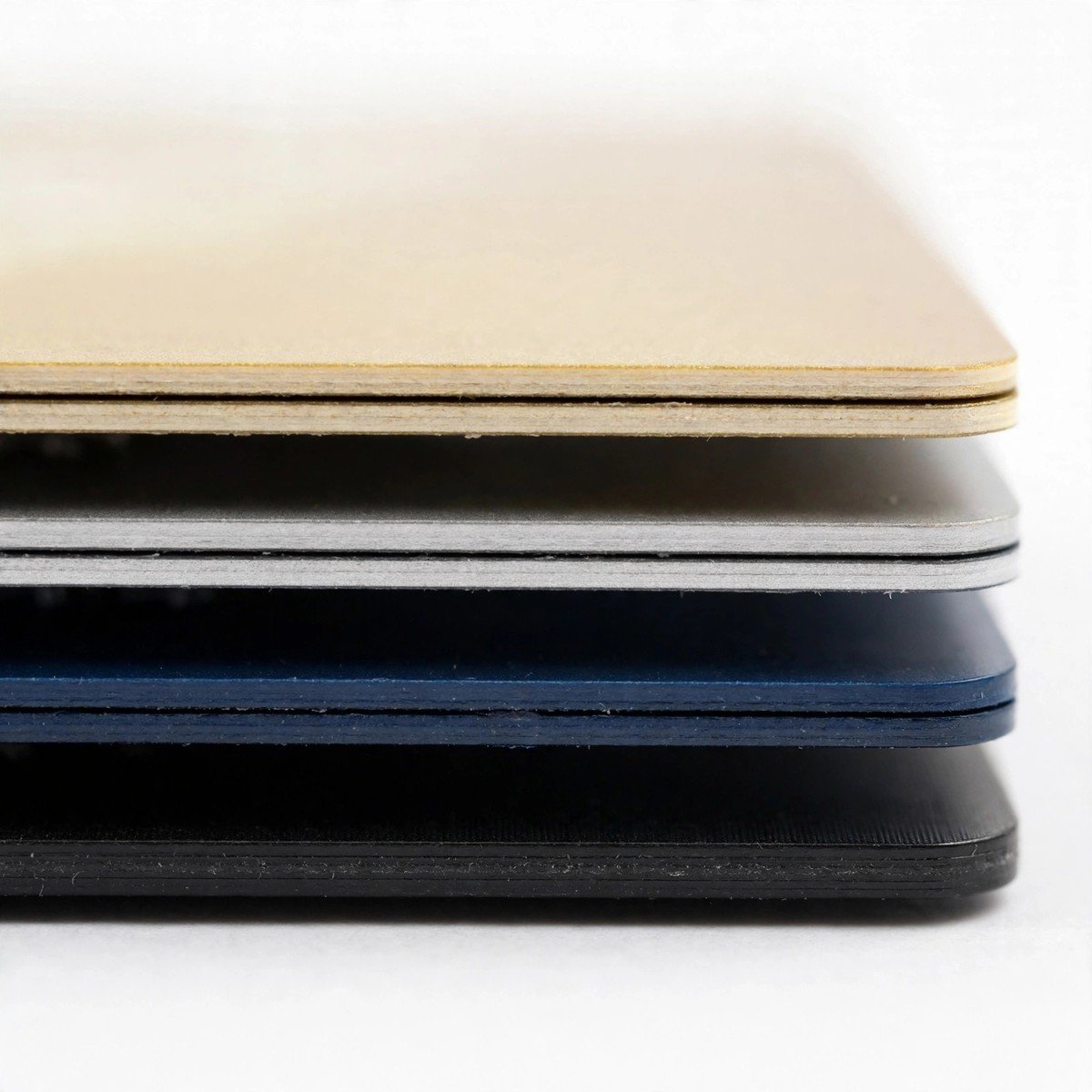
Wondering “How big is 3 mm?” with no ruler in the drawer? You do not need one. A few everyday objects are already close to that size, and you can use them as a quick reference:
- Stack four credit cards. A standard credit card is 0.76 mm thick, and four of them stacked together measure 3.04 mm (0.76 × 4 = 3.04) — almost exactly 3 mm. Hold the stack edge-on and you are looking at 3 mm.
- Stack two dimes. A US dime is 1.35 mm thick, so two dimes stacked measure 2.7 mm — just 0.3 mm short of 3 mm. Add a single sheet of paper, about 0.1 mm thick, and you are at roughly 2.8 mm.
- Look at a matchstick head. The head of a standard wooden match is about 3.7 mm wide and 4 mm long, so it is only a fraction bigger than 3 mm. If the match head looks slightly wider than the thing you are measuring, that thing is probably about 3 mm.
- Use the millimeter marks on any ruler or tape measure. On the metric side of a ruler, the smallest marks are 1 mm apart. Count three small marks from zero and you have 3 mm. On a tape measure, the metric side works the same way.
If you are shopping online and a product lists a 3 mm size, the credit-card trick is the fastest check. Four cards stacked is 3 mm, so anything about that thick — a thin phone case edge, a craft bead, a small screw head — is in the right range.
What Is 3 mm Used For?
Three millimeters is a standard size in more places than most people realize. Every one of these uses answers the same question — how big is 3 mm — with the same number. It is small enough for fine detail work and big enough to hold together, which is why manufacturers keep coming back to it:
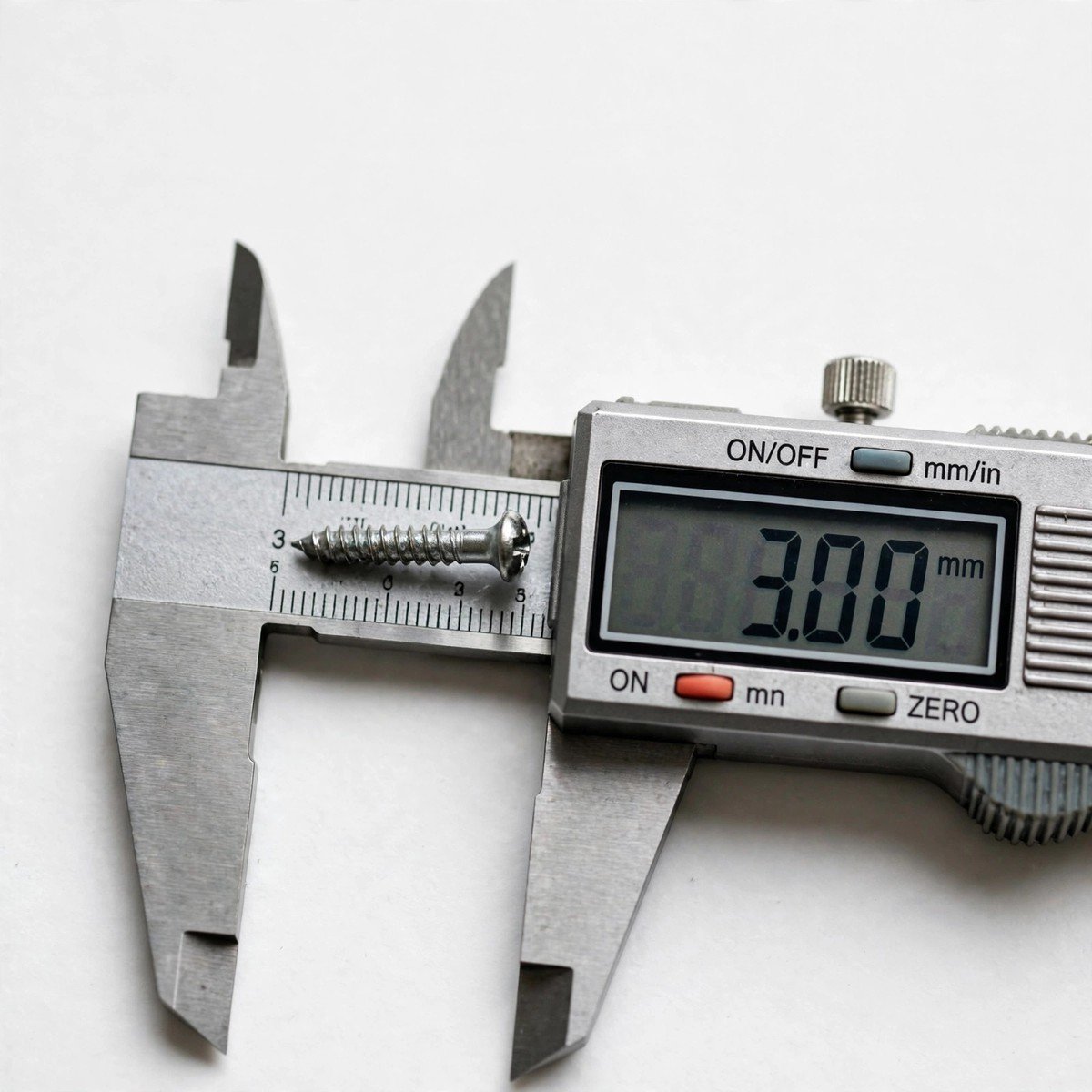
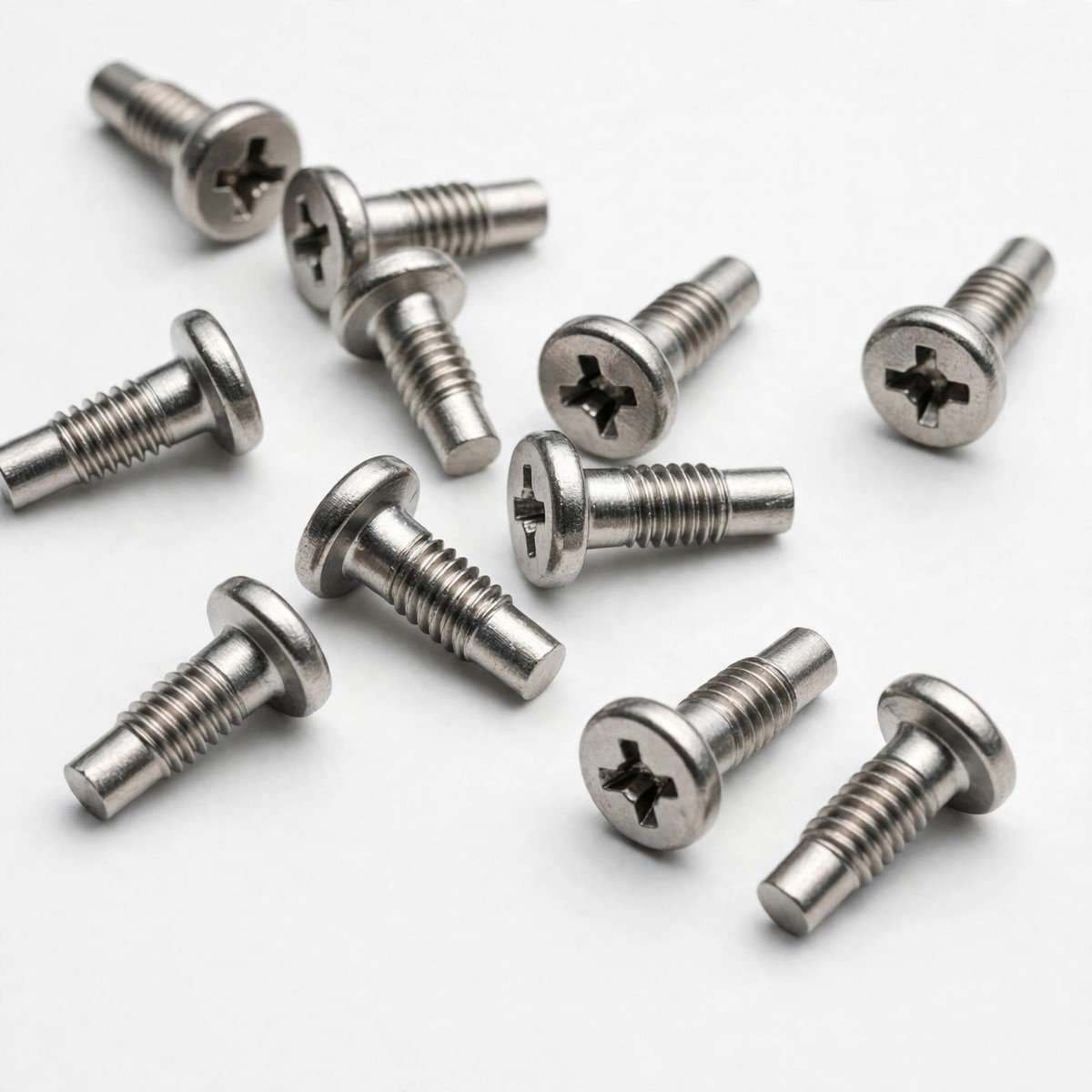
- M3 screws. In the metric screw system, the number is the diameter. An M3 screw is 3 mm across, and it is the standard small screw in electronics, laptops, eyeglasses, toys, and small appliances. If you have ever opened a laptop or a game controller, the tiny screws inside were very likely M3 screws.
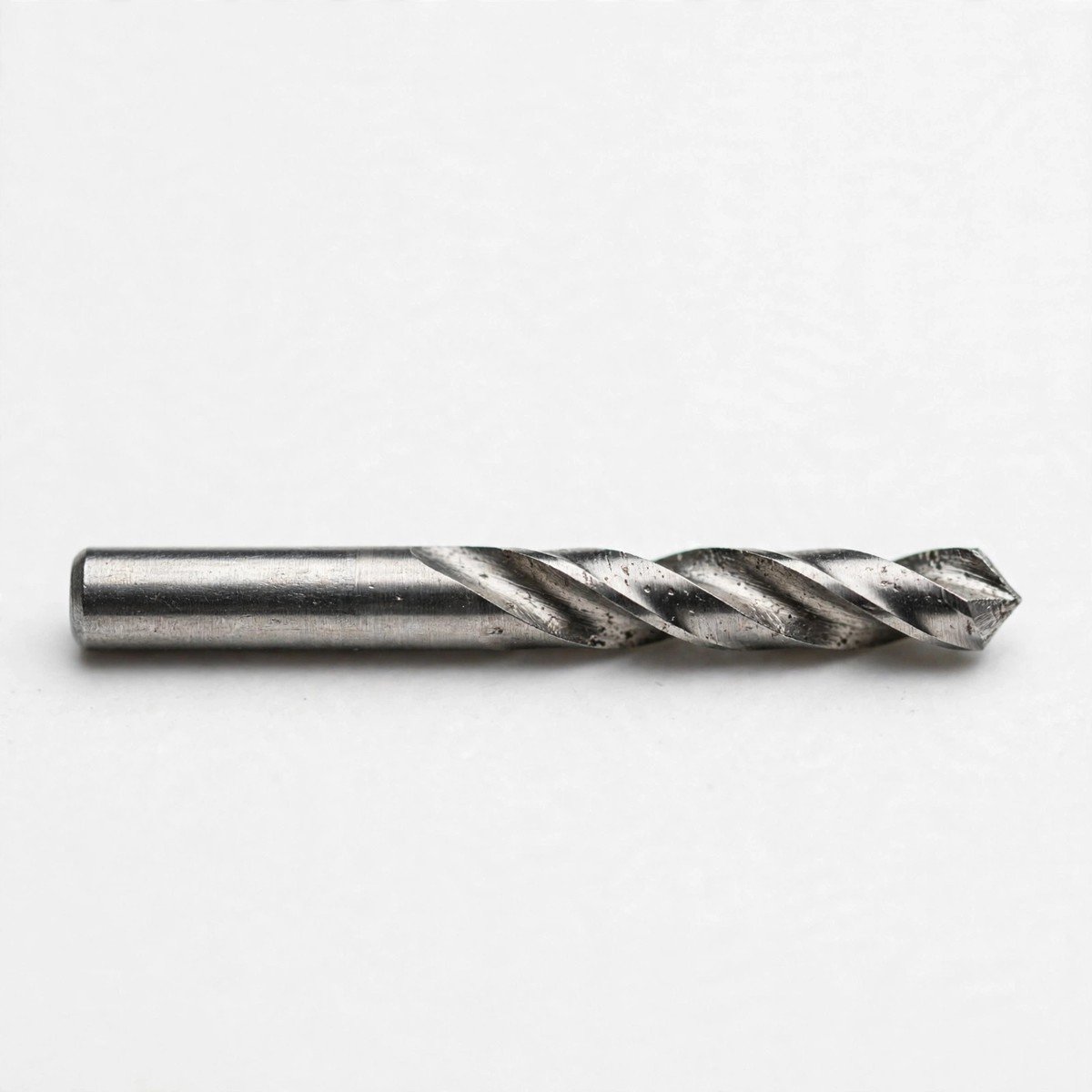
- 3 mm drill bits. A 3 mm drill bit is a common size for pilot holes, jewelry making, and model building. It drills a hole exactly 3 mm wide, which is the right size for an M3 screw to thread into soft material or for a small wire to pass through.
- 3 mm LEDs. The small round indicator lights on electronics often use 3 mm LEDs, the smaller cousin of the more common 5 mm LED. A 3 mm LED is 3 mm across its round lens.
- 3 mm sheets. Glass, acrylic, and plywood are all sold in 3 mm thickness. A 3 mm acrylic sheet is a popular choice for picture frames, craft projects, and laser cutting because it is rigid enough to hold its shape but light enough to cut easily.
- 3 mm beads and jewelry. Seed beads and small craft beads are often sold in 3 mm size, and 3 mm is a common diameter for bracelet and necklace beads that sit close to the skin.
Once you know the answer to “how big is 3 mm”, the size starts showing up everywhere in the workshop. The reason 3 mm shows up so often is simple: it is the smallest size that is still easy to handle with your fingers. Anything smaller starts to need tweezers, and anything bigger starts to look chunky on a small device.
Everyday Size Comparisons: How Big Is 3 mm Really?
A number like 0.118 inches is hard to picture on its own. Here is how big 3 mm is next to things you already know.
A Sesame Seed
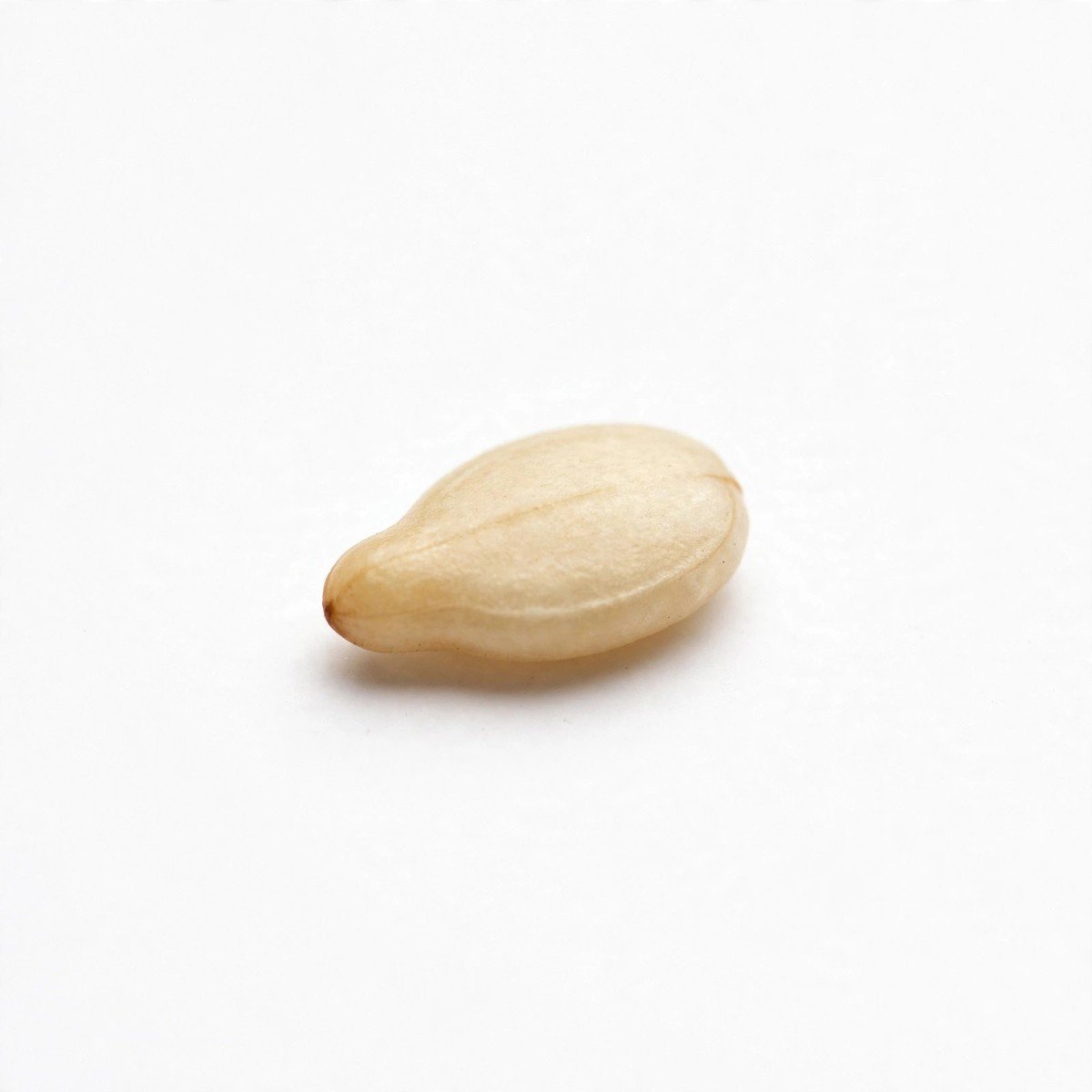
How big is 3 mm next to a sesame seed? Almost exactly the same size. A sesame seed is about the same length as 3 mm. Measured across thousands of seeds, the average sesame seed is 3.24 mm long, with most seeds falling between 2.7 and 3.8 mm. That means a typical sesame seed is only 0.24 mm longer than 3 mm — a difference of less than one-tenth of a millimeter in practical terms. The next time you see a sesame seed on a bun or a bagel, you are looking at 3 mm. A single seed weighs about 3 milligrams, and 1,000 seeds weigh about 3 grams.
A Small Ant
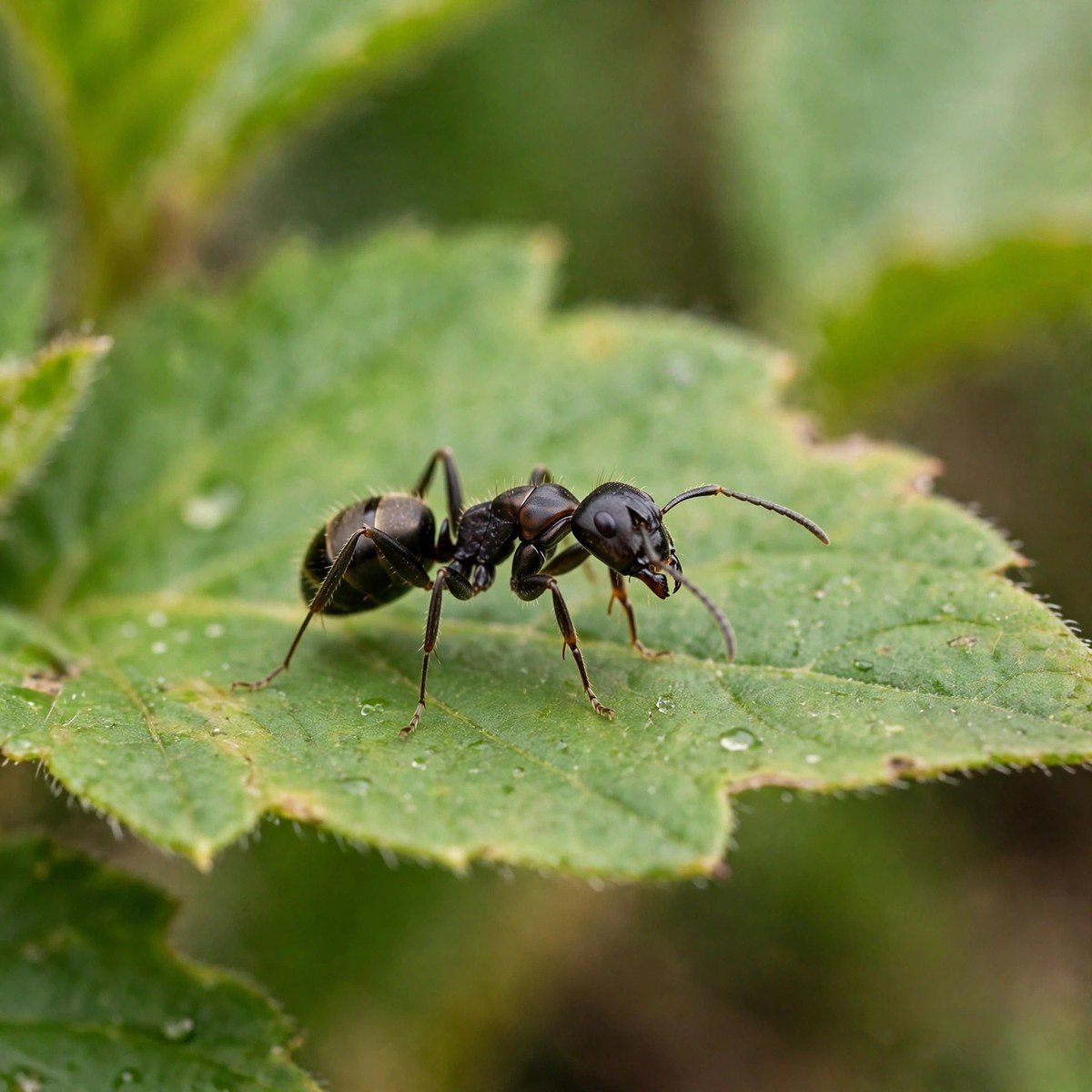
How big is 3 mm next to an ant? For a small garden ant, it is the same length. A small garden ant is about 3 mm long. The common black garden ant measures around 3 mm from head to abdomen, and little black ants run 1.5 to 3 mm long. The odorous house ant, the one that shows up in kitchens, is 2.5 to 3.2 mm long. So if an ant walks across your counter, its body is roughly the same length as 3 mm — and the smallest household ants are actually shorter than 3 mm. A typical ant is about 5 mm long, so a 3 mm ant is a small one, but the tiny ants in your home are the perfect real-life picture of this size.
A Matchstick Head
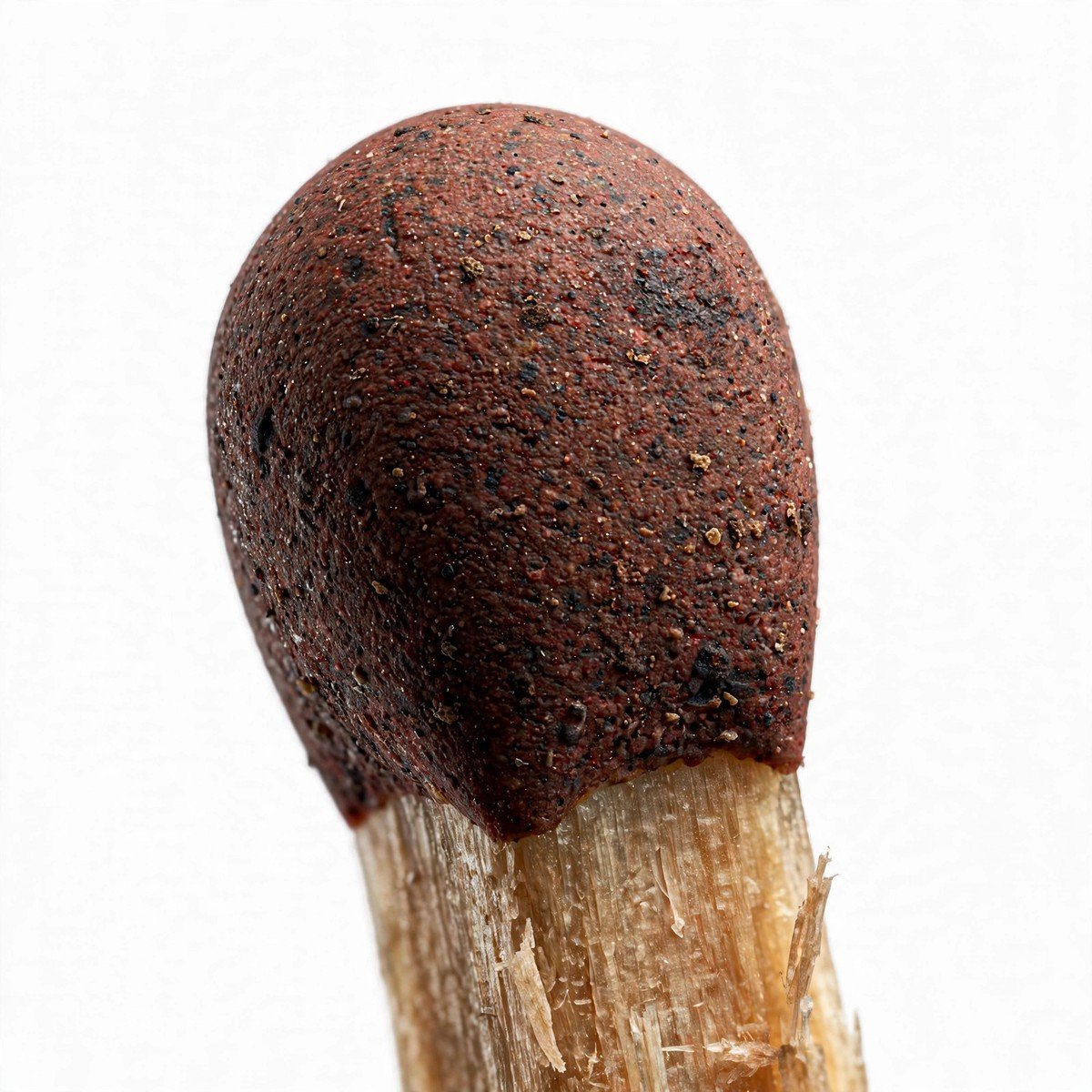
How big is 3 mm next to a matchstick head? Just a hair smaller. The head of a standard wooden match is just a hair bigger than 3 mm. It measures about 3.7 mm wide and 4 mm long, sitting on a wooden handle that is 2.5 mm wide. The whole matchstick is about 61.2 mm long, so the head is only a small part of it — but that little colored tip is 23 percent wider than 3 mm (3.7 ÷ 3 = 1.23). If you hold a match next to something that measures 3 mm, the match head will look very slightly wider. It is one of the easiest comparisons to make because almost every home has a box of matches.
A Grain of Rice
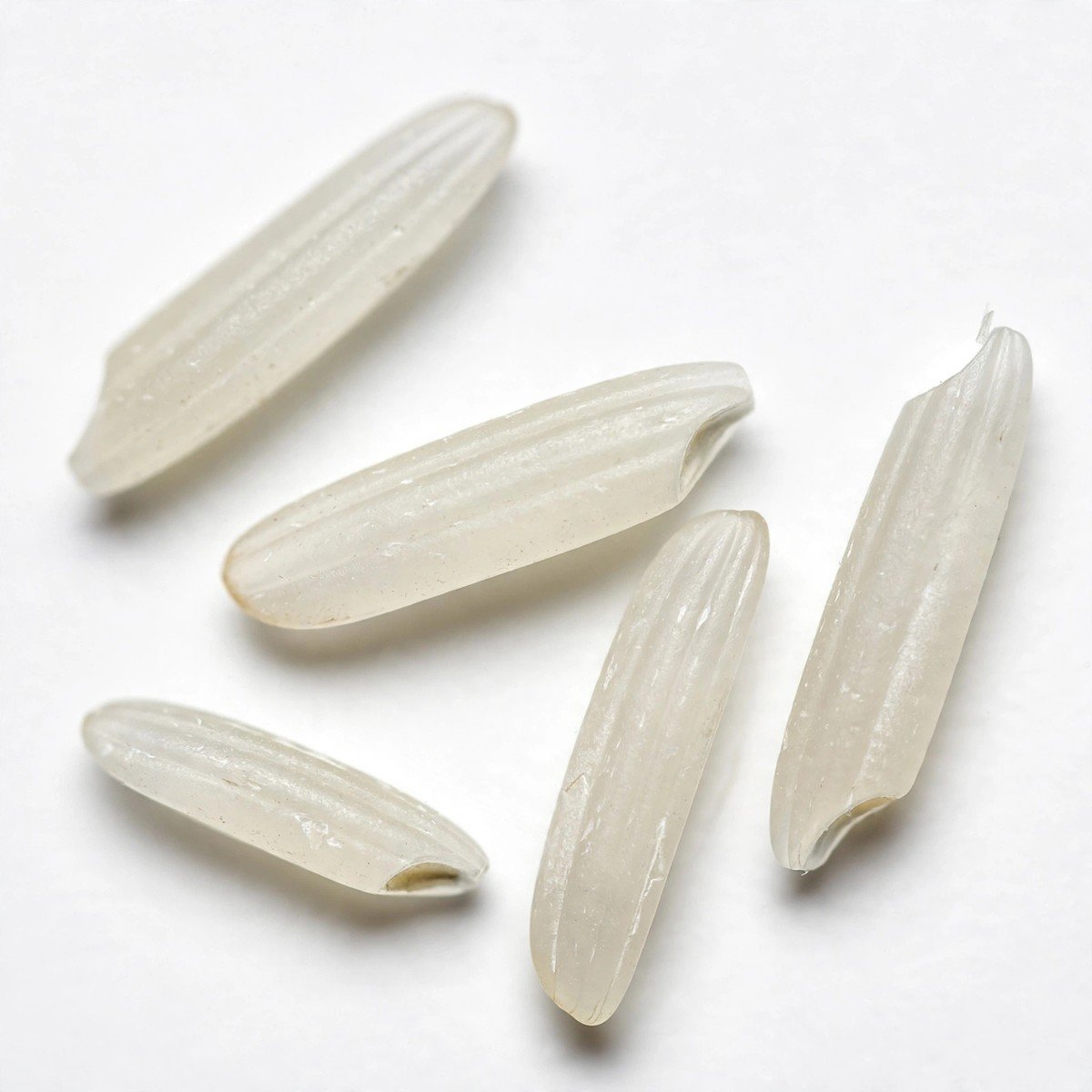
How big is 3 mm next to a grain of rice? Wider than the grain, shorter than its length. A grain of rice is wider than 3 mm is long — but only just. A long-grain rice kernel is about 7 mm long and about 2 mm wide, with widths running 1.73 to 2.73 mm depending on the variety. That makes 3 mm about 1.5 times the width of a rice grain (3 ÷ 2 = 1.5), and about 43 percent of a grain’s full length (3 ÷ 7 = 0.43). So if you lay a grain of rice on the table, 3 mm is one and a half grain-widths, or a little under half the grain from end to end. Short-grain rice is 4 to 5 mm long, so 3 mm is about two-thirds of a short grain.
A Fruit Fly

How big is 3 mm next to a fruit fly? The same length, almost to the fraction. A fruit fly is about 3 mm long. The common fruit fly, Drosophila melanogaster, measures 2 to 4 mm long and about 2 mm wide, with most adults right around 3 mm. It weighs about 1 milligram. That is why fruit flies slip through window screens so easily — at 3 mm long, they fit through gaps that stop a housefly, which is 6 to 7 mm long, or about twice the size. If you have ever seen a tiny fly hovering over a banana, you have seen exactly how big 3 mm is.
A US Dime
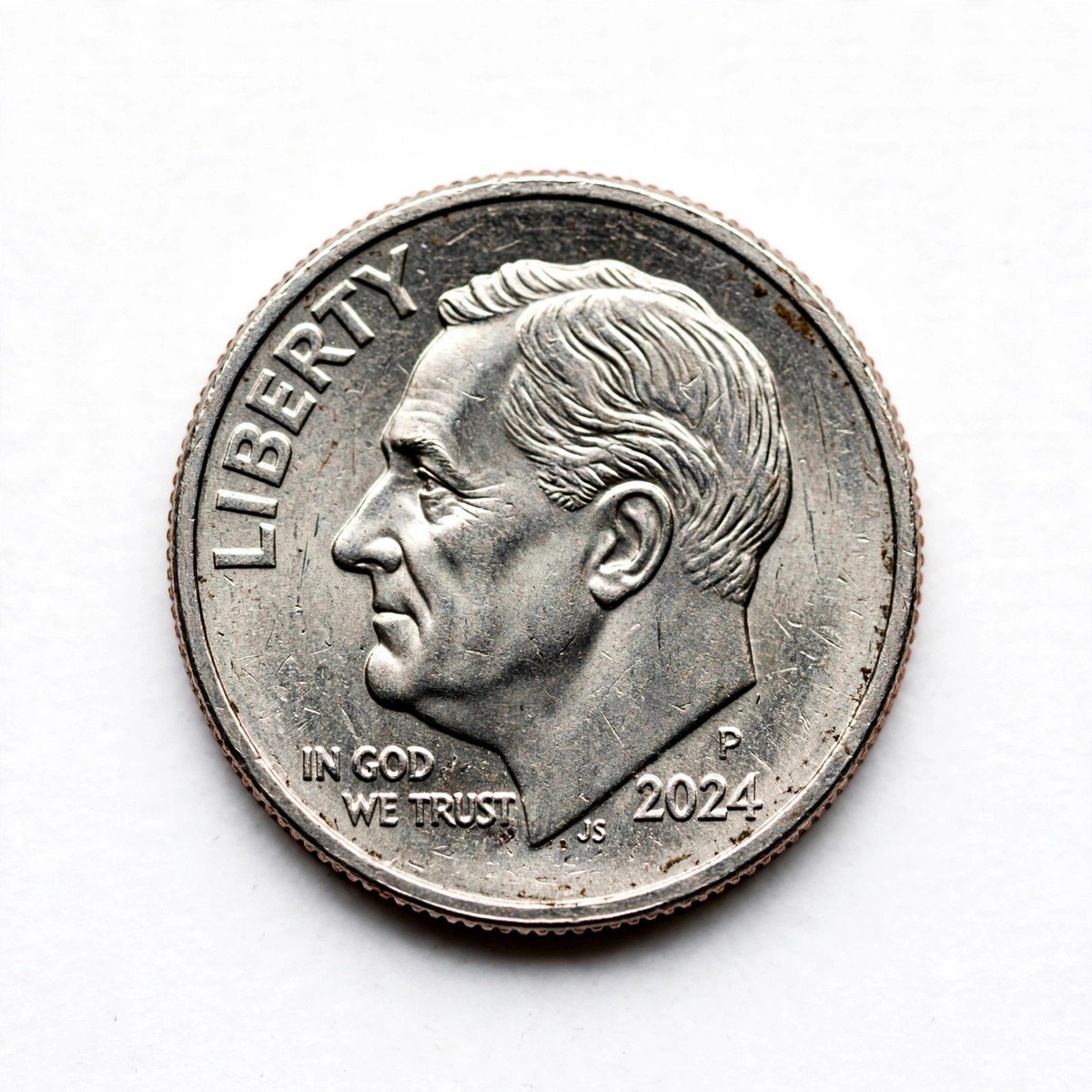
How big is 3 mm next to a dime? About one-sixth of the coin’s width. A US dime is about six times as wide as 3 mm. The dime is 17.91 mm across (0.705 inches), and 17.91 ÷ 3 = 5.97, so almost exactly six lengths of 3 mm fit across a dime’s diameter. The dime is also useful in a second way: it is 1.35 mm thick, so 3 mm is about 2.2 dime-thicknesses (3 ÷ 1.35 = 2.22). Two dimes stacked are 2.7 mm thick, just 0.3 mm short of 3 mm. For scale, a US penny is 19.05 mm across, or about 6.35 times wider than 3 mm. So the next time someone asks how big 3 mm is, the honest answer is: picture a dime, then picture one-sixth of its width.
Frequently Asked Questions
How big is 3 mm in inches?
3 mm is 0.118 inches, which most people round to about 0.12 inches — just under one-eighth of an inch (0.125 inches). Divide millimeters by 25.4 to convert: 3 ÷ 25.4 = 0.118 inches.
How big is 3 mm compared to a sesame seed?
A sesame seed is about the same size as 3 mm. The average sesame seed is 3.24 mm long, with most seeds between 2.7 and 3.8 mm, so a typical seed is only 0.24 mm longer than 3 mm.
How big is 3 mm on a ruler?
On the metric side of a ruler, the smallest marks are 1 mm apart. Count three small marks from zero and you have 3 mm. On the inch side, 3 mm sits just short of the one-eighth inch mark (0.125 inches).
Is 3 mm bigger than a grain of rice?
It depends on which way you measure the grain. A long-grain rice kernel is about 7 mm long and about 2 mm wide, so 3 mm is longer than the grain is wide (1.5 times the width) but shorter than the grain is long (about 43 percent of its length).
How many 3 mm lengths fit in an inch?
About 8.5. One inch is 25.4 mm, and 25.4 ÷ 3 = 8.47, so eight and a half lengths of 3 mm fit side by side across a single inch. Across one centimeter, about 3.3 lengths of 3 mm fit (10 ÷ 3 = 3.33).
Conclusion
How big is 3 mm? It is 0.118 inches (about 0.12 inches), or 0.3 centimeters — the length of a sesame seed, a small garden ant, or a fruit fly. It is 3,000 micrometers, 0.003 meters, and about one-sixth of the width of a US dime. Four credit cards stacked together measure 3.04 mm, so you can check the size any time without a ruler.
So the next time someone asks, “How big is 3 mm?”, you will have the answer ready. Three millimeters is small, but it is far from invisible. It is the diameter of an M3 screw, a 3 mm drill bit, and a 3 mm LED, and the thickness of a standard craft sheet. Once you know that a sesame seed is 3 mm long, you will never need a ruler to picture it again.
Related Guides
- 5 Centimeters in Inches: How Big Is 5 cm Really?
- 15 Common Things That Are 30 Centimeters Long
- Inches to Cm Converter
- Length Converter
- How Long Is a 22 ARC Bolt Action Rifle? Length, Barrel & Size Guide

Hi, I’m Michael Carter, I write simple, everyday size guides so you can picture any measurement in seconds.