
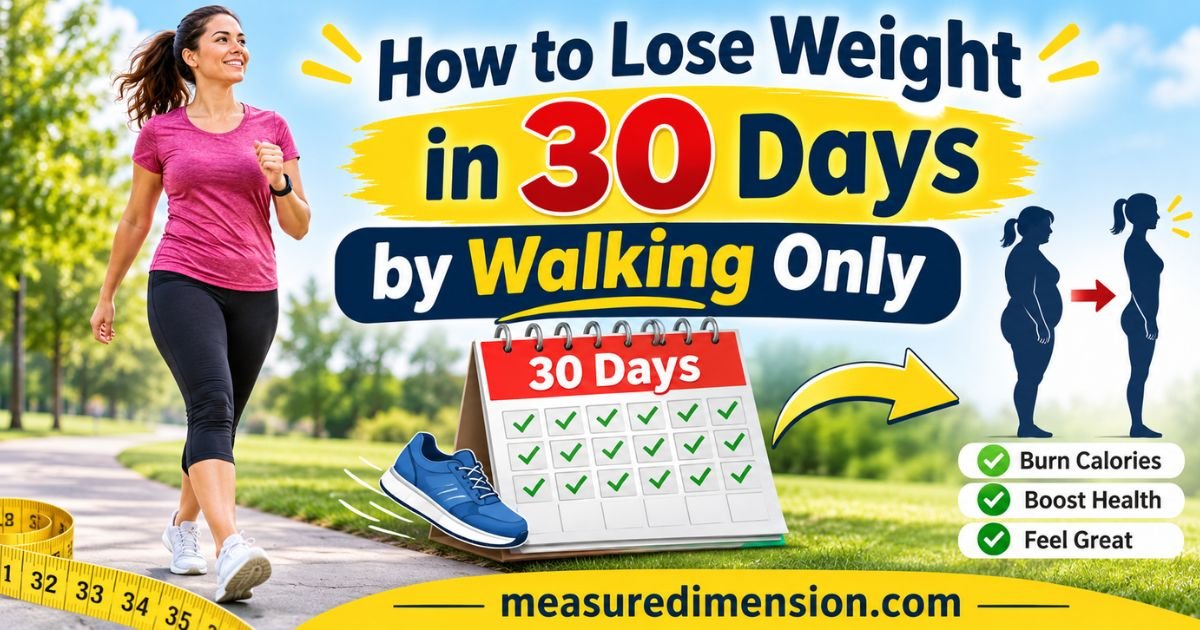
You do not need a gym membership, a running habit, or a diet plan to lose weight. Walking alone can do it — if you walk enough, every day, for 30 days.
This guide is about walking and nothing else. There is no meal plan here, no calorie counting, and no workout routine. The only rule is to walk more than you walk now, a little more each week, until you reach 10,000 steps a day. If you follow that one rule, most people lose 2 to 4 kg in 30 days.
That number is not a promise — it is the realistic result of a steady walking habit. Your exact result depends on your starting weight, how much you walk now, and whether you eat roughly the same as usual. What walking gives you is a simple, repeatable way to burn more calories than you take in, without changing anything else about your life.
How Walking Burns Fat

Walking burns fat the same way every other exercise does: by using more energy than your body takes in from food. The gap between what you eat and what you burn is called a calorie deficit, and fat loss only happens when that gap exists.
Walking creates the gap quietly. A rough guide is that an average adult burns about 100 calories per mile (1.6 km) of walking. That means:
- 4,000 steps (about 3 km) burns roughly 150 to 200 calories
- 6,000 steps (about 4.5 km) burns roughly 250 to 300 calories
- 10,000 steps (about 7.5 km) burns roughly 400 to 500 calories
Those are rough estimates — heavier people burn more, lighter people burn less, and a faster pace burns more than a slow stroll. But the point is simple: a 10,000-step day burns about as many calories as a small meal. Do that every day for 30 days and the total adds up to real fat loss.
Walking has one more advantage over running and gym workouts: you can do it every single day without getting sore, injured, or bored. Consistency beats intensity. A 40-minute walk you actually do beats a hard workout you quit after a week.
The 30-Day Walking Plan
The plan builds your daily steps week by week. Do not jump to 10,000 steps on day 1 — that is how people get sore feet and quit. Start where you are and add a little each week.
| Week | Daily Steps | How to Get There |
|---|---|---|
| Week 1Days 1–7 | 4,000 steps | One 15-minute walk a day, plus a 10-minute walk after dinner |
| Week 2Days 8–14 | 6,000 steps | One 25-minute walk a day, plus 10 minutes after lunch and dinner |
| Week 3Days 15–21 | 8,000 steps | One 35-minute brisk walk a day, plus after-meal walks and errands on foot |
| Week 4Days 22–30 | 10,000 steps | One 45-minute brisk walk a day, plus after-meal walks, stairs, and walking for short errands |
Quick tip: if you already walk more than 4,000 steps a day, start from your current number and add 2,000 steps in Week 1. The plan works from wherever you begin — the goal is to walk more than last week, not to hit a magic number on day 1.
Walking After Meals
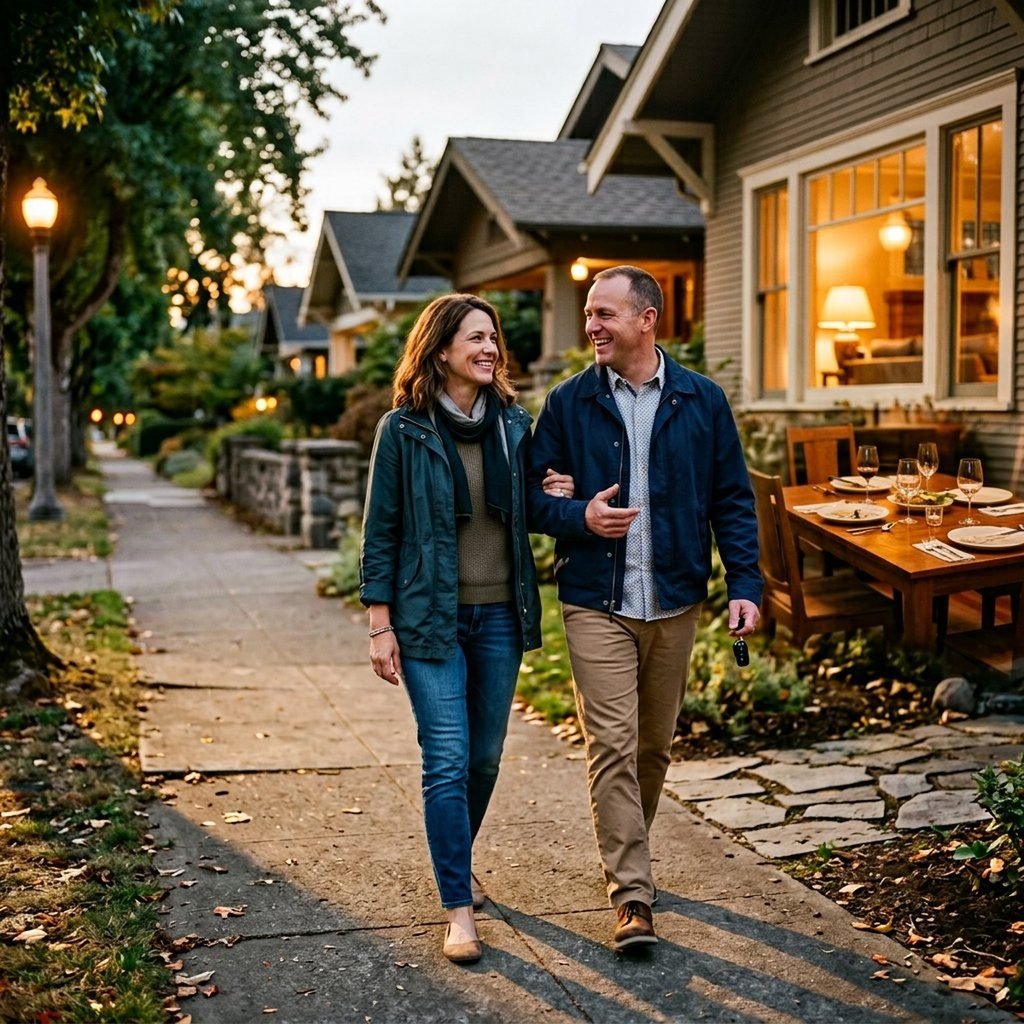
The easiest steps in this plan are the ones right after you eat. A 10-minute walk after a meal is short, gentle, and surprisingly useful.
After you eat, your blood sugar rises. A short walk uses some of that sugar for energy instead of letting it sit, which helps your body handle the meal better. It also settles your stomach — many people find that a slow walk after dinner reduces bloating and that heavy, sleepy feeling.
Start with dinner, because it is usually the biggest meal and the one after which most people sit down for the evening. Walk for 10 minutes — around the block, around your home, or up and down your street. In Week 2, add a 10-minute walk after lunch too. Two short walks a day can add 2,000 to 3,000 steps without you ever setting aside “exercise time.”
Walk slowly after meals. This is not the time for a fast pace — a gentle stroll is enough, and it is kinder on a full stomach.
Pace and Posture

Not all walking burns the same calories. A slow stroll burns less than a brisk walk, so pace matters once the habit is set.
How to know you are walking briskly: you can still talk in full sentences, but you cannot sing. Your breathing is a little faster than normal, and you feel warm after a few minutes. That is the right pace for fat loss — fast enough to raise your heart rate, slow enough to keep going for 30 to 45 minutes.
Posture matters too. Walk tall: head up, eyes forward, shoulders relaxed and back, stomach gently pulled in. Let your arms swing naturally at your sides, bent slightly at the elbows. Land on your heel first and roll through to your toes. Good posture burns a little more energy, protects your knees and back, and makes the walk feel easier.
Do not worry about pace in Week 1. Walk at whatever speed feels natural. From Week 3 onwards, try to make your main daily walk brisk — that is when the extra calorie burn starts to add up.
Shoes and Comfort

You do not need special walking shoes to start, but your feet will thank you for comfortable ones. Any pair of shoes you can walk in for 30 minutes without pain will do — trainers, sports shoes, or soft flat shoes.
Two things cause most walking problems: blisters and sore knees. Blisters come from shoes that rub, so wear socks that fit well and break new shoes in with short walks first. Sore knees usually come from doing too much too soon, which is why this plan builds up slowly. If your knees hurt, shorten the walk and slow down — do not push through pain.
Carry a small bottle of water on longer walks, especially in warm weather. Walking makes you sweat more than you notice, and staying hydrated keeps your energy up.
Tracking Your Steps
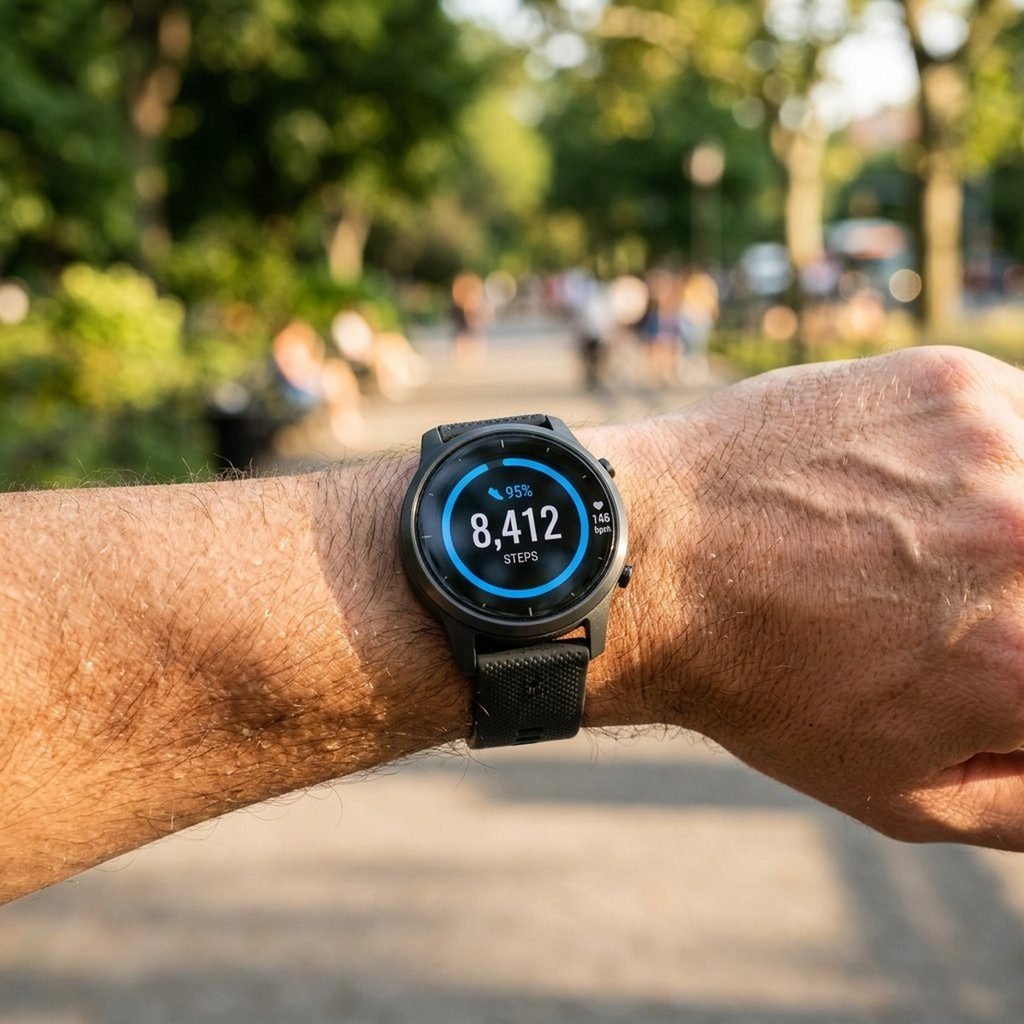
You do not need a fitness watch. Almost every phone has a free step counter built in — check your health app, or download any free pedometer app. Put your phone in your pocket and it counts for you.
Check your steps once a day, in the evening, not every hour. The daily total is what matters, not the number at noon. If you are short of your target, a 10-minute walk after dinner usually closes the gap.
Do not chase a perfect number every day. Some days you will hit 10,000 steps and some days you will reach 7,000. What matters is the weekly average. If your average rises each week, the plan is working.
Bad-Weather Days

Rain, heat, or cold will come — and a missed day can break a new habit. Plan for it in advance.
Indoors: walk laps around your home, up and down a hallway, or climb the stairs a few times. Marching in place while watching TV counts too — 10 minutes of marching is about 1,000 steps. A shopping mall is another good option: one full loop of a mall is often 1,000 to 2,000 steps, and it is dry and cool.
Short and split: if you cannot do one long walk, split it into three 10-minute walks across the day. The steps count the same, and short walks are easier to fit between rain showers.
The rule is simple: never let two bad-weather days in a row pass with no walking at all. One missed day is normal. Two missed days is a habit breaking.
What About Food?
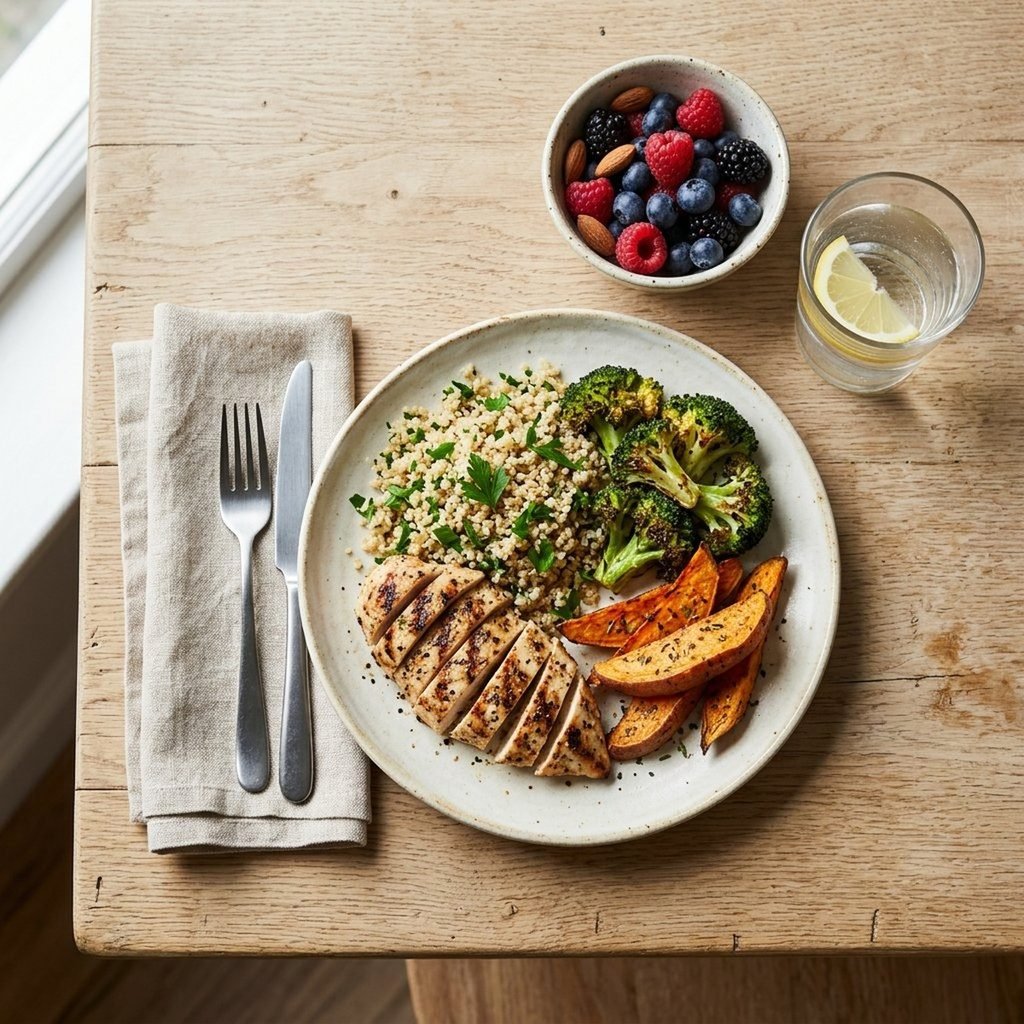
This plan has no diet, and that is the point. You do not have to change what you eat to lose weight by walking — the walking itself creates the calorie deficit.
There is only one food rule, and it is about not cancelling out your walks: do not “reward” a walk with extra food. A 45-minute walk burns roughly 200 to 300 calories. One large fizzy drink or a packet of biscuits gives those calories straight back. You do not need to eat less — just do not eat more because you walked.
Drink water before and after your walks. Thirst is often mistaken for hunger, and a glass of water before a meal helps you eat a normal portion without trying.
FAQs
Can I really lose weight just by walking?
Yes. Walking burns calories, and enough walking every day creates the calorie deficit that causes fat loss. Most people who build up to 10,000 steps a day lose 2 to 4 kg in 30 days without changing anything else. It works more slowly than a strict diet, but it is far easier to keep doing.
How many steps a day do I need to lose weight?
There is no single number, because it depends on your weight and how much you walk now. As a guide, 10,000 steps a day burns roughly 400 to 500 calories — enough for steady fat loss over a month. If 10,000 feels too far away, 7,000 to 8,000 steps a day still makes a real difference.
Is walking after meals really helpful?
Yes. A 10-minute walk after eating helps your body use the sugar from the meal for energy, and it settles your stomach. It is also the easiest way to add steps, because it is short and fits into your normal routine. Start with a walk after dinner, then add one after lunch.
Do I need special shoes for walking?
No. Any comfortable shoes you can walk in for 30 minutes without pain will do. If you plan to walk every day, proper walking shoes or trainers are worth it — they protect your feet and knees. Break new shoes in with short walks first to avoid blisters.
What should I do when the weather is bad?
Walk indoors: laps around your home, stairs, or marching in place while watching TV. A shopping mall is a good dry option. Or split your walk into three 10-minute walks between rain showers. The key is to never let two bad-weather days in a row pass with no walking at all.
How fast should I walk to lose weight?
Walk briskly enough that you can talk but cannot sing — your breathing should be a little faster than normal. That pace burns noticeably more calories than a slow stroll. In the first two weeks, walk at whatever speed feels natural; from Week 3, make your main daily walk brisk.
Conclusion
Losing weight by walking only is the simplest weight-loss plan there is: one rule, no gym, no running, no diet. Start with 4,000 steps a day, add 2,000 steps each week, walk for 10 minutes after your meals, and keep your pace brisk in the second half of the month. In 30 days, most people lose 2 to 4 kg — and they gain a habit they can keep for life.
Start today. Put your shoes on, walk for 15 minutes, and count the steps. Tomorrow, do it again. That is the whole plan.
This article is general information, not medical advice. If you are pregnant, breastfeeding, have a medical condition such as diabetes, heart problems, or joint problems, take regular medication, or have a history of eating disorders, speak to a doctor before starting any weight-loss plan.
Related Guides
- How Heavy Is 80 Kilograms?
- How Heavy Is 120 Kilograms?
- How Heavy Is 60 Kilograms?
- How Heavy Is 70 Kilograms?

Hi, I’m Michael Carter, I write simple, everyday size guides so you can picture any measurement in seconds.