
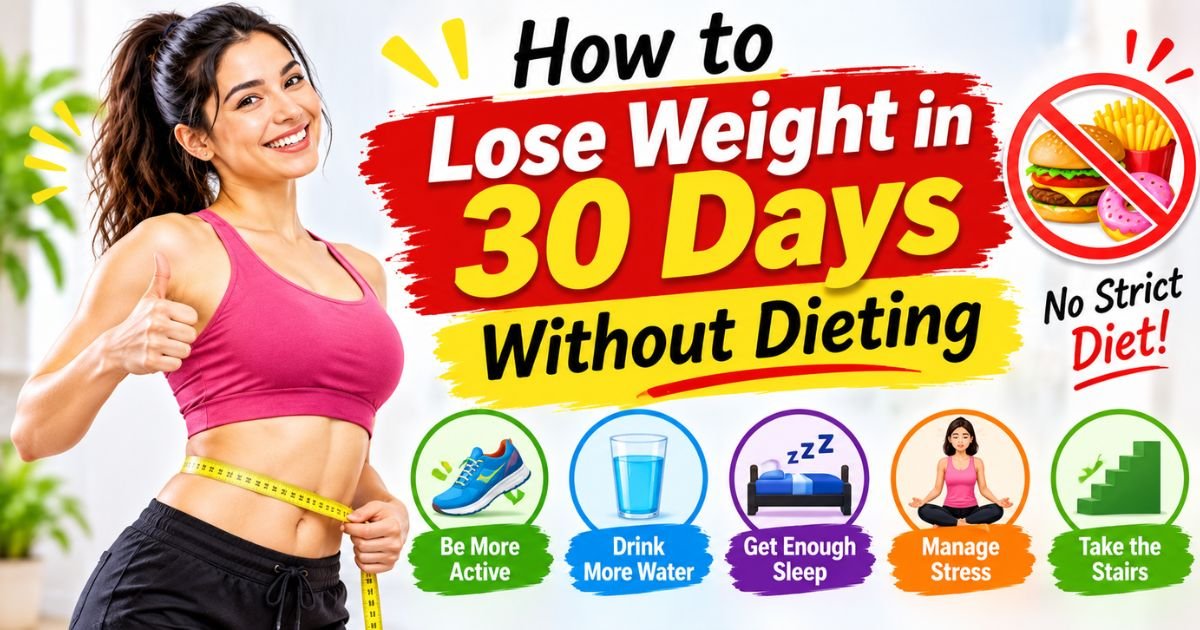
If you have ever started a diet, followed it perfectly for a week, then quit — you are not the problem. The diet is. Most diets fail for ordinary people because they demand too much at once: count every calorie, weigh every portion, give up your favourite foods, follow a meal plan, and do it all perfectly. One bad meal feels like failure, so people stop.
There is another way to lose weight, and it does not look like a diet at all. Instead of changing what you eat, you change how you eat — the habits around your food. Smaller plates, slower meals, water instead of fizzy drinks, a short walk after dinner. None of these is a diet rule. Each one quietly makes you eat a little less, without counting, without banning anything, and without feeling hungry.
This guide gives you 7 such habit changes. Do them for 30 days and most people lose a realistic 2 to 4 kg — the safe pace of about 0.5 to 1 kg per week — without ever going on a diet.
7 Habit Changes That Work
| Habit | How to Do It | Why It Works |
|---|---|---|
| 1. Use a smaller plate | Serve dinner on a side plate or a small bowl instead of a large dinner plate | A full small plate looks like a full meal, so you feel satisfied with less food |
| 2. Eat slowly | Put your fork down between bites; take at least 20 minutes over a meal | Your brain needs about 20 minutes to register fullness — slow eaters stop sooner |
| 3. Make water your default drink | Water with every meal; keep a bottle where you sit and work | Fizzy drinks and juice add hundreds of calories without filling you up |
| 4. Start each meal with protein | Eat the egg, chicken, dal, or curd part of your meal first | Protein fills you up early, so you naturally eat less of the rest |
| 5. Walk 10 minutes after dinner | A short walk outside or around the house, every evening after eating | It burns calories, helps digestion, and breaks the sit-after-dinner habit |
| 6. Keep tempting food out of sight | Biscuits and snacks in a closed cupboard; fruit where you can see it | You eat what you see — food in sight gets eaten, food hidden gets forgotten |
| 7. Go to bed at the same time | Pick a bedtime and keep it every night, including weekends | Short sleep raises hunger the next day and makes cravings stronger |
The Habits in Detail
1. Use a Smaller Plate

This is the easiest habit on the list, and it works on a simple trick of the eye. A normal portion on a large dinner plate looks small, so you add more. The same portion on a side plate looks full, so you feel satisfied. Studies on serving sizes have found that people serve themselves noticeably less food on smaller plates without even noticing.
You do not need to buy anything special. Use the side plates you already have for dinner for the next 30 days. Keep the big plates for serving food at the table, not for eating from.
2. Eat Slowly — Put Your Fork Down

Most people finish a meal in under 10 minutes. The problem is that your brain needs around 20 minutes to get the signal that you are full. If you eat fast, you can finish a second helping before your body has had time to say stop.
The fix is physical, not mental: put your fork down between bites. Chew properly. Take at least 20 minutes over a meal. Eat without a screen in front of you, because people who eat while watching something eat more and notice it less. Slow eating is not about discipline — it is about giving your body time to catch up.
3. Make Water Your Default Drink

You do not have to ban anything. Just change the default. When you sit down to eat, there is a glass of water on the table. When you are thirsty at work, the bottle next to you holds water. Fizzy drinks and juice are still allowed if you truly want one — but they are no longer the automatic choice.
This one habit removes the easiest calories in your day. A can of fizzy drink holds around 140 calories, and juice is not much better, yet neither makes you feel full. Replacing two sweet drinks a day with water can save nearly 300 calories a day — without changing a single meal.
4. Start Each Meal with Protein
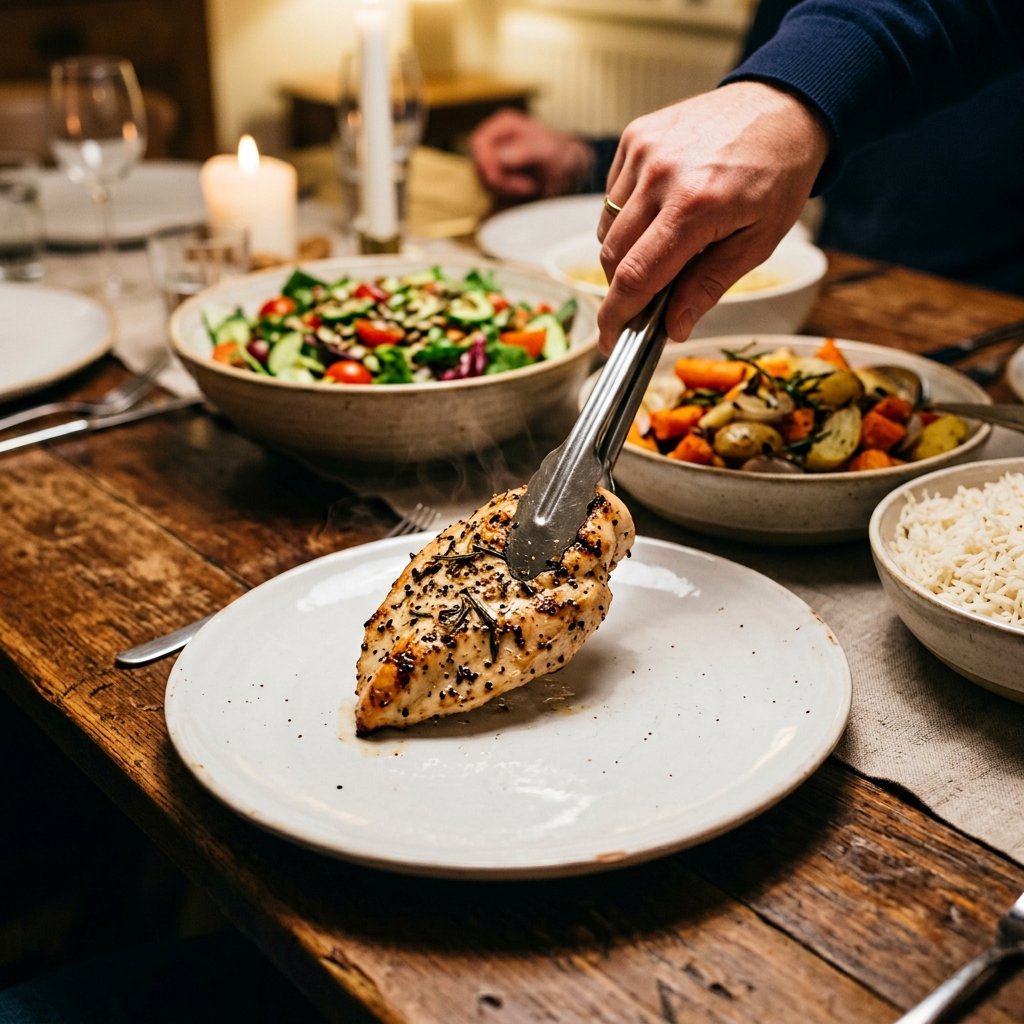
You do not need a high-protein diet. You only need to change the order you eat in. Start each meal with the protein part — the egg, the chicken, the fish, the dal, the curd, the paneer — and eat the rest after.
Protein fills you up faster than carbs do, and it keeps you full for longer. When it goes in first, you naturally eat less of the rice, roti, or potatoes that follow, because you are already partway full. Nothing is banned and nothing is counted. The order does the work.
5. Walk 10 Minutes After Dinner

Dinner is where the day’s sitting usually wins. You eat, then you sit for the rest of the evening. A 10-minute walk after dinner breaks that pattern. Walk outside if you can, or around the house if you cannot — the place does not matter, the habit does.
A short walk after eating also helps your body handle the meal better, and it replaces the usual after-dinner snacking time with movement. Ten minutes is short enough that you will actually do it every night, and that is the point: a small habit you keep beats a big workout you quit.
6. Keep Tempting Food Out of Sight
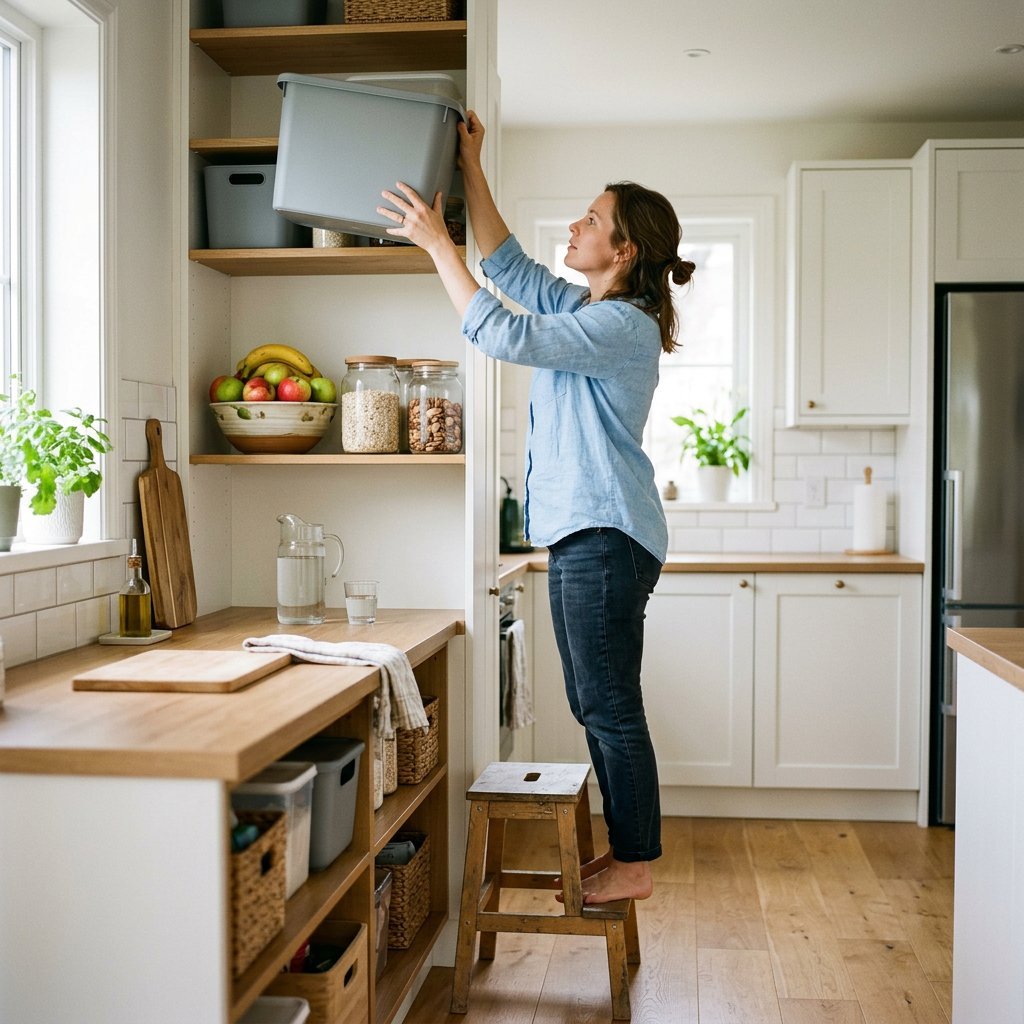
Willpower is weak. Your surroundings are strong. If biscuits sit on the kitchen counter, you will eat them — not because you are hungry, but because they are there. If they sit in a closed cupboard on a high shelf, you will eat them far less often.
This habit is about designing your kitchen once, instead of fighting yourself every day. Put fruit where you can see it. Put snacks, biscuits, and sweets in closed containers, out of sight. You are not banning them — you are making them a choice instead of an accident. People eat far less of food they have to go and get.
7. Go to Bed at the Same Time Every Night

Sleep is the habit most people forget, and it quietly controls the other six. When you sleep less than 7 hours, you wake up hungrier, you crave sweet and fried food more, and you have less energy to walk or cook. One short night can undo a careful day.
Pick a bedtime and keep it every night for 30 days, including weekends. Stop screens 30 minutes before bed and keep the room dark and cool. Aim for 7 to 9 hours. You will notice the difference first in your mornings: less craving, more energy, and an easier time keeping the other habits.
What “Without Dieting” Does NOT Mean

This approach is often misunderstood, so here is what it does not mean.
It does not mean you can eat anything in any amount. The habits work because they quietly reduce how much you eat — smaller plates, slower meals, protein first, water instead of fizzy drinks. If you keep the habits but eat twice as much of everything else, they will not help. The difference is that the reduction happens by itself, not by counting.
It does not mean no effort. Habits take a little attention for the first week: remembering the small plate, putting the fork down, walking after dinner. After that they become automatic, which is exactly why they last longer than diets.
It does not mean fast results. Without dieting, weight comes off at the same safe pace as with any sensible plan: about 0.5 to 1 kg a week, or 2 to 4 kg in 30 days. Anyone promising faster results without a diet is selling something.
It does not mean ignoring your health. If you have a medical condition, take medication, or have been told by a doctor to follow a specific eating plan, follow your doctor’s advice — not this article.
Tracking Without a Scale Obsession

People who hate diets usually hate scales too, and weighing yourself every day is a fast way to quit. So track the challenge differently:
Weigh yourself once a week, on the same day. Monday morning, after using the bathroom, in similar clothes. Write the number down and forget it until next week. Daily weighing only shows water changes, and water changes look like failure.
Measure your waist once a week. Around the belly button, same day as the weigh-in, before eating. Your waist often shrinks before the scale moves, because you can lose fat and keep muscle at the same time.
Notice your clothes and your energy. How your trousers fit, how you feel after lunch, whether you still want a snack at 4 pm — these are real results, and they usually appear before the numbers change.
Count the habits, not the calories. At the end of each day, count how many of the 7 habits you did. Five out of seven is a good day. Seven out of seven is a great day. The habit count is the score that matters, because the habits are what cause the weight loss.
FAQs
Will I really lose weight without dieting?
Yes, if the habits are done most days. The habits work by quietly reducing how much you eat — smaller plates, slower meals, protein first, water instead of sweet drinks — without you having to count anything. Most people lose 2 to 4 kg in 30 days this way. The result is slower than a crash diet but far more likely to last.
Do I need to count calories?
No. That is the whole point. Calorie counting is a diet tool, and this guide does not use it. If you ever want to check your progress, count habits instead: how many of the 7 did you do today? That number predicts your result better than any calorie total.
Can I still eat my favourite foods?
Yes. Nothing is banned. You can still eat your favourite foods — the habits change how much of them you eat, not whether you eat them. Smaller plates, slower eating, and protein first all reduce the portion naturally. A food you enjoy once in a while, in a normal portion, does not stop weight loss.
What if I eat out a lot?
The habits travel well. At a restaurant, ask for a smaller plate or a half portion, drink water with the meal, eat the protein part first, and put your fork down between bites. You can also walk for 10 minutes after the meal. Eating out does not break the approach — the habits work anywhere food is served.
How fast will I see results?
Most people feel a difference in the first week — less bloating, better sleep, more energy — and see the scale move in the second or third week. A realistic result is 2 to 4 kg in 30 days. If the scale does not move but your waist is shrinking and your clothes fit better, the plan is working.
What should I do after 30 days?
Keep the habits. They are designed to be permanent, not a 30-day event. If a habit did not suit you, drop it and keep the ones that did. The goal was never to finish a diet — it was to find a way of eating and living that keeps the weight off without you having to think about it.
Conclusion
Losing weight without dieting is not a trick. It is seven small changes to how you eat, drink, move, and sleep — changes so small that none of them feels like a diet, but together they quietly eat into the extra calories that were keeping the weight on.
Start with one habit today. The smaller plate, or the glass of water, or the 10-minute walk after dinner. Add a second habit when the first one feels easy. In 30 days you will have lost some weight — most likely 2 to 4 kg — and you will have done it without counting a single calorie, banning a single food, or following a single meal plan.
That is the point. A diet ends. A habit stays.
This article is general information, not medical advice. If you are pregnant, breastfeeding, have a medical condition such as diabetes or thyroid problems, take regular medication, or have a history of eating disorders, speak to a doctor before starting any weight-loss plan.
Related Guides
- How Heavy Is 80 Kilograms?
- How Heavy Is 120 Kilograms?
- How Heavy Is 60 Kilograms?
- How Heavy Is 70 Kilograms?

Hi, I’m Michael Carter, I write simple, everyday size guides so you can picture any measurement in seconds.