
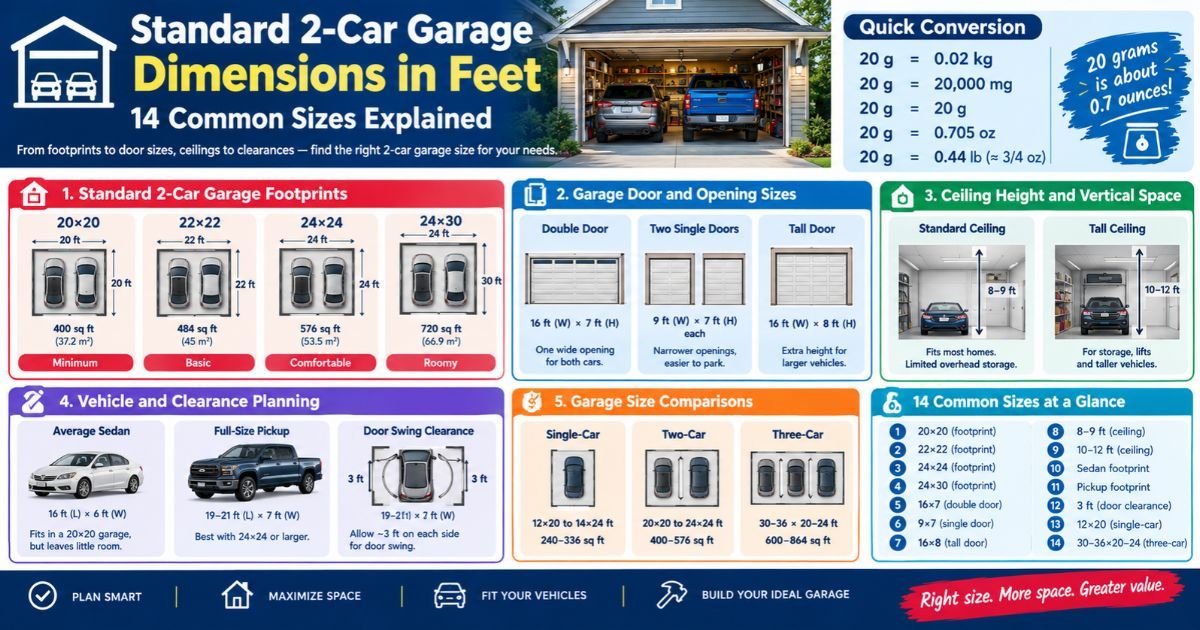
Standard 2-car garage dimensions run from about 20 by 20 feet at the practical minimum to 24 by 24 feet for comfortable parking and storage. The right 2-car garage size depends on your vehicles, door width, ceiling height, and how much storage you want. Below are 14 common 2-car garage dimensions in feet, from footprints and doors to clearances and comparisons.
2-Car Garage Dimensions in Feet, Inches, and Meters: Quick Conversion
| Measurement | 24 × 24 Foot Garage |
|---|---|
| Dimensions (Feet) | 24 × 24 ft |
| Dimensions (Inches) | 288 × 288 in |
| Dimensions (Meters) | 7.32 × 7.32 m |
| Area (Square Feet) | 576 sq ft |
| Area (Square Meters) | About 53.5 sq m |
Quick math: feet × 0.3048 = meters, and square feet × 0.0929 = square meters.
Quick Reference: 14 Common 2-Car Garage Dimensions
| Category | Topics Covered |
|---|---|
| Standard 2-Car Garage Footprints |
|
| Garage Door and Opening Sizes |
|
| Ceiling Height and Vertical Space |
|
| Vehicle and Clearance Planning |
|
| Garage Size Comparisons |
|
These 14 sizes make 2-car garage dimensions in feet easy to picture before you plan, build, or buy.
Standard 2-Car Garage Footprints
The footprint is the first number builders choose, and four sizes cover most US homes.
Minimum 20×20 Garage

A 20×20 garage covers 400 square feet, or about 37.2 square meters, and is the practical minimum for a standard 2-car garage. It fits two average cars with very little room left over.
A 20×20 garage leaves tight space for opening doors and almost none for shelves or a workbench. Many homeowners treat this size as parking only.
22×22 Garage
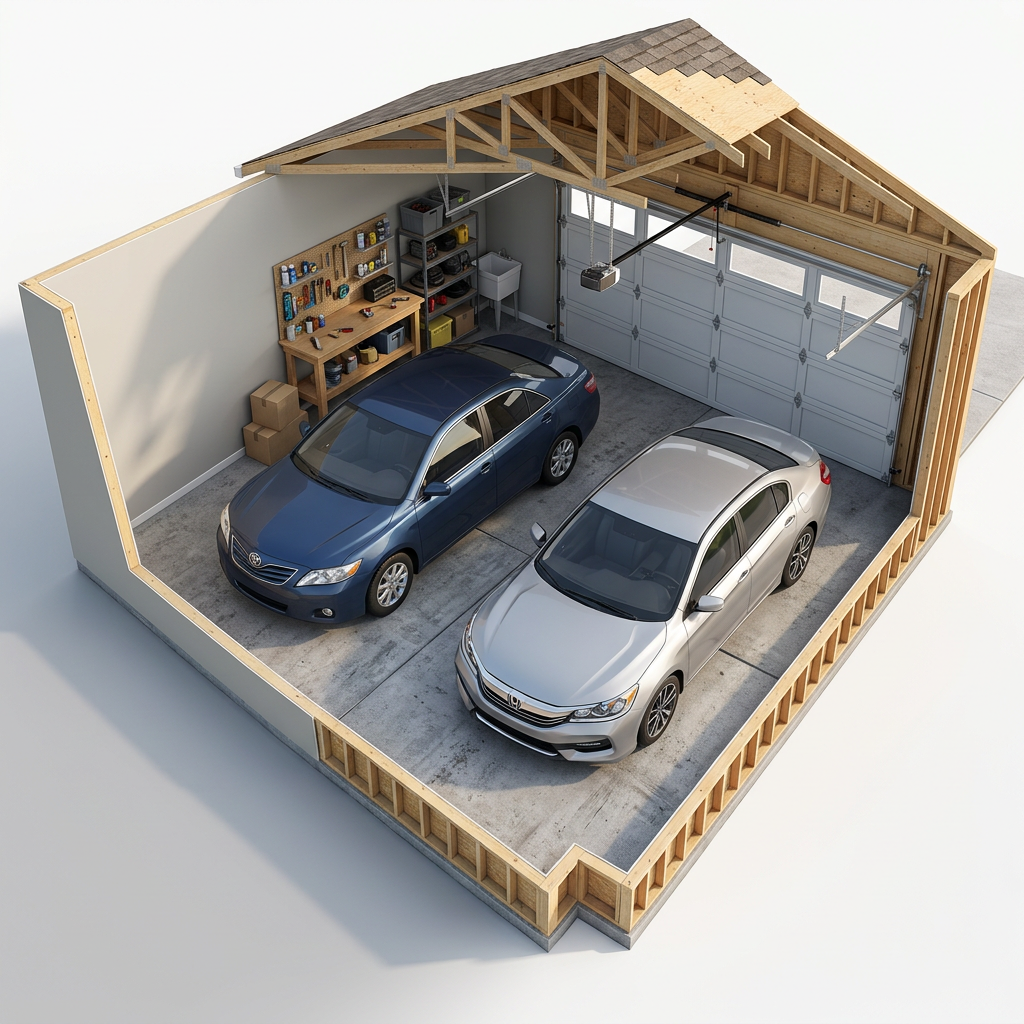
A 22×22 garage covers 484 square feet, or about 45 square meters, giving a bit more breathing room than the minimum. The extra 2 feet in each direction helps with door swings and walkways.
A 22×22 garage can handle two midsize vehicles plus a narrow shelf along one wall. It is a common middle choice when the lot allows slightly more than the minimum.
Comfortable 24×24 Garage
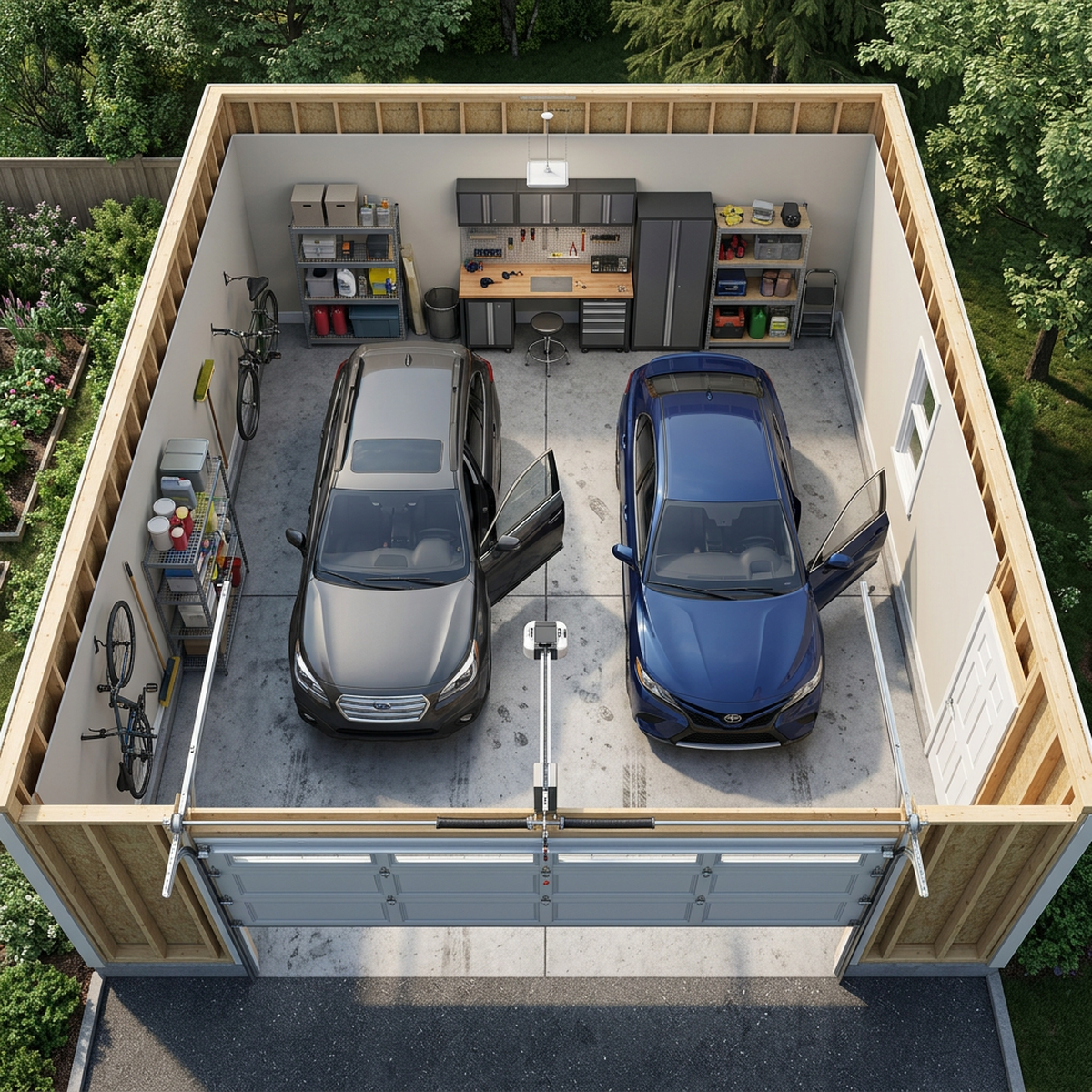
A 24×24 garage covers 576 square feet, or about 53.5 square meters, and is often called the sweet spot for a 2-car garage. It gives each vehicle about 12 feet of width.
A 24×24 garage leaves room to open doors fully and add a shelving run along the back wall. Builders across the US treat this as the comfortable standard.
Roomy 24×30 Garage
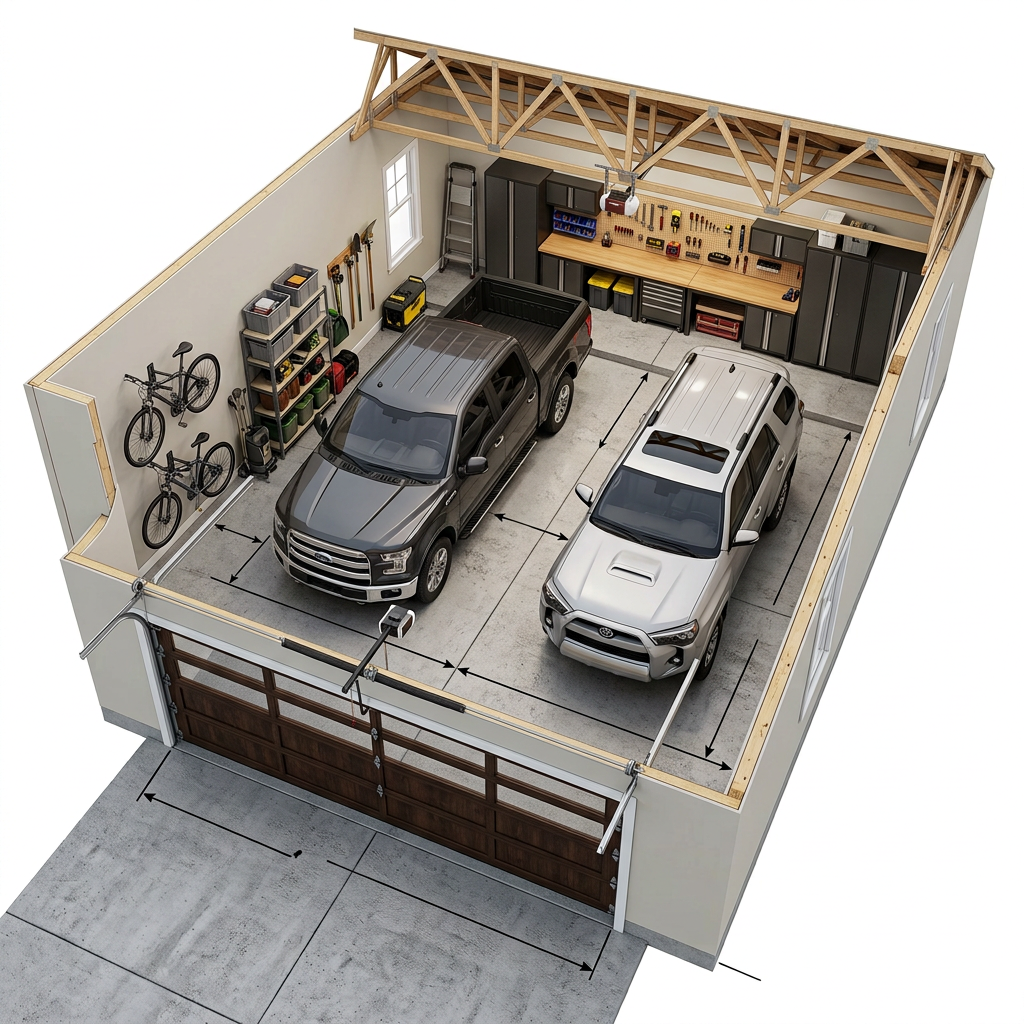
A 24×30 garage covers 720 square feet, or about 66.9 square meters, adding 6 feet of depth to the comfortable size. The extra length can hold a workbench or storage wall at the back.
A 24×30 garage works well for owners with pickup trucks, tools, or hobby gear. It is a popular upgrade when lot size and budget allow.
Garage Door and Opening Sizes
Door width and height decide which vehicles fit and how easily they get in.
Double 16×7 Garage Door
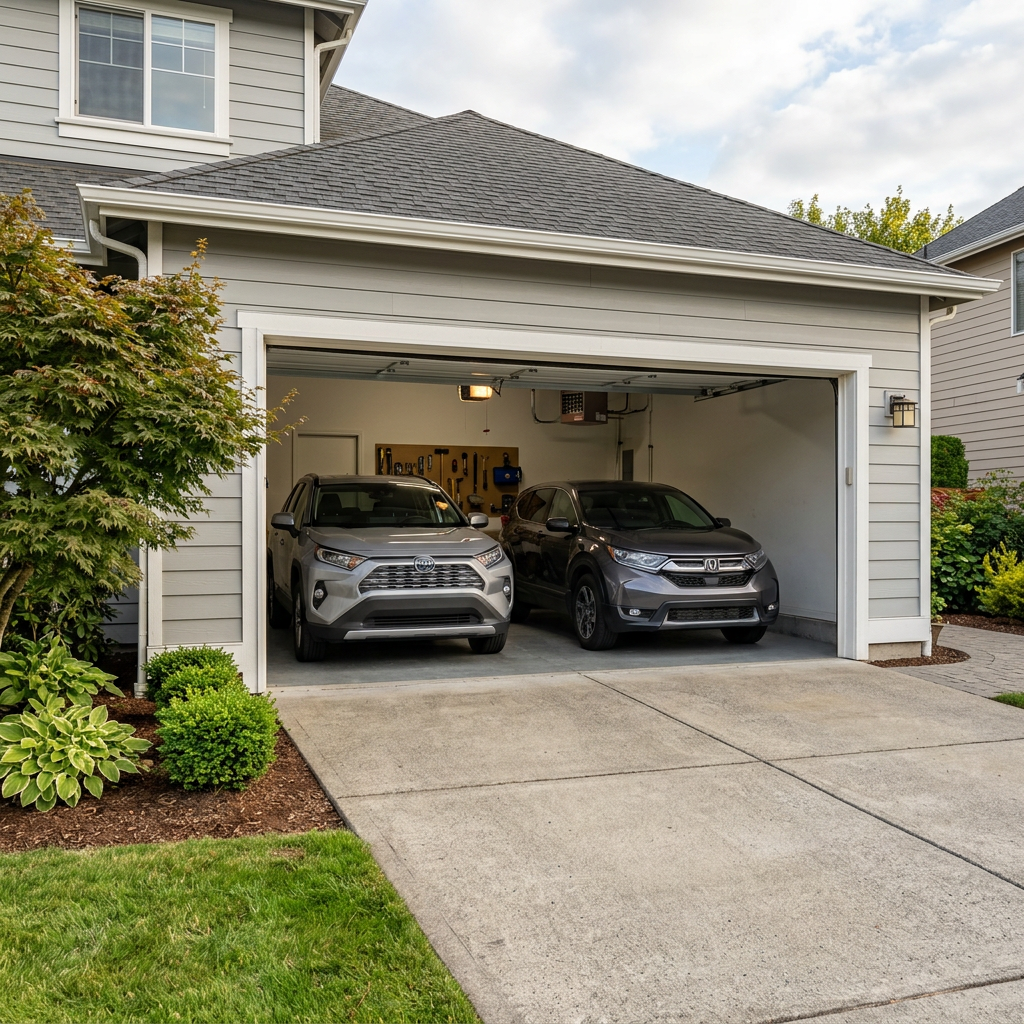
A double garage door, including steel models from Clopay, is commonly 16 feet wide by 7 feet tall. One wide opening serves both vehicles at the same time.
A 16×7 garage door fits most cars, minivans, and small SUVs without trouble. Parking two vehicles side by side takes careful lining up, since the opening is shared.
Two Single 9×7 Garage Doors
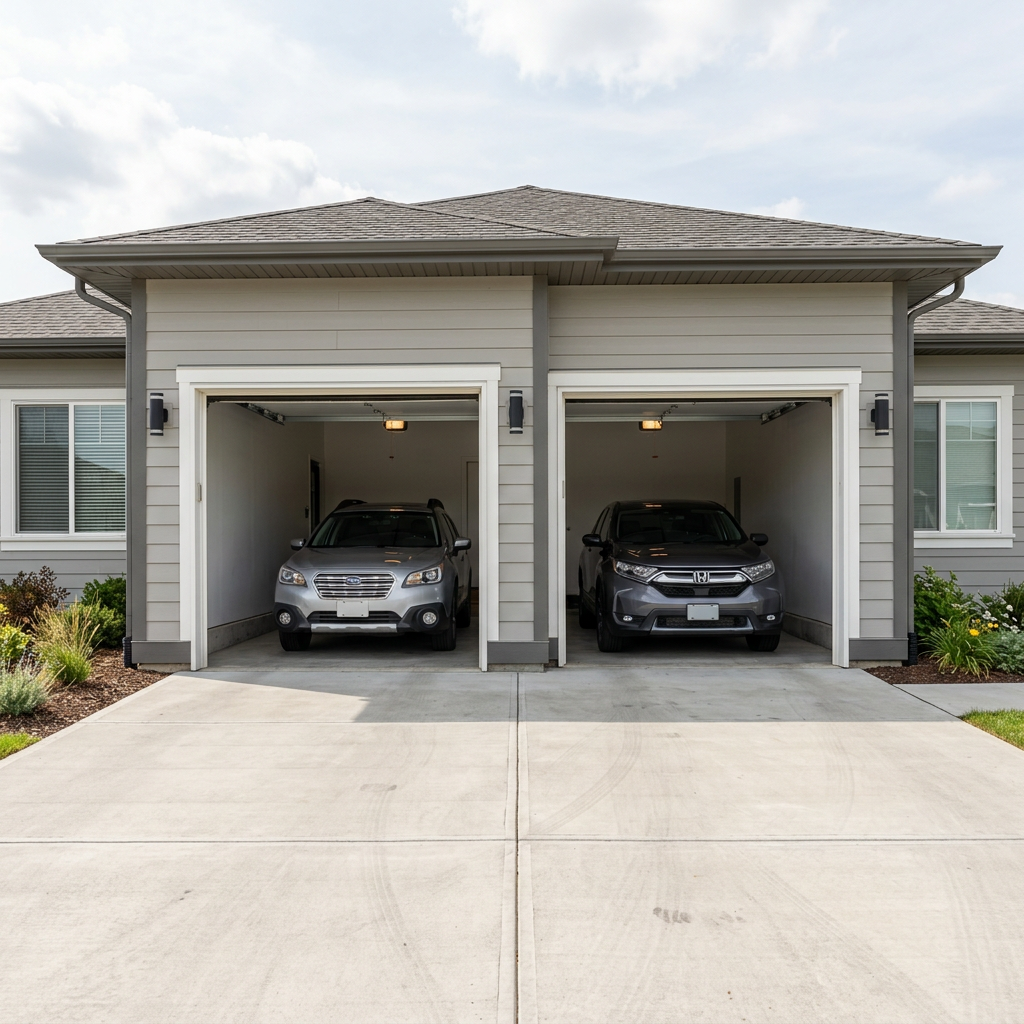
A pair of single garage doors, each 9 feet wide by 7 feet tall, is another common setup for a 2-car garage. The wall between the doors adds structure and keeps each opening easier to hit.
Two 9×7 garage doors make parking simpler, since each driver aims at a narrower, defined opening. This setup also allows only one door to be opened at a time.
Tall 16×8 Garage Door

A tall garage door measuring 16 feet wide by 8 feet tall gives an extra foot of headroom compared with the standard 7-foot height. That extra foot helps taller vehicles and roof racks clear the top of the opening.
A 16×8 garage door suits full-size pickups, vans, and SUVs with cargo boxes. It costs more than a standard door but avoids scraped roof racks.
Ceiling Height and Vertical Space
Ceiling height sets how much overhead storage and vehicle height your garage can handle.
Standard 8 to 9 Foot Ceiling
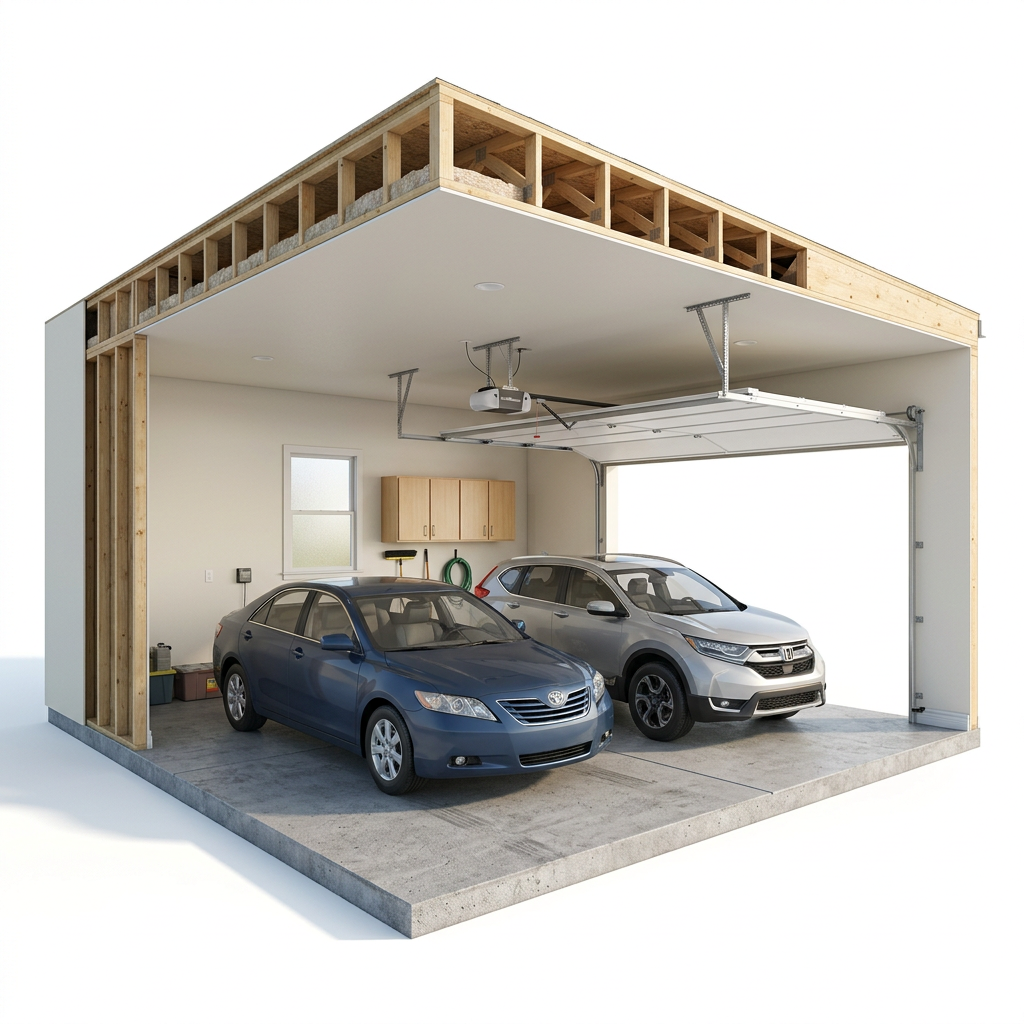
A standard garage ceiling is 8 to 9 feet high, which matches the height of most home framing. This leaves room to open a garage door and run the track and opener overhead.
An 8-foot garage ceiling limits tall shelving and overhead racks. A 9-foot ceiling gives noticeably more storage space above the vehicles.
10 to 12 Foot Ceiling for Lifts and Storage
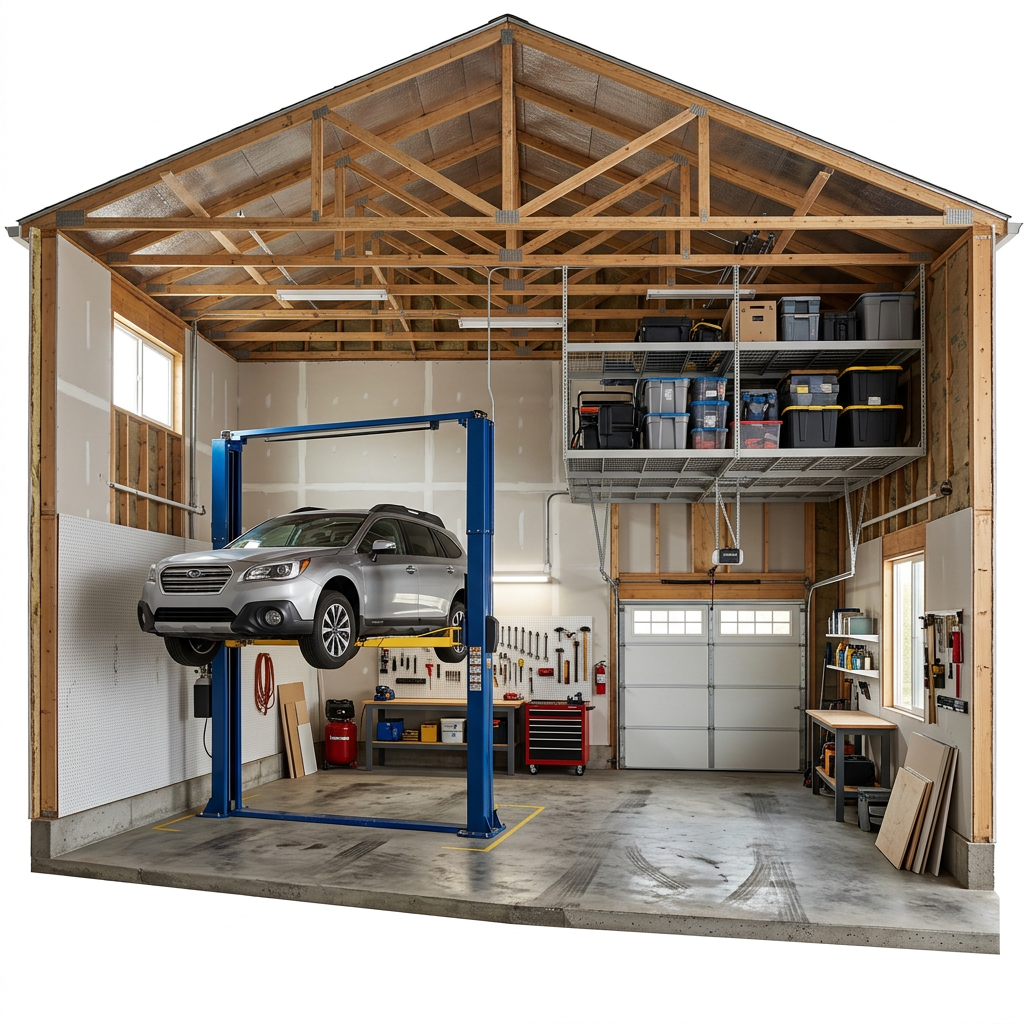
A 10 to 12 foot garage ceiling allows overhead storage racks and room for lifts, such as a two-post lift from BendPak. Many lifts need about 11 feet or more, so check the spec sheet.
A 12-foot garage ceiling gives enthusiasts room to raise a vehicle for repairs. The taller walls add building cost, so most homeowners choose them only for specific needs.
Vehicle and Clearance Planning
Vehicle size and door-swing space explain why a bigger garage feels so much roomier.
Average Sedan Footprint
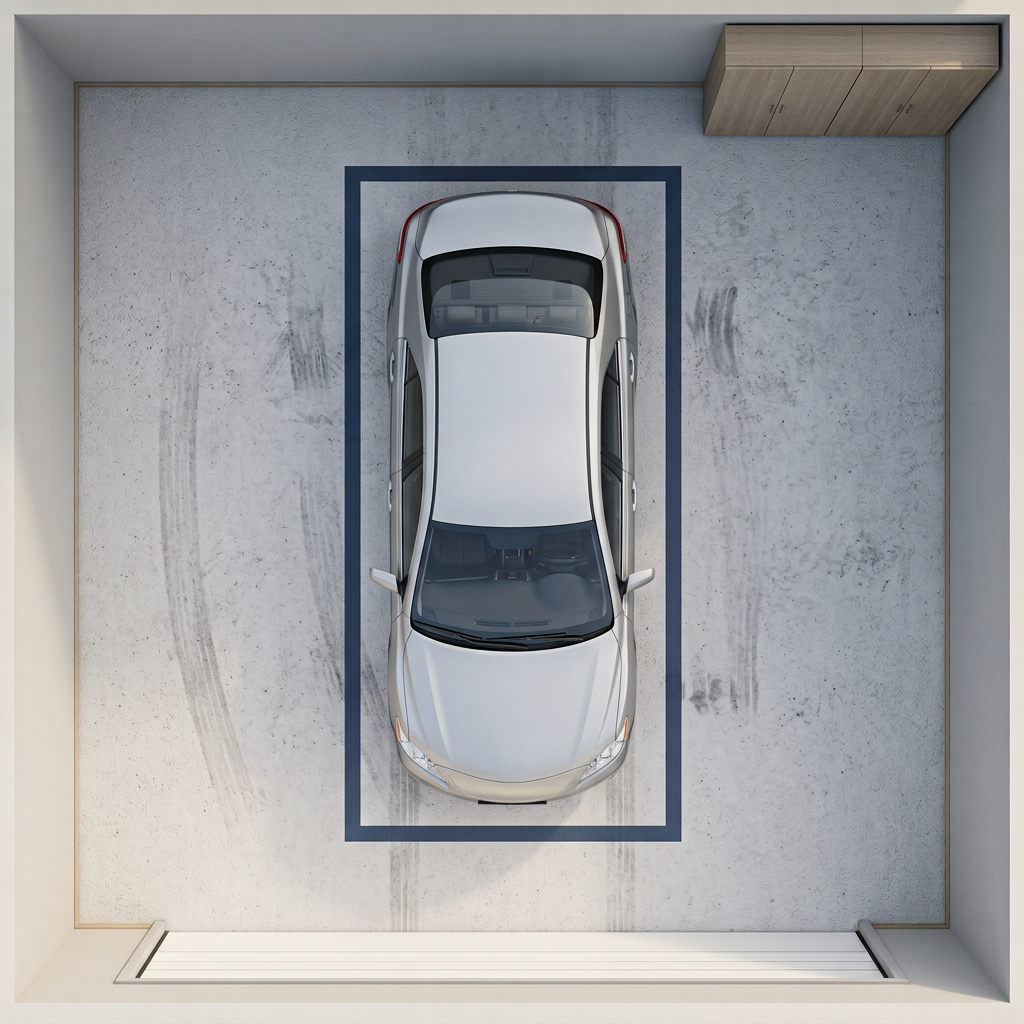
A midsize sedan such as the Toyota Camry measures about 16 feet long and 6 feet wide, not counting mirrors. Two of them side by side use about 12 feet of width.
A Camry-size sedan fits easily into a 20×20 garage, but door swings and storage get tight fast. Measuring your own car before planning avoids surprises.
Full-Size Pickup Footprint
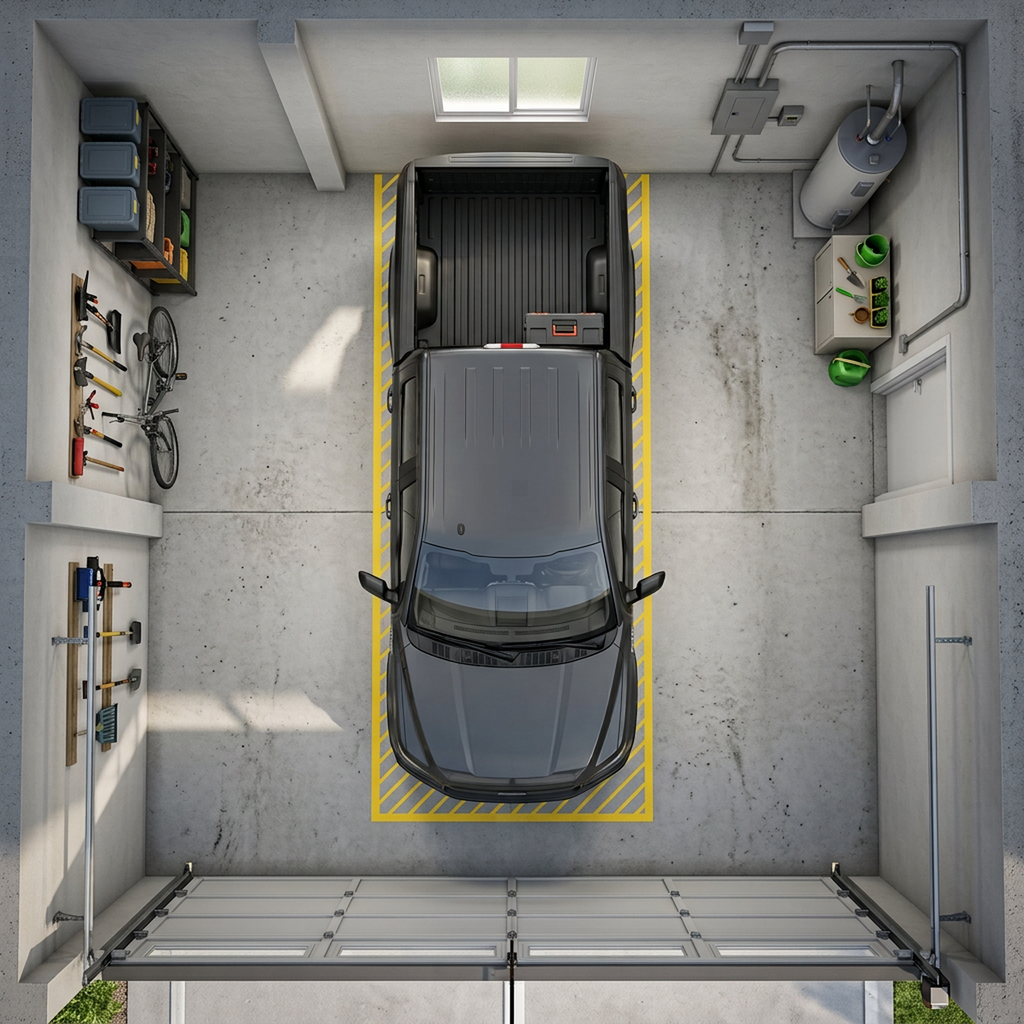
A full-size pickup such as the Ford F-150 measures roughly 19 to 21 feet long and nearly 7 feet wide, not counting mirrors. The longest crew-cab, long-bed versions are too long for a 20-foot-deep garage.
An F-150-size pickup is why many owners step up to a 24×24 garage or deeper. A 24×30 size gives room to walk around the truck.
Door Swing Clearance
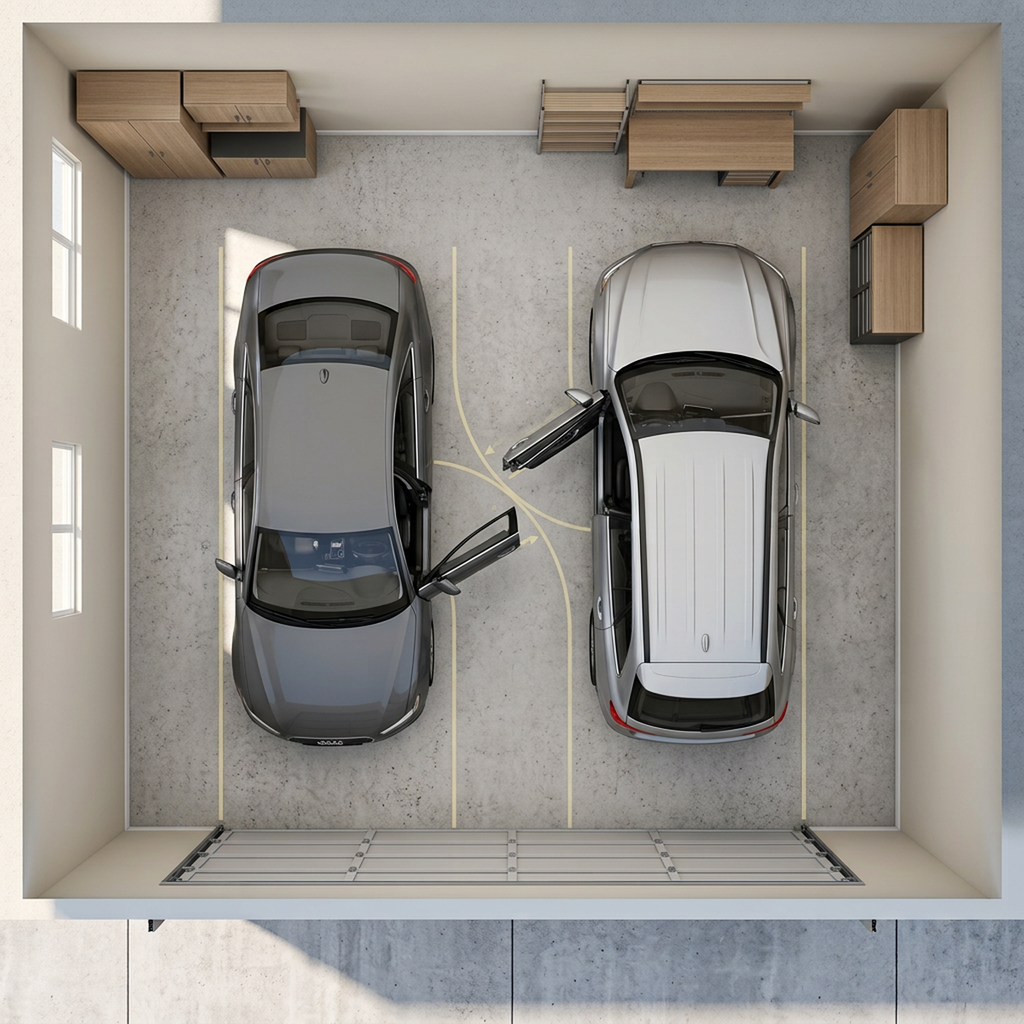
A car door usually needs about 3 feet of open space beside the vehicle to swing fully open. Planning this clearance between cars and between each car and the wall keeps doors from hitting each other.
A 3-foot door swing clearance is one reason a 24-foot-wide 2-car garage feels so much roomier than a 20-foot one. Tight clearance leads to dinged doors and cramped loading.
Garage Size Comparisons
Comparing a 2-car garage to a single and a three-car garage shows what extra feet actually buy you.
Single-Car Garage

A single-car garage commonly measures 12 by 20 feet up to 14 by 24 feet, covering about 240 to 336 square feet. This is roughly half the footprint of a standard 2-car garage.
A single-car garage parks one vehicle with limited room for storage. Comparing it with a 2-car garage shows how much extra width a second vehicle needs.
Three-Car Garage

A three-car garage commonly measures 30 to 36 feet wide by 20 to 24 feet deep, adding about 6 to 12 feet of width over a 2-car garage. That extra width holds a third vehicle or a full workshop bay.
A three-car garage costs more to build but adds flexibility for hobbies and storage. Many buyers choose it over upsizing a 2-car garage to 24×30.
FAQ Section
What are the standard 2-car garage dimensions in feet?
Common sizes run from 20×20 feet at the minimum to 24×24 feet for comfortable parking and storage.
How many square feet is a 2-car garage?
Most 2-car garages cover 400 to 720 square feet, and a 24×24 garage is 576 square feet.
Is a 20×20 garage big enough for two cars?
Yes for two average cars, but doors, storage, and larger trucks make 20×20 a tight fit.
How wide is a standard 2-car garage door?
A double door is typically 16 feet wide by 7 feet tall, or you can use two 9-foot single doors.
What is a 24×24 garage in meters?
A 24×24 foot garage measures about 7.32 by 7.32 meters, or roughly 53.5 square meters.
How tall should a 2-car garage ceiling be?
Eight to 9 feet is typical, and 10 feet or more helps for overhead storage or a vehicle lift.
Conclusion
Standard 2-car garage dimensions run from 20×20 feet to 24×24 feet, with 24×24 (576 square feet, about 53.5 square meters) the most comfortable common size. These 14 sizes cover footprints, doors, ceilings, vehicle clearances, and comparisons. Measure your own vehicles and check local codes before choosing a final size. For the foot, inch and metre units used here, see NIST’s SI units for length.

Hi, I’m Michael Carter, I write simple, everyday size guides so you can picture any measurement in seconds.
[…] 2-Car Garage […]
[…] .2-Car Garage […]
[…] .20 Gram.2-Car Garage […]
[…] .20 Gram.2-Car Garage […]
[…] .20 Gram.2-Car Garage […]
[…] .2-Car Garage […]
[…] 2-Car Garage […]