
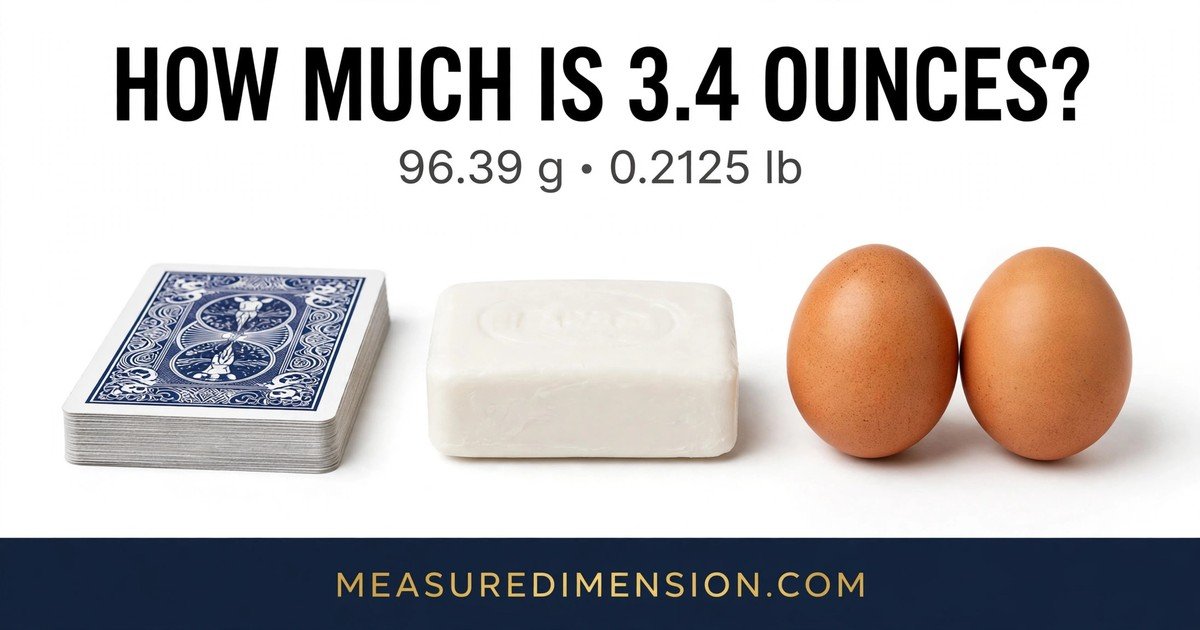
How much is 3.4 ounces? 3.4 oz is 96.39 grams, or 0.2125 pounds — just 3.61 grams less than 100 grams, about the weight of a deck of playing cards, two large eggs, or a small orange. Note that 3.4 fluid ounces is different: it is 100.55 milliliters, the TSA carry-on liquid limit.
3.4 ounces is a small weight, and it shows up in more places than most people expect. It is the weight of a travel-size bottle, a small snack, or a pocket full of change. It is also the number on every TSA liquid rule sign at the airport, which is why so many people search for it before a flight. The tricky part is that “ounces” can mean two different things: weight ounces and fluid ounces. This guide covers both, so you never mix them up again.
3.4 Ounces at a Glance
| Measurement | Value |
|---|---|
| Weight | 3.4 oz |
| Grams | 96.39 g |
| Milligrams | 96,388 mg |
| Kilograms | 0.0964 kg |
| Pounds | 0.2125 lb |
| Grains | 1,487.5 grains |
| 100 grams in ounces | 3.53 oz |
| Fluid ounces (volume, separate) | 3.4 fl oz = 100.55 ml |
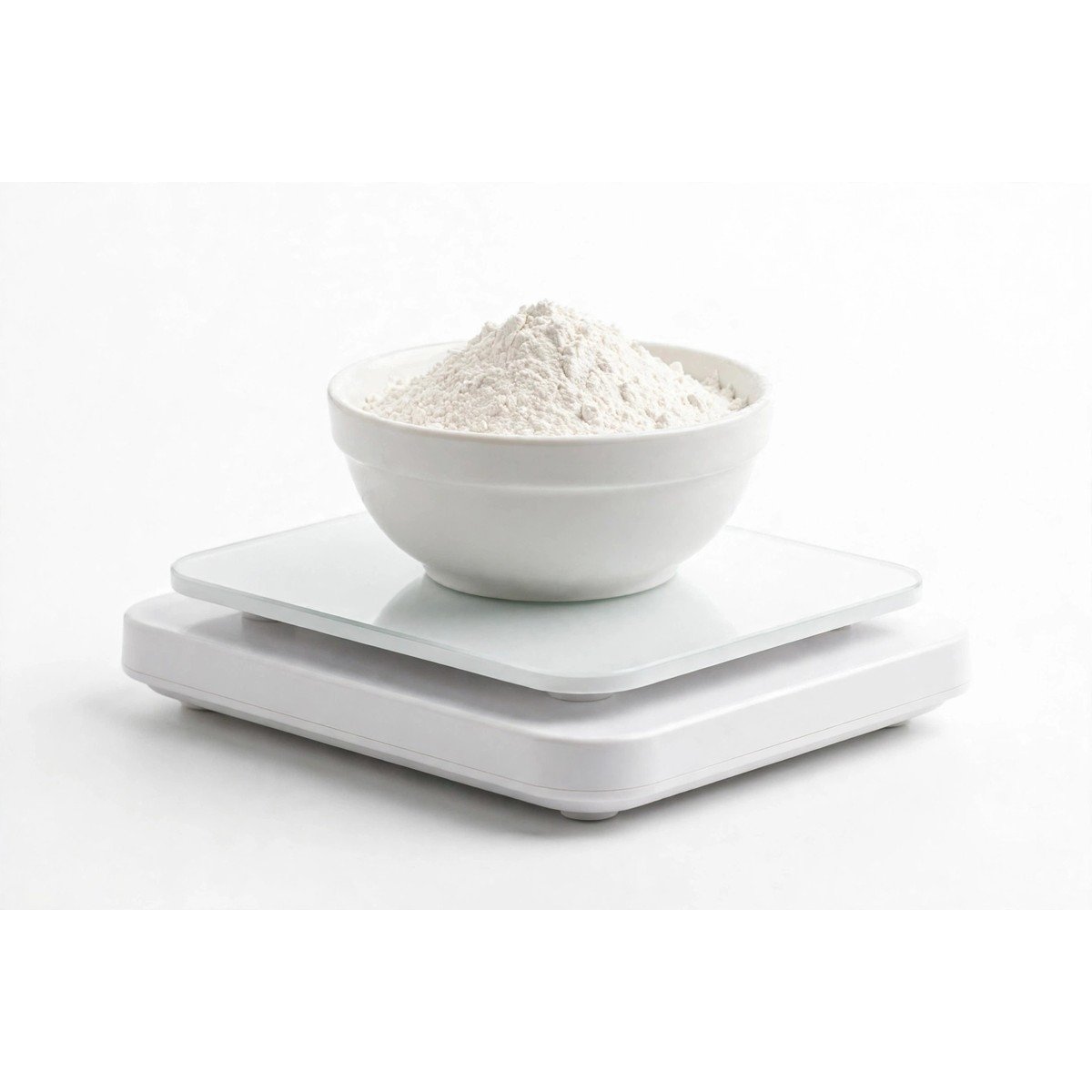
Quick tip: ounces on a kitchen scale are weight ounces. If a recipe or a travel rule says fluid ounces, that is volume — 3.4 fluid ounces is 100.55 ml, not 96.39 grams. Check whether the number says “oz” or “fl oz” before you convert.
How Much Is 3.4 Ounces in Grams?

3.4 ounces is 96.39 grams. The formula is simple: multiply ounces by 28.3495, because one avoirdupois ounce is exactly 28.349523125 grams. So 3.4 × 28.3495 = 96.3883, which rounds to 96.39 grams.
Here is the same math broken down step by step, so you can check it yourself. Three ounces is 3 × 28.3495 = 85.0485 grams. Four-tenths of an ounce is 0.4 × 28.3495 = 11.3398 grams. Add them together: 85.0485 + 11.3398 = 96.3883 grams, which rounds to 96.39 grams.
For everyday use, you can round 3.4 oz to about 96 grams. In cooking, that rounding is fine — a recipe that calls for 96 grams and a recipe that calls for 3.4 ounces are the same recipe. The exact figure only matters in a lab, a pharmacy, or a postage calculation, where 0.39 grams could count.
The most useful thing to remember is that 3.4 ounces is just under 100 grams. It is 3.61 grams short of 100 grams, which is roughly the weight of three paperclips. If a recipe calls for 100 grams and your scale only reads ounces, use 3.53 ounces. If it calls for 3.4 oz and your scale only reads grams, use 96.39 grams. Either way, you are within a few grams of the target, and no dish will notice the difference.
3.4 Ounces in Pounds, Kilograms and Milligrams
3.4 ounces converts to 0.2125 pounds. There are 16 ounces in a pound, so 3.4 ÷ 16 = 0.2125 pounds. That is about a fifth of a pound — a little more than 0.2 pounds, which would be 3.2 ounces. If you are weighing luggage, postage, or a small parcel, 0.2125 pounds is the number to use.
In kilograms, 3.4 ounces is 0.0964 kg. There are 1,000 grams in a kilogram, so 96.3883 ÷ 1,000 = 0.096388 kg, which rounds to 0.0964 kg. In milligrams, the same weight is 96,388 mg, because 96.3883 grams × 1,000 = 96,388.38 milligrams. And in the old unit of grains, used for bullets and medicine, 3.4 oz is 1,487.5 grains, since one ounce is 437.5 grains.
Half of 3.4 oz is 1.7 ounces, which is 48.19 grams. Double 3.4 ounces is 6.8 ounces, which is 192.78 grams. Those two numbers are handy in the kitchen: if a recipe serves two and you want to serve four, double 3.4 oz to 6.8 ounces; if you want to serve one, halve it to 1.7 ounces.
| Ounces | Grams |
|---|---|
| 1 oz | 28.35 g |
| 2 oz | 56.70 g |
| 3 oz | 85.05 g |
| 3.4 oz | 96.39 g |
| 4 oz | 113.40 g |
| 5 oz | 141.75 g |
| 8 oz | 226.80 g |
| 16 oz | 453.59 g |
3.4 Ounces vs 100 Grams: Almost the Same Weight
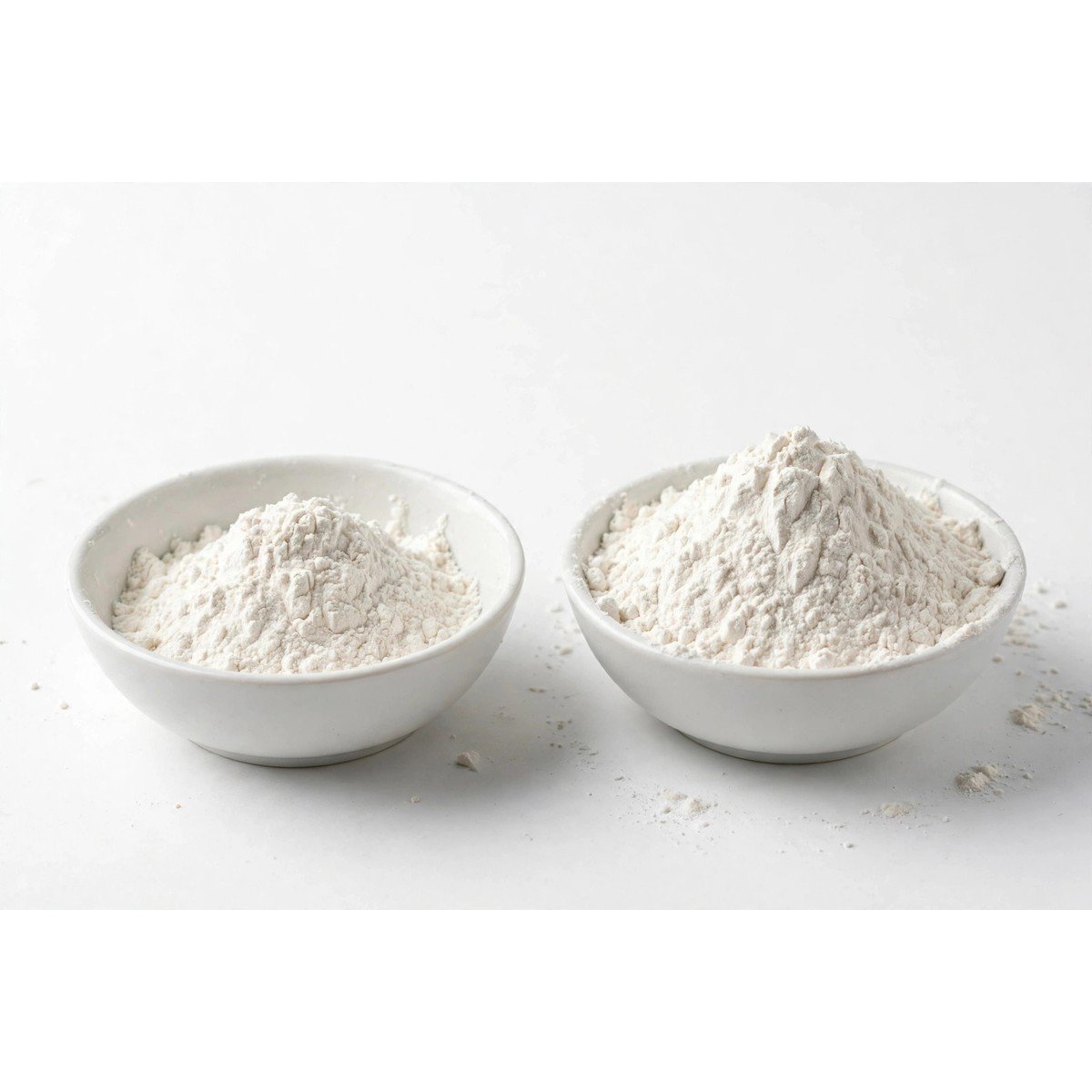
3.4 ounces and 100 grams are close, but they are not the same. 100 grams is 3.53 ounces, and 3.4 ounces is 96.39 grams. The gap between them is 3.61 grams, which is about 3.7 percent of the total. Put another way, 3.4 oz is 96.39 percent of 100 grams.
This matters most in baking, where small differences add up. If a recipe calls for 100 grams of flour and you measure out 3.4 ounces instead, you are short by 3.61 grams — roughly three paperclips. For most home baking that is fine, but for a finicky recipe like macarons, measure in grams and use the exact 100 grams.
The reverse is also true. If a recipe calls for 3.4 oz and you measure out 100 grams, you have added 3.61 grams too much. Again, most recipes will not notice. The safe rule is simple: when a recipe gives grams, weigh in grams; when it gives ounces, weigh in ounces. Convert only when your scale forces you to, and use 96.39 grams for 3.4 oz and 3.53 ounces for 100 grams.
Ounces vs Fluid Ounces: Don’t Mix Them Up
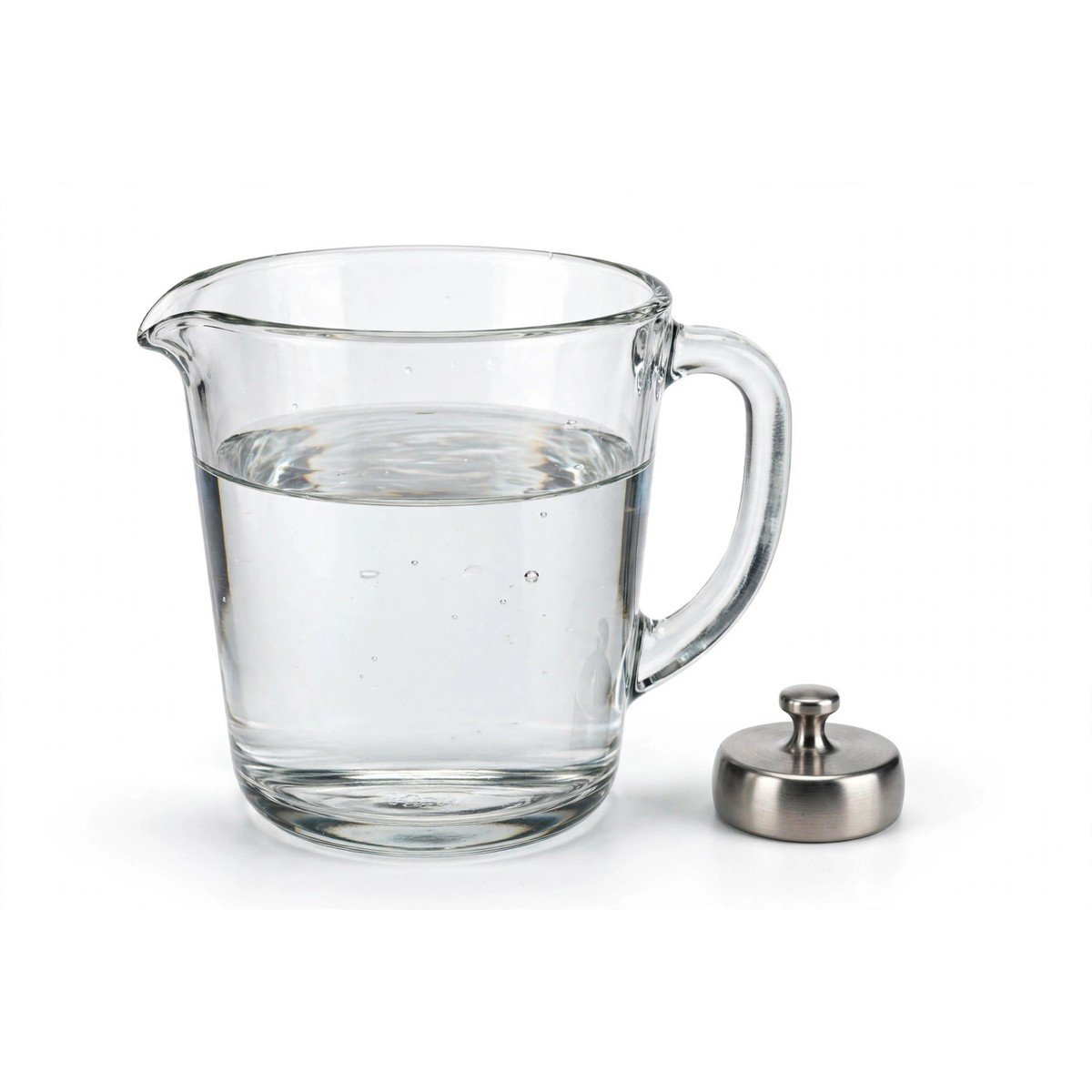
This is where most people get confused, and it is worth a careful look. An ounce (oz) is a unit of weight. A fluid ounce (fl oz) is a unit of volume. They share a name and a number, but they measure different things, and you cannot swap them without knowing what is inside the container.
The confusion comes from water. One fluid ounce of water weighs 1.04 ounces, because water is slightly heavier than the volume it fills. So 3.4 fluid ounces of water weighs 3.55 ounces (100.55 grams), not 3.4 ounces. The difference is small — 0.15 ounces — but it is real, and it shows why the two units are not interchangeable.
Other liquids make the difference bigger. One fluid ounce of honey weighs about 1.5 ounces, because honey is dense. One fluid ounce of cooking oil weighs about 0.95 ounces, because oil is lighter than water. So a 3.4 fluid ounce bottle of honey weighs about 5 ounces, while the same bottle filled with oil weighs about 3.2 ounces. Same volume, very different weight.
The practical rule is to use the right tool for the job. A kitchen scale measures weight ounces: put a bowl on the scale, tare it to zero, and add food until it reads 3.4 ounces. A measuring cup or jug measures fluid ounces: fill it to the 3.4 fl oz line. If a recipe says “3.4 oz of flour,” use the scale. If it says “3.4 fl oz of milk,” use the measuring cup.
3.4 Fluid Ounces and the TSA Liquid Rule
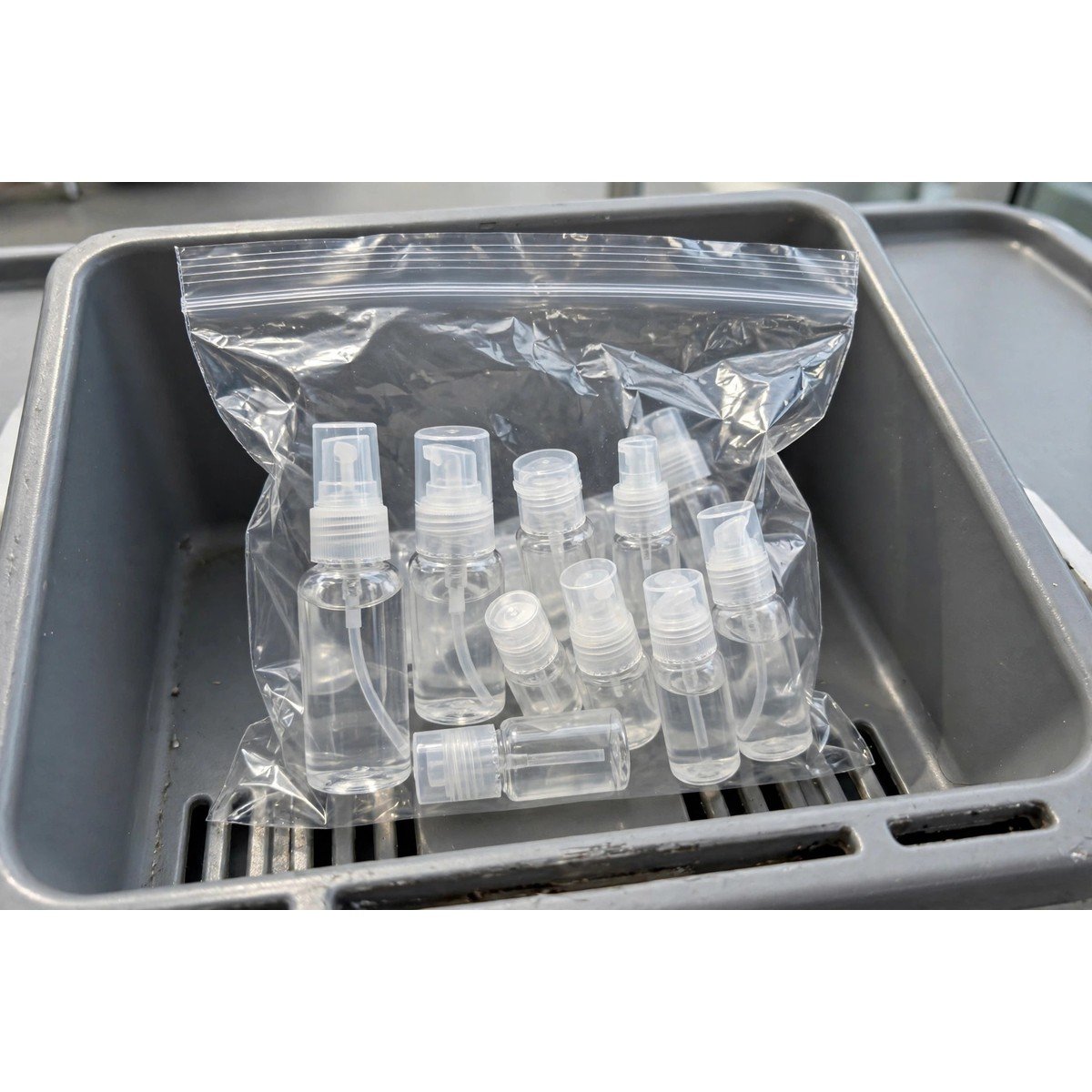
3.4 fluid ounces is famous for one reason: the airport. The TSA 3-1-1 rule says that each liquid container in your carry-on bag must be 3.4 fluid ounces (100 ml) or smaller, all containers must fit in one quart-size clear bag, and each passenger gets one bag. That 3.4 fl oz number is the same one this article is about — but it is fluid ounces, not weight ounces.
The exact conversion is 3.4 fl oz = 100.55 ml. The TSA rounds it down to 100 ml on its signs, which is why travel-size bottles are sold as “3.4 fl oz (100 ml).” The two numbers are not exactly equal — 100 ml is 3.38 fl oz — but the TSA treats them as the same limit, and a bottle labeled 100 ml passes security.
The limit applies to the size of the container, not how full it is. A 4 fl oz bottle that is only half full is still not allowed, because the container itself is bigger than 3.4 fl oz. A 3.4 fl oz bottle that is completely full is allowed. This is the rule that catches the most travelers, so check the label on the bottle, not the amount left inside it.
In kitchen terms, 3.4 fluid ounces is 0.425 cups, or 6.8 tablespoons, or 20.4 teaspoons. That is a little less than half a cup — about the amount of cream in a small coffee, or the amount of dressing on a side salad. Travel-size shampoo, sunscreen, and toothpaste are all sold in 3.4 fl oz bottles precisely because that is the largest size the TSA allows.
Everyday Size Comparisons: What Weighs 3.4 Ounces?
A number like 96.39 grams is hard to picture on its own. Here is how 3.4 oz compares with things you already hold in your hand every day. Each one weighs about the same as 3.4 ounces, so pick the one you know best and use it as your mental scale.
Deck of Playing Cards
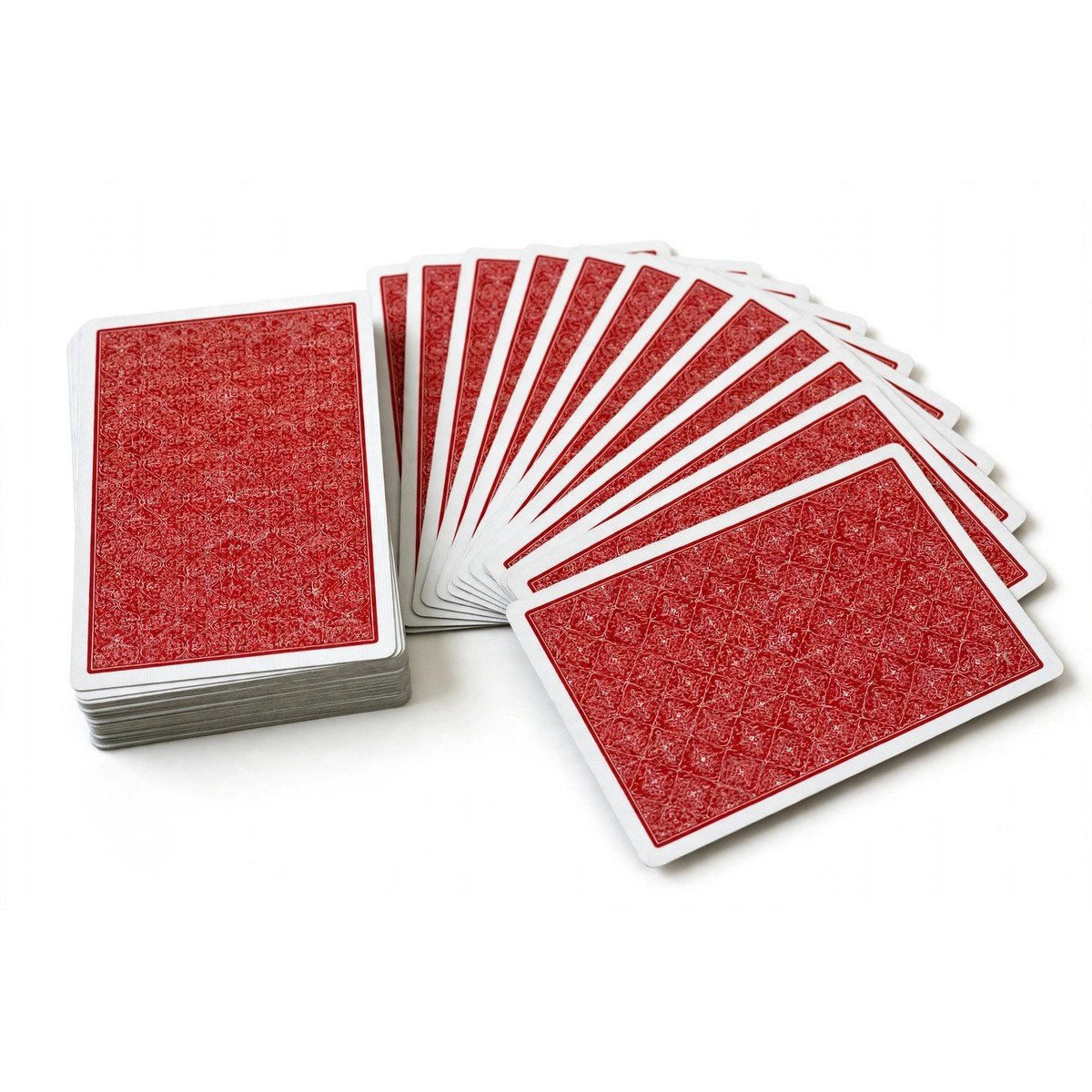
A standard 52-card deck weighs about 94 to 100 grams (3.32 to 3.53 ounces). A Bicycle deck, the most common deck in the United States, weighs right around 100 grams with its box. That means 3.4 ounces (96.39 grams) sits right inside the normal range for a deck of cards. Hold a deck of cards in your hand and you are holding about 3.4 oz. The difference is at most 3.61 grams — less than the weight of a single playing card.
Bar of Soap
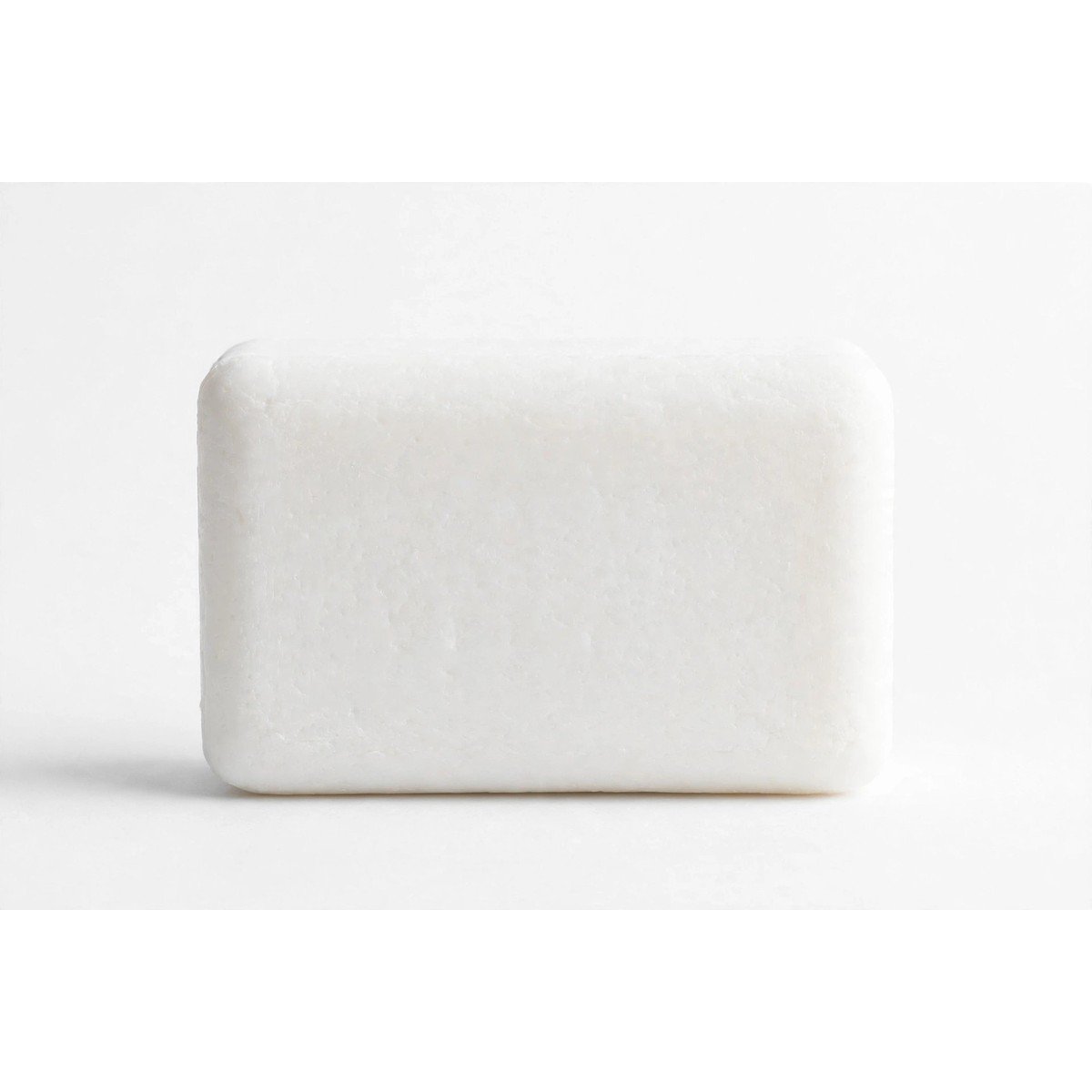
A new standard bar of soap weighs about 100 to 120 grams (3.53 to 4.23 ounces). A Dove bar is 100 grams, and an Ivory bar is 113 grams. That makes 3.4 oz just a little lighter than a fresh bar of soap — 3.61 grams lighter than a 100-gram bar, to be exact. As soap gets used, it gets lighter, so a bar that has been used for a few days often weighs right around 3.4 ounces. If you want a quick sense of 3.4 oz, pick up a bar of soap: that is about it.
Two Large Eggs

Two large eggs weigh about 100 grams (3.53 ounces) without their shells. One US Large egg is 50 grams of edible egg — 33 grams of white and 17 grams of yolk — and the shell adds about 7 grams more, so two large eggs in their shells weigh about 113.4 grams, or 4 ounces. Cracked into a bowl, two large eggs are 100 grams, which is just 3.61 grams more than 3.4 ounces. Next time you crack two eggs for breakfast, you are holding almost exactly 3.4 ounces of egg.
Small Orange
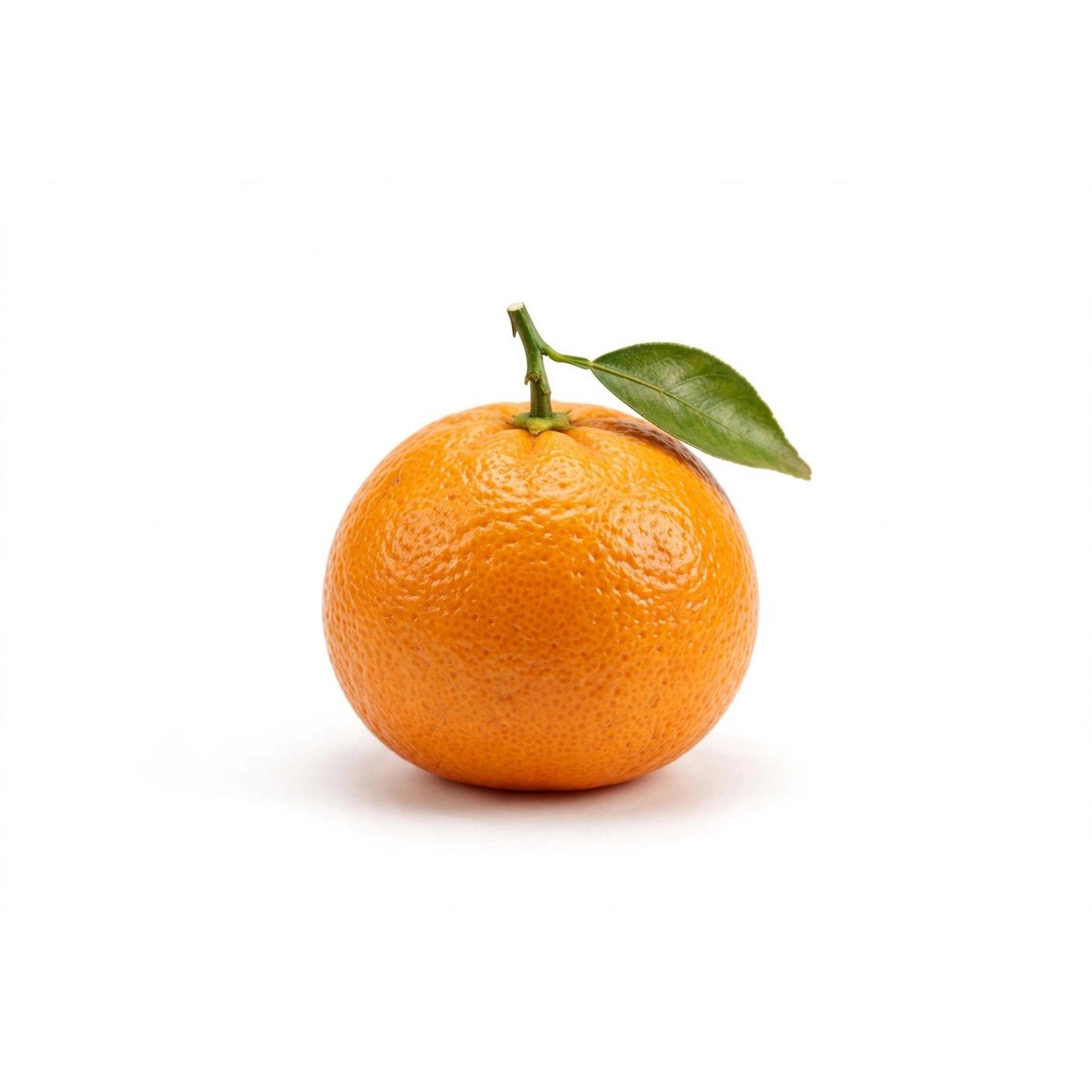
A small orange weighs 96 grams (3.39 ounces) according to USDA data. That makes it the closest everyday match to 3.4 oz on this whole list — only 0.39 grams lighter, a difference you could not feel in your hand. A medium orange is heavier at 131 grams (4.62 ounces), so reach for the smallest orange in the bag if you want a true 3.4-ounce reference. Hold a small orange and you are holding 3.4 ounces.
Stick of Butter
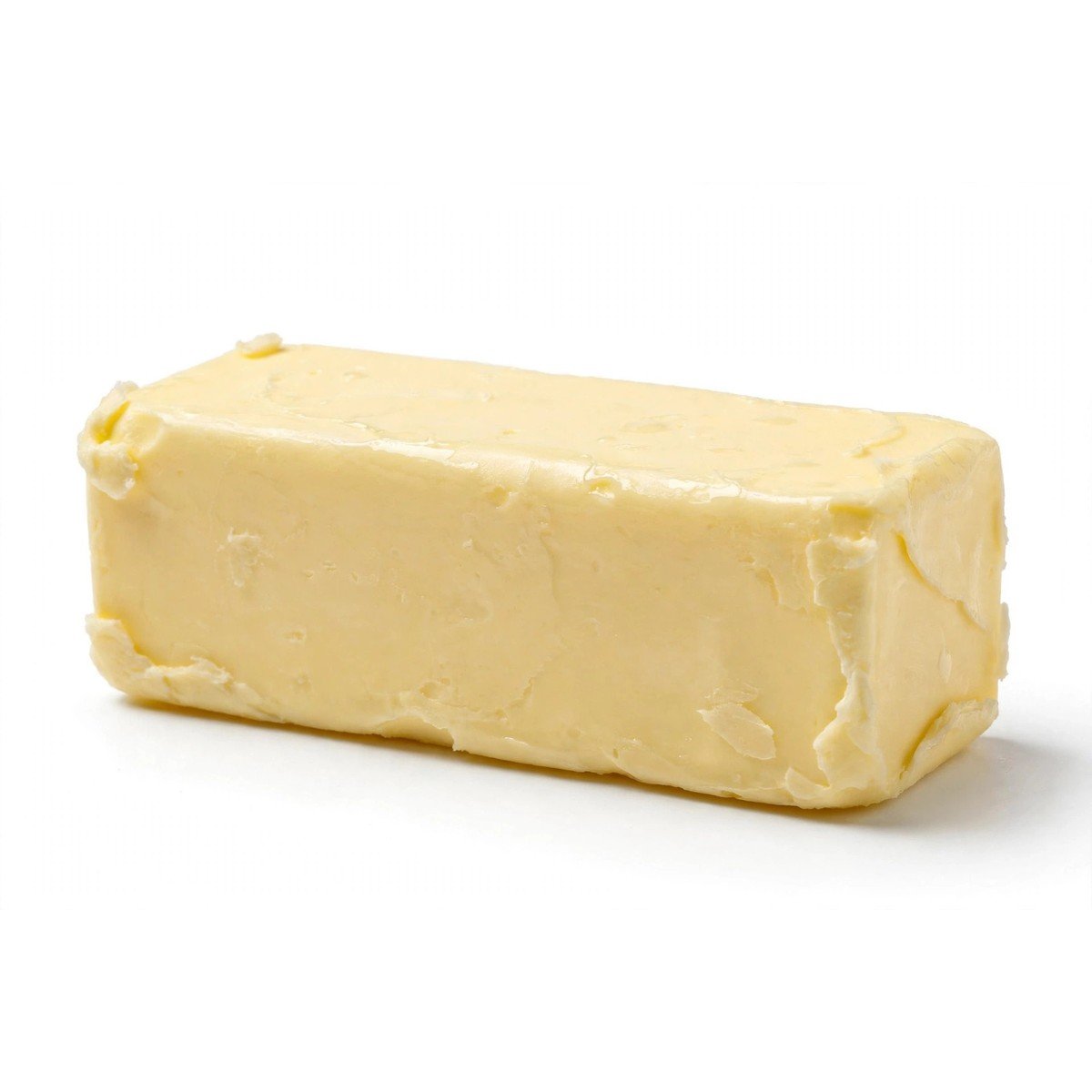
A standard US stick of butter weighs 4 ounces (113.4 grams). That makes 3.4 ounces exactly 85 percent of a stick of butter. The difference is 0.6 ounces, or 17.01 grams — cut off about a seventh of the stick and what is left weighs 3.4 oz. A stick of butter is one of the most exact weights in an American kitchen, because it is printed on the wrapper in tablespoons: 8 tablespoons to a stick. 3.4 ounces is 6.8 tablespoons of butter.
Syrian Hamster
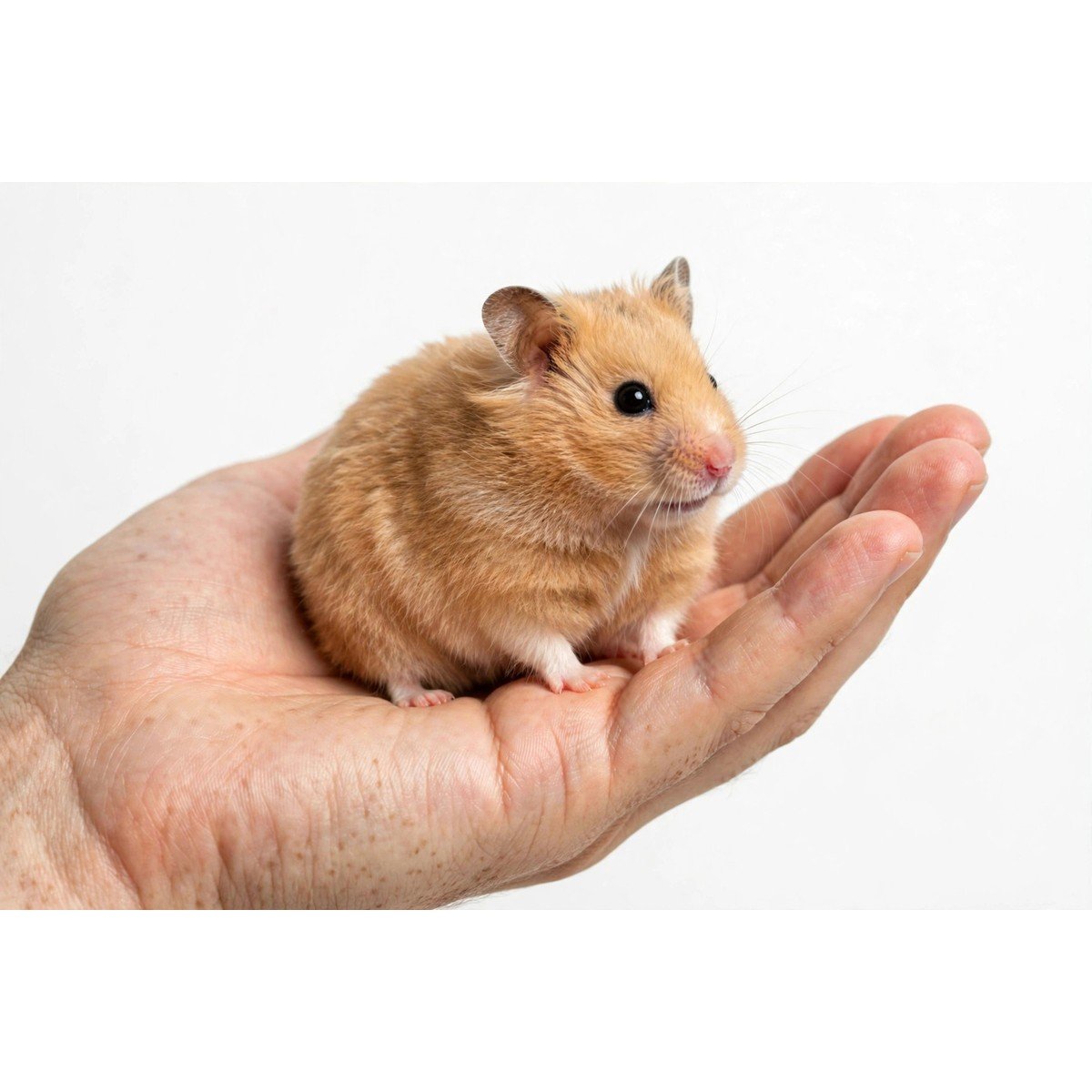
An adult Syrian hamster, also called a golden hamster, weighs about 100 to 150 grams (3.53 to 5.29 ounces). The Merck Veterinary Manual puts the adult range at 110 to 140 grams. A small adult Syrian hamster at the low end of that range weighs about 100 grams, which is 3.53 ounces — just 3.61 grams more than 3.4 ounces. Dwarf hamsters are much lighter, at only 25 to 50 grams, so this comparison is for the Syrian hamster only. A hamster that fits in the palm of your hand weighs about 3.4 oz.
How to Weigh 3.4 Ounces Without a Scale
No scale? You can still get close to 3.4 ounces with things from around the house. The easiest trick is coins: a US nickel weighs exactly 5 grams, so 19 nickels weigh 95 grams, which is 3.35 ounces — just 1.39 grams short of 3.4 ounces. Twenty nickels weigh exactly 100 grams, or 3.53 ounces. Pennies work too: a modern US penny weighs 2.5 grams, so 39 pennies weigh 97.5 grams, a touch over 3.4 oz.
In the kitchen, use the comparisons above instead. A deck of cards, two large eggs, or a small orange all land within a few grams of 3.4 ounces, so grab whichever one is closest and use it as your reference weight. For butter, measure 6.8 tablespoons — just under 7 tablespoons, which is 3.5 ounces. None of these tricks replaces a scale for baking, but for a rough measure they get you within a gram or two of 3.4 ounces.
Frequently Asked Questions
How many grams is 3.4 ounces?
3.4 oz is 96.39 grams. Multiply 3.4 by 28.3495, the number of grams in one ounce: 3.4 × 28.3495 = 96.3883 grams, which rounds to 96.39 grams. For everyday use, about 96 grams is close enough.
Is 3.4 ounces the same as 100 grams?
No. 3.4 ounces is 96.39 grams, which is 3.61 grams less than 100 grams. Going the other way, 100 grams is 3.53 ounces. The two are close — 3.4 ounces is 96.39 percent of 100 grams — but they are not the same weight.
How much is 3.4 fluid ounces in ml?
3.4 fluid ounces is 100.55 ml. The TSA rounds this to 100 ml, which is why travel-size bottles are labeled “3.4 fl oz (100 ml).” Note that fluid ounces measure volume, while plain ounces measure weight — 3.4 fluid ounces of water weighs 3.55 ounces, not 3.4 oz.
What is the TSA 3.4 ounce rule?
The TSA 3-1-1 rule says each liquid container in your carry-on must be 3.4 fluid ounces (100 ml) or smaller, all containers must fit in one quart-size clear bag, and each passenger gets one bag. The limit is on the size of the container, not how full it is — a half-empty 4 fl oz bottle is still not allowed.
How much is 3.4 ounces in pounds?
3.4 ounces is 0.2125 pounds. Divide 3.4 by 16, the number of ounces in a pound: 3.4 ÷ 16 = 0.2125 pounds. That is about a fifth of a pound.
Conclusion
How much is 3.4 ounces? It is 96.39 grams, or 0.2125 pounds — just 3.61 grams short of 100 grams. That makes it about the weight of a deck of playing cards, two large eggs, a bar of soap, or a small orange, which at 96 grams is the closest match of all. It is 85 percent of a stick of butter and about the weight of a small Syrian hamster. And remember the other 3.4: 3.4 fluid ounces is 100.55 milliliters, the TSA carry-on liquid limit, and it is a measure of volume, not weight. Keep the two kinds of ounces straight, and 3.4 oz will never confuse you again.
Related Guides
- How Much Is 100 Grams?
- How Much Is 20 Grams?
- How Much Is 300 Grams?
- How Heavy Is 1 Kilogram?
- What Weighs 2 Pounds?

Hi, I’m Michael Carter, I write simple, everyday size guides so you can picture any measurement in seconds.