

Width is the distance from one side of an object to the other. It is the measure of how wide something is, and when something is bigger, its width is bigger too.
When you buy furniture, hang curtains, or put up a shelf, width is the number you need first. It tells you if something will fit and how much space it will take up.
Snippet answer: Width is the horizontal distance from one side of an object to the other. For a rectangle, it is the shorter of the two sides. You can work out width with the formula Width = area ÷ length. For example, a room of 120 sq ft with one side of 12 ft has a width of 10 ft, because 120 ÷ 12 = 10.
What Is Width? The Simple Meaning
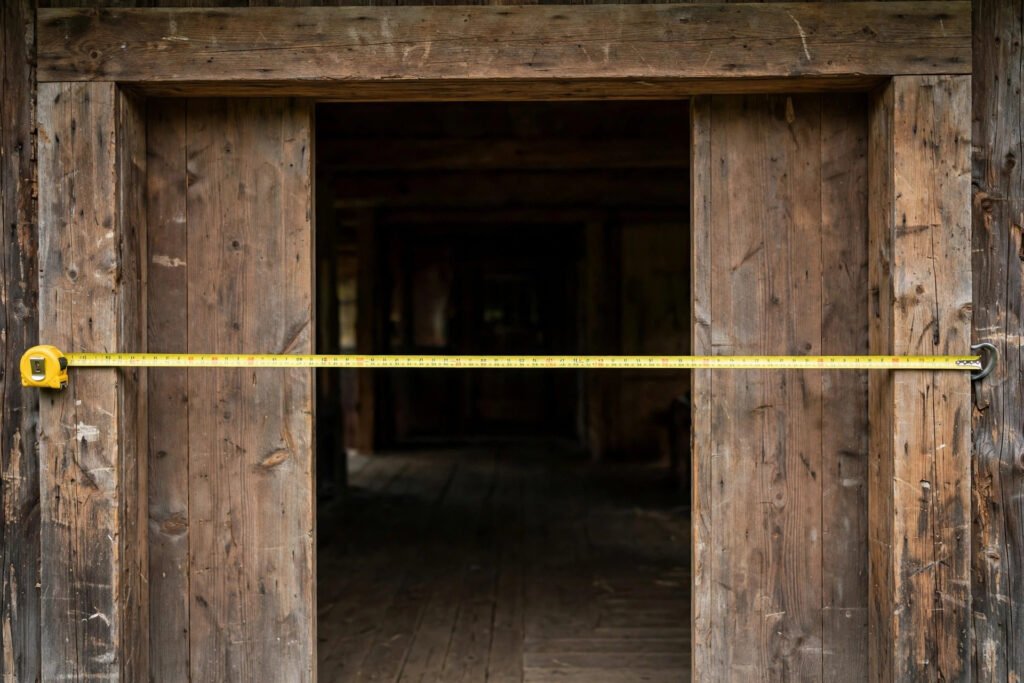
Width is the distance between the two sides of a shape or object, measured from left to right. If you stand in front of a doorway, the width is how far it is from one side of the frame to the other. Width is always measured at right angles to length, so the two numbers together describe the shape.
In everyday language, width and length are not the same. Length is the longer side, and width is the shorter side. Keep the two names straight and your measurements will make more sense.
Width is a basic measurement used in every measurement system. In the metric system, the width of a table would be in centimetres. In the imperial system, it would be measured in inches or feet.
Width, Length, Height, and Depth — What Is the Difference?

Length, width, height, and depth are four different measurements, and they describe an object in different ways. The length of an object is how long it is from end to end. The width is how far it is from one side to the other. The height is how tall it is from bottom to top. The depth is how far it goes from front to back.
How to Mark and Measure Each One
Picture a box sitting on a table. Its length is how far it goes from left to right, and its width is how far it goes from front to back. The height is the distance from the top of the table to the top of the box, and the depth is the distance from the front to the back. When you order packaging or furniture, you will see the measurements given as ‘length x width x height’, which means you should give them in that order.
When Depth and Height Get Confused
People often confuse depth and height. The depth of a drawer is how far back it went, and the height is how tall the drawer face is. If you measure a swiming pool, its depth is how far the water goes down, and its height is the distance from the water to the top of the pool wall. It is important to know which one you are measuring before you order, because the number you need could be different.
How to Measure Width
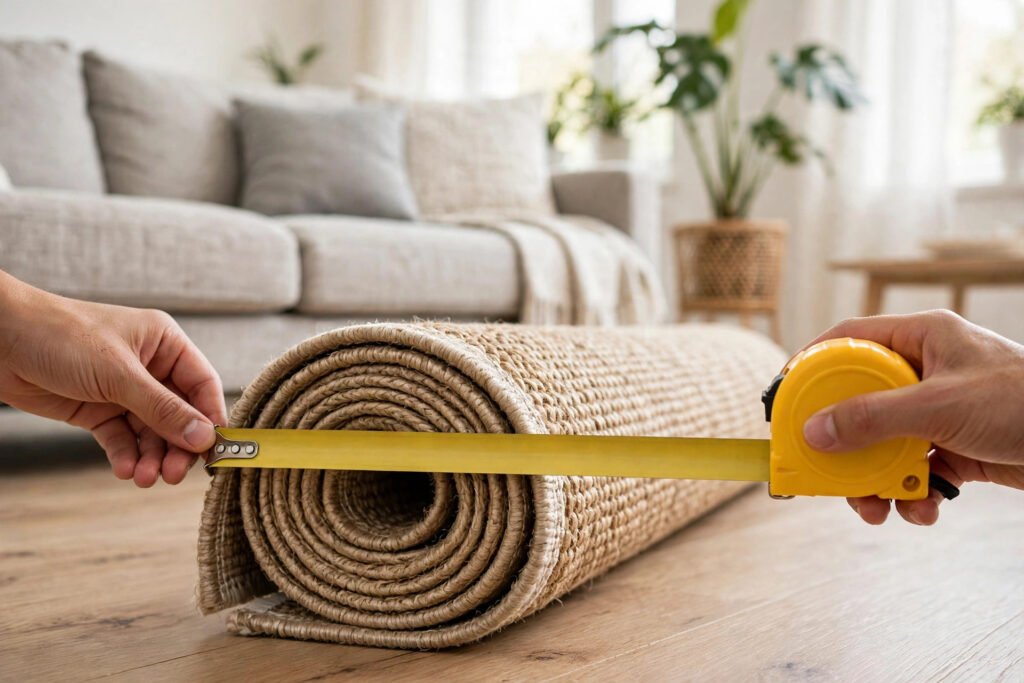
Measure the width with a tape measure or a ruler. Find the two widest edges of the object and measure the distance between them in a straight line.
Step 1: Find the Right Edge
Find the edge of the object that runs from one side to the other in a straight line. Mark the point where the tape measure should start.
Step 2: Measure to the Other Edge
Run the tape measure across the object in a straight line to the other edge. Keep the tape flat and straight, because bending it will make the number longer than it really is.
Step 3: Note the Number
Read the number where the tape reaches the far edge. If the number is not a round one, round it down to the nearest unit. Write down whether the number is in inches, centimetres, or millimetres.
The Width Formula

For a rectangle, the width can be found with a simple formula: Width = area ÷ length. If you know the area and the length of a shape, you can work out the width, and you can use the same formula to work out the length if you know the area and the width.
For example, if a garden is 60 square metres and its length is 12 metres, the width is 60 ÷ 12 = 5 metres. If a room is 120 square feet and one side is 12 feet, the width is 120 ÷ 12 = 10 feet.
Width Examples in Everyday Life
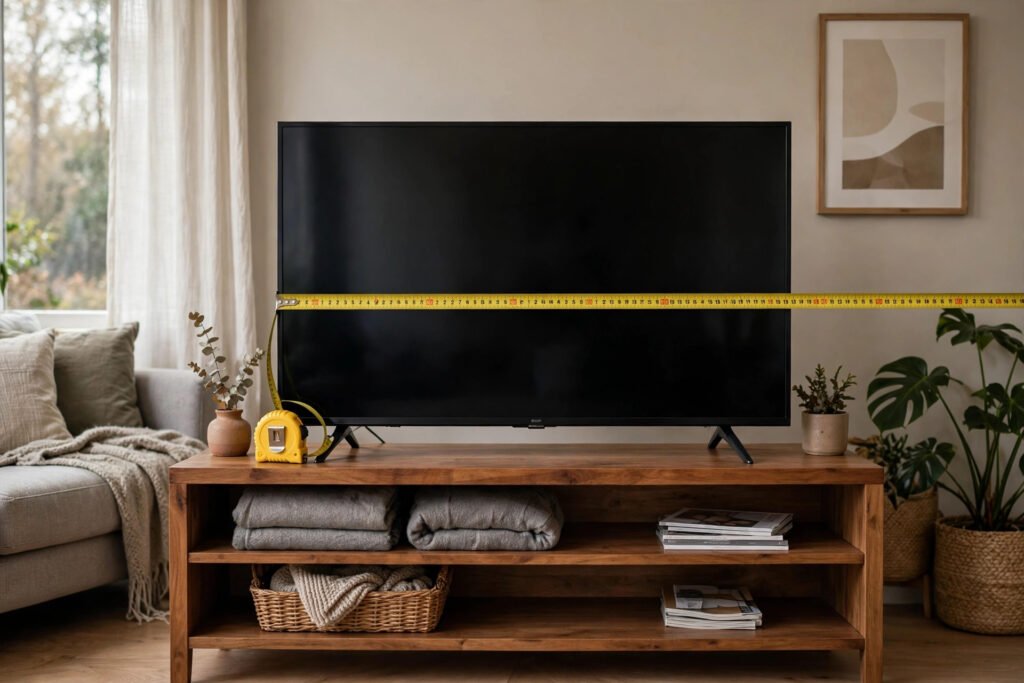
Width shows up in the world around you every day. A standard doorway is 30 to 36 inches wide. An adult bed is usually 38 inches wide for a single bed and 60 inches wide for a queen bed.
Television sizes: A 55-inch TV is usually 48 to 49 inches wide. The screen size is measured from corner to corner, so the width of the TV is smaller than the size number.
Roads and cars: A typical two-lane road is about 24 feet wide, and a standard car parking space is 8 to 9 feet wide. Knowing the width can help you work out if a car will fit through a gate or into a parking space.
Clothing sizes: Clothing sizes are given in centimetres or inches. The width of a pair of jeans is measured at the waist, and the width of a shirt is measured across the chest.
Width, Perimeter, and Area
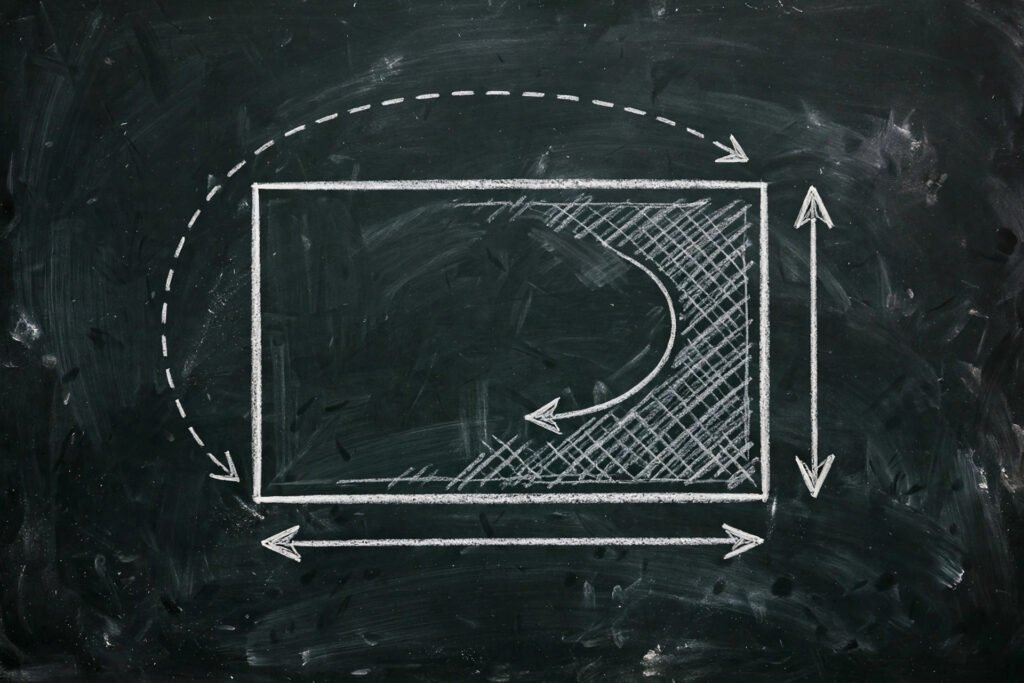
The width, perimeter, and area of a rectangle are all connected. The perimeter is the distance around the edge of the rectangle, and the area is the space inside it. You can work both of them out from the length and width of the rectangle.
Worked Examples
A rectangle with a length of 8 cm and a width of 5 cm has an area of 40 cm². The perimeter of the rectangle is 2 × length + 2 × width = (2 × 8) + (2 × 5) = 26 cm.
Frequently Asked Questions
What Is the Meaning of Width in Simple Words?
Width is the distance from one side of something to the other, measured from left to right. If you stand in front of a table, its width is how far it is from one side to the other.
Which Way Is the Width?
The width of a rectangle is the shorter side. The length of the rectangle is the longer side, and the width is measured at right angles to the length.
What Is the Difference Between Width and Length?
The width is measured from one side of a rectangle to the other, and it is the shorter side. The length is the longer side, and it is measured from one end to the other. The area of a rectangle is found by multiplying the length by the width.
Is Width Vertical or Horizontal?
Width is usually horizontal. For a rectangle, the width is the shorter side, and it is drawn as a horizontal line. The width of a building is the distance from one side to the other, and it is measured in a horizontal line.
Conclusion
Width is the horizontal measure of how wide something is, and it is the shorter side of a rectangle. Use a tape measure or a ruler to measure it across the object from one side to the other, or use the formula Width = area ÷ length if you know the area and the length. The width is usually listed with the length in the form ‘length x width’.
Related Guides
- Is Length or Width First? Complete Guide (With Examples)
- How to Convert Inches to Centimeters
- How to Measure for Roman Shades

Hi, I’m Michael Carter, I write simple, everyday size guides so you can picture any measurement in seconds.