
Introduction
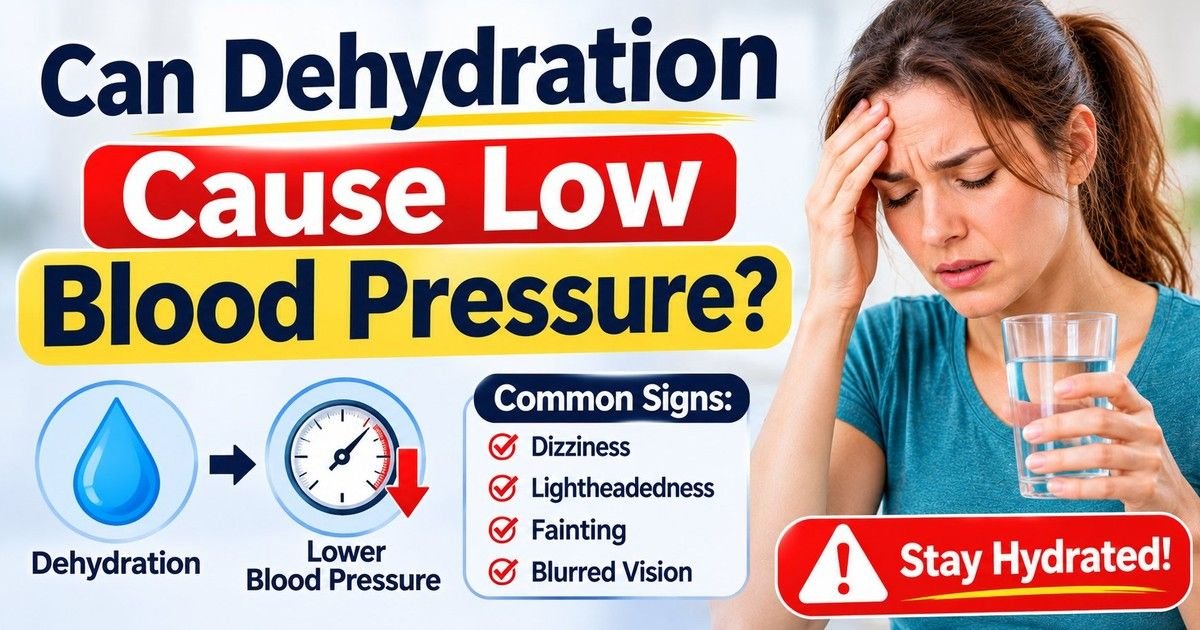
Yes — dehydration can cause low blood pressure. When your body loses more fluid than it takes in, the amount of blood in your body drops, and blood pressure drops with it. The Mayo Clinic puts it plainly: when the body does not have enough water, the amount of blood in the body declines, and this can cause blood pressure to drop.
Low blood pressure, called hypotension, is a reading of less than 90/60 mmHg, according to the NHS and the American Heart Association. But the number alone is not the whole story: both say it usually only needs treatment when it causes symptoms, such as dizziness, fainting, blurred vision, or confusion.
Dehydration does not always lower blood pressure: the American Heart Association notes it can sometimes cause blood pressure to drop, but it does not automatically signal low blood pressure. Mild fluid loss often causes only thirst, tiredness, and a headache, while severe dehydration can drop blood pressure to dangerously low levels and become a medical emergency. This guide explains how it happens, the symptoms, who is most at risk, how much fluid you need, and how to rehydrate safely.
Dehydration and Blood Pressure at a Glance
| Level | Common Signs | Blood Pressure Effect | What to Do |
|---|---|---|---|
| Mild | Thirst, dry mouth, dark yellow urine, headache, tiredness | Often stays normal; dizziness is possible | Drink water steadily through the day and rest |
| Moderate | Very dry mouth, peeing little, dizziness on standing, confusion, fast heartbeat | May drop, mainly when you stand up | Water plus an oral rehydration solution; see a doctor if it does not improve |
| Severe | Little or no urination, sunken eyes, confusion, fainting, rapid breathing | Can fall to dangerously low levels; risk of shock | Get emergency care right away; fluids by IV in hospital |
Quick tip: the color of your urine is a simple daily check. Pale yellow usually means you are drinking enough; dark yellow or strong-smelling urine is an early sign that you need more fluid.
How Dehydration Lowers Blood Pressure
Blood pressure is the force of blood pushing against artery walls. Blood plasma — the liquid part of blood — is mostly water, so when you lose fluid through sweat, vomiting, diarrhea, fever, or not drinking enough, total blood volume falls. Less blood in the same vessels means less pressure, so blood pressure drops.
Your body fights back: the heart beats faster to keep blood moving to the brain and organs, and blood vessels narrow to hold pressure up. That is why a fast heartbeat often appears with low blood pressure in dehydration — the Cleveland Clinic lists “high heart rate but low blood pressure” as a dehydration symptom.
The trouble shows up when you stand. Gravity pulls blood toward your legs, and with less blood to go around, the brain briefly gets less than it needs — the lightheaded feeling when you rise from a chair, called orthostatic hypotension. The Mayo Clinic says it is usually caused by something obvious, such as dehydration or lengthy bed rest.
How little fluid loss does it take? The American Heart Association notes that even mild dehydration — a loss of as little as 1 percent to 2 percent of body weight — can cause weakness, dizziness, and fatigue. For a person weighing 70 kg (154 lb), that is 0.7 to 1.4 kg — and since 1 liter of water weighs 1 kg, roughly 0.7 to 1.4 liters of fluid.
When fluid loss becomes severe, the body’s fixes fail: blood volume falls so far that the heart cannot keep organs supplied with oxygen. The Mayo Clinic calls this hypovolemic shock, a life-threatening complication — and the reason severe dehydration is a medical emergency.
Symptoms of Dehydration

Thirst is the best-known sign, but it is not a reliable early warning: the Mayo Clinic points out that many people, mainly older adults, do not feel thirsty until they are already dehydrated. Drink regularly during hot weather or illness rather than waiting for thirst.
Mild to moderate dehydration is likely to cause, according to the Mayo Clinic and the NHS:
- Thirst and a dry, sticky mouth
- Dark yellow, strong-smelling urine
- Peeing less often than usual — the NHS notes less than 3 or 4 times a day
- Dry skin, lips, and eyes
- Headache
- Sleepiness, tiredness, or fatigue
- Constipation
- Dizziness or lightheadedness
Severe dehydration is a medical emergency. The Mayo Clinic lists these signs: extreme thirst; very dry mouth, skin, and mucous membranes; little or no urination; sunken eyes; skin that stays pinched; confusion; low blood pressure; rapid heartbeat and breathing; fever; and delirium or unconsciousness.
Children show dehydration differently: infants may have no wet diapers for three hours and few or no tears when crying, and the most common cause in young children is severe diarrhea and vomiting. Get medical advice sooner for children and older adults.
Symptoms of Low Blood Pressure

Low blood pressure does not always cause symptoms. The NHS says to get your blood pressure checked if you keep getting symptoms like these:
- Lightheadedness or dizziness
- Feeling sick
- Blurred vision
- Generally feeling weak
- Confusion
- Fainting
The Mayo Clinic adds fatigue, trouble concentrating, and an upset stomach to the list, and notes that cold, clammy, pale skin and rapid, shallow breathing can appear when blood pressure falls sharply.
The pattern matters too. If dizziness or fainting happens when you stand up or change position suddenly, the NHS says you may have postural hypotension — a sudden drop in blood pressure on standing. The Mayo Clinic says symptoms usually last less than a few minutes.
A low reading by itself is often not a problem: the American Heart Association says low blood pressure is usually not harmful unless there are other concerning symptoms. What needs attention is a sudden drop, or symptoms that keep coming back.
Who Is Most at Risk?

Anyone can become dehydrated, but the Mayo Clinic says certain people are at greater risk.
Older adults. With age, the body’s fluid reserve becomes smaller, the ability to conserve water is reduced, and the thirst sense becomes less acute — made worse by chronic illnesses such as diabetes and dementia, by certain medicines, and by mobility problems that limit the ability to get water. The Cleveland Clinic adds that adults ages 65 and older carry less water in their bodies and cannot tell as easily when they are thirsty.
Infants and young children. Children lose fluids fast during diarrhea and vomiting and depend on adults to offer fluids; the Mayo Clinic calls dehydration especially dangerous for them.
Athletes and outdoor workers. Anyone who exercises can become dehydrated, especially in hot, humid conditions, where sweat cannot evaporate and cool the body, so fluid needs rise. Endurance athletes — ultramarathon runners, triathletes, mountain climbers, and competitive cyclists — are at particularly high risk, and the longer the exercise lasts, the harder it is to stay hydrated.
People taking diuretics and some blood pressure medicines. The Mayo Clinic lists medicines as a dehydration cause: water pills, called diuretics, and some blood pressure medicines cause more urination. If you take a water pill, ask your doctor how much fluid to drink — never stop a prescribed medicine on your own because you feel dizzy.
People with chronic illnesses. Uncontrolled or untreated diabetes puts you at high risk, according to the Mayo Clinic, and kidney disease increases the risk as well, as do medicines that increase urination. People with heart disease should be especially careful: a Mayo Clinic cardiologist notes their hearts may have less reserve to respond to the added stress of dehydration.
How Much Fluid Do You Need Each Day?

There is no single number for everyone, but the U.S. National Academies of Sciences, Engineering, and Medicine set an adequate daily fluid intake, as summarized by the Mayo Clinic, of about 15.5 cups (3.7 liters) a day for men and about 11.5 cups (2.7 liters) a day for women.
These totals cover water, other beverages, and food combined. The Mayo Clinic notes roughly 20 percent of daily fluid typically comes from food, so the amount left to drink is about 3.0 liters (around 12 cups) a day for men and about 2.2 liters (around 9 cups) a day for women: 3.7 × 0.8 = 2.96 liters, and 2.7 × 0.8 = 2.16 liters.
The famous “8 glasses a day” rule is a rough shorthand, not an official requirement: eight 8-ounce glasses add up to 64 ounces, or about 1.9 liters. The National Academies figures are population estimates for healthy adults in a temperate climate, not strict minimums for every person.
Your needs rise with heat, exercise, and illness: hot, humid weather, vigorous activity, fever, vomiting, and diarrhea all increase fluid loss, and the Mayo Clinic advises starting to hydrate the day before strenuous exercise. But people with heart failure or kidney disease may need to limit fluids — if a doctor gave you a fluid limit, follow it.
Two daily checks work better than counting ounces: drink regularly rather than waiting for thirst, which lags behind fluid loss, and watch urine color — pale yellow usually means you are drinking enough, dark yellow means you need more.
How to Rehydrate Safely

For mild dehydration, the fix is usually simple: drink fluids steadily and rest. The NHS advises water, diluted squash, or fruit juice, which are better than tea, coffee, or fizzy drinks. Sip regularly rather than forcing down a large amount all at once — your body absorbs fluid better in steady amounts.
If vomiting or diarrhea is causing the fluid loss, you lose salts and sugars as well as water, and water alone may not be enough. The NHS recommends oral rehydration solutions: powders you mix with water, containing potassium and sodium salts plus glucose or starch. A pharmacist can recommend the right one. If you feel sick, start with small sips and gradually drink more.
For prolonged exercise or endurance activities, the Mayo Clinic notes electrolyte sports drinks can help, because sweat carries salts out with the water. For an ordinary workout under an hour, plain water is usually enough.
Avoid alcohol and highly caffeinated drinks while rehydrating: the NHS says both will dehydrate you, and a Mayo Clinic cardiologist notes alcohol changes how the brain and kidneys regulate fluids. Eat as well as drink when you can — food supplies some fluid — but if you have been told to limit salt, follow your doctor’s advice.
Do not overdo it: drinking extreme amounts of water in a short time can dilute the salts in your blood, a condition called hyponatremia, which is also dangerous. Steady sipping, not flooding, is the safe pattern. Moderate to severe dehydration may need fluids given through a vein in a medical setting, the Cleveland Clinic notes — so if you cannot keep fluids down, or symptoms worsen despite drinking, get medical help.
When to Get Help Right Away

Get emergency care the same day — or call your local emergency number — if you see signs of severe dehydration: fainting or cannot stay awake; confusion or delirium; little or no urination; very dry mouth and skin or sunken eyes; rapid heartbeat or rapid, shallow breathing; or cold, clammy, pale skin with a fast, weak pulse.
Severe dehydration can lead to hypovolemic shock, which the Mayo Clinic describes as a life-threatening complication: low blood volume causes a sudden drop in blood pressure and in the oxygen reaching your tissues. Without treatment, severe shock can cause death in hours.
Book a doctor’s appointment soon if you notice a pattern rather than an emergency: repeated dizziness when standing, fainting more than once, or dehydration that keeps coming back despite drinking more. The NHS advises seeing a GP if you keep getting symptoms such as dizziness and fainting. Bring a note of your readings, medicines, and when symptoms happen — that pattern helps the doctor find the cause.
This article gives general information only. It is not medical advice, and it cannot diagnose or treat any condition. Your own fluid needs and blood pressure targets depend on your age, your medicines, and your health, so ask your doctor what is right for you.
Frequently Asked Questions
Can dehydration cause low blood pressure?
Yes. When you lose more fluid than you take in, the amount of blood in your body declines and blood pressure drops with it. The Mayo Clinic lists dehydration as a cause of low blood pressure. Mild dehydration may cause only weakness, dizziness, and fatigue, while severe dehydration can drop blood pressure to dangerously low levels.
Can dehydration cause high blood pressure instead?
Usually dehydration lowers blood pressure, but the Cleveland Clinic explains the body can overcorrect: when blood pressure drops, the body works to raise it back and sometimes overshoots. If your blood pressure stays high, do not assume dehydration is the reason — it needs its own checkup.
What should I drink to rehydrate fast?
Water is the best first choice for mild dehydration: sip it steadily and rest. If vomiting or diarrhea caused the fluid loss, the NHS recommends an oral rehydration solution from a pharmacist, which replaces lost salts and sugars. Avoid alcohol and highly caffeinated drinks. For prolonged endurance exercise, an electrolyte sports drink can help.
Who is most at risk of dehydration and low blood pressure?
Older adults, infants and young children, athletes and outdoor workers in heat, people taking diuretics or some blood pressure medicines, and people with chronic illnesses such as uncontrolled diabetes or kidney disease. Older adults are at greater risk because their fluid reserve is smaller and their thirst sense is weaker, the Mayo Clinic says.
When is dehydration an emergency?
When it is severe: fainting, confusion, little or no urination, sunken eyes, very dry mouth and skin, or a rapid heartbeat or breathing. Severe dehydration can lead to hypovolemic shock, a life-threatening drop in blood volume and pressure. Get emergency care right away.
Conclusion
Dehydration can cause low blood pressure for a simple reason: less fluid means less blood, and less blood means less pressure. Mild fluid loss may only leave you thirsty and tired, but worsening dehydration can cause dizziness on standing, fainting, and — in severe cases — a dangerous collapse in blood pressure.
Most dehydration is preventable: drink regularly, drink more in heat and during exercise, use an oral rehydration solution when vomiting or diarrhea strikes, and watch urine color as a daily check. Older adults, athletes, and people taking water pills need extra care. If dizziness or fainting keeps happening, see a doctor; if severe symptoms appear, get emergency help.
Related Guides
- Normal Blood Sugar After Eating: Healthy Range by Age
- What Food Lowers Blood Sugar Immediately? 12 Fast-Acting Foods
- A1C Average Blood Sugar Chart
- Flour Tortilla Nutrition Facts: Calories, Carbs, Protein & Fat
- How to Lose Belly Fat in 30 Days at Home (No Gym Needed)

Hi, I’m Michael Carter, I write simple, everyday size guides so you can picture any measurement in seconds.