
Introduction
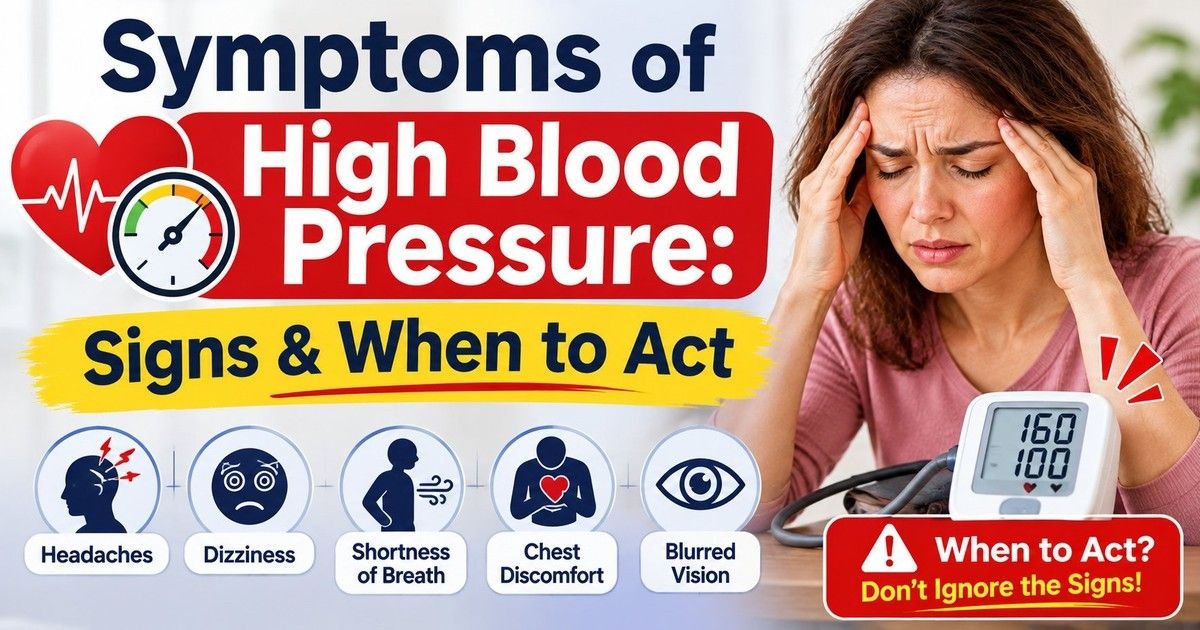
Symptoms of high blood pressure usually do not exist: for most people it causes no signs at all — no headache, no dizziness, no warning feeling. That is why the American Heart Association calls it the “silent killer.” The only way to know you have it is to have your blood pressure measured.
High blood pressure is one of the most common health problems in the world. The World Health Organization estimated that about 1.4 billion adults aged 30 to 79 had hypertension in 2024, yet 44% did not know they had it. In the United States, the CDC reports that 48.1% of adults, about 119.9 million people, have high blood pressure, and only about one in four has it under control.
Symptoms can appear when blood pressure climbs very high, usually above 180/120 mm Hg: severe headache, blurred vision, chest pain, or shortness of breath. That is a medical emergency, not a normal symptom. Blood pressure is written as two numbers in mm Hg (millimeters of mercury): the top number (systolic) is the force when your heart beats; the bottom number (diastolic) is the force while it rests between beats.
Blood Pressure Categories
| Category (AHA) | Top Number (Systolic) | Bottom Number (Diastolic) | What It Means |
|---|---|---|---|
| Normal | Less than 120 | Less than 80 | Healthy range. |
| Elevated | 120–129 | Less than 80 | Higher than ideal — act with lifestyle changes. |
| Stage 1 hypertension | 130–139 | 80–89 | High blood pressure: lifestyle changes, sometimes medicine. |
| Stage 2 hypertension | 140 or higher | 90 or higher | Lifestyle changes plus medicine. |
| Higher than 180/120 | Higher than 180 | Higher than 120 | Seek care promptly. |
Quick tip: the higher number decides the category — 132/78 is Stage 1.
Why High Blood Pressure Usually Has No Symptoms
High blood pressure damages the body quietly, over years. The extra force strains artery walls, the heart, the brain, the kidneys, and the eyes — but none of that produces pain or a feeling you can notice. You cannot feel your blood pressure the way you can feel a fever. Would you know if you had it? For nearly everyone, no: the American Heart Association states plainly that for most people, high blood pressure has no signs or symptoms, and the NHS says the same.
That is why routine checks matter more than waiting for a warning. High blood pressure can affect all ages, and risk rises with age: CDC survey data from 2021 to 2023 found it in 23.4% of US adults aged 18 to 39, 52.5% aged 40 to 59, and 71.6% aged 60 and older.
Two common beliefs are wrong: a headache or nosebleed does not mean your blood pressure is high, and feeling healthy does not mean your numbers are fine. Blood pressure does not track how you feel — the only way to know your numbers is to measure them.
Symptoms That Can Appear When Blood Pressure Is Very High
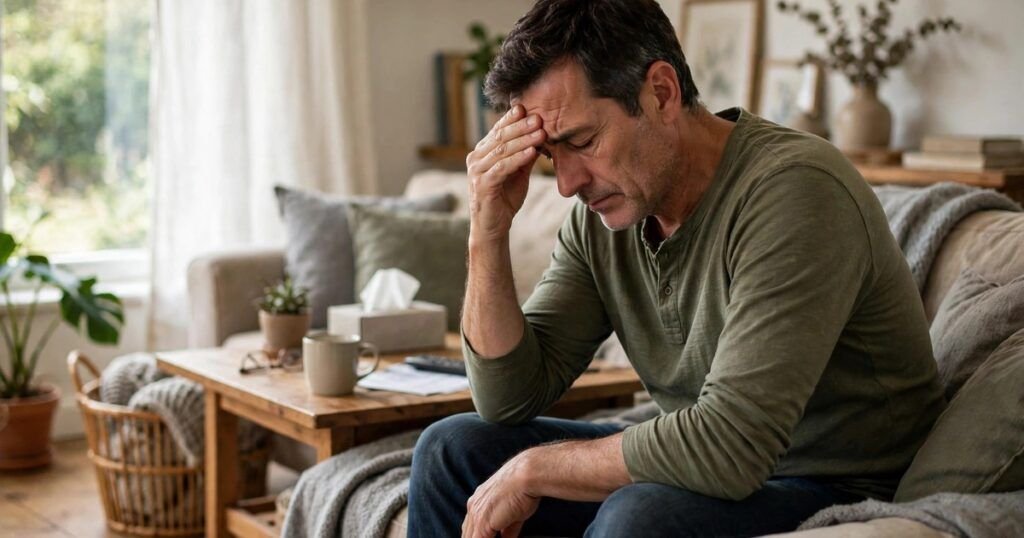
When blood pressure rises to a very high level, symptoms sometimes appear. The NHS lists severe headaches, blurred or double vision, dizziness, feeling sick or vomiting, regular nosebleeds, and shortness of breath.
These symptoms are rare and do not show up at the levels where most people live with high blood pressure. A reading of 145/92 — Stage 2 hypertension — almost never causes any feeling. Symptoms tend to arrive only far higher, often above 180/120 mm Hg, and even then not everyone feels them.
That gap is what makes high blood pressure dangerous. Years of readings in the 130s and 140s strain the heart and blood vessels without a single symptom, raising the risk of heart attack, stroke, heart failure, kidney disease, and vision loss. In the United States, the CDC reports it was a primary or contributing cause of more than 660,000 deaths in 2023.
Hypertensive Crisis: Warning Signs and Emergency Care
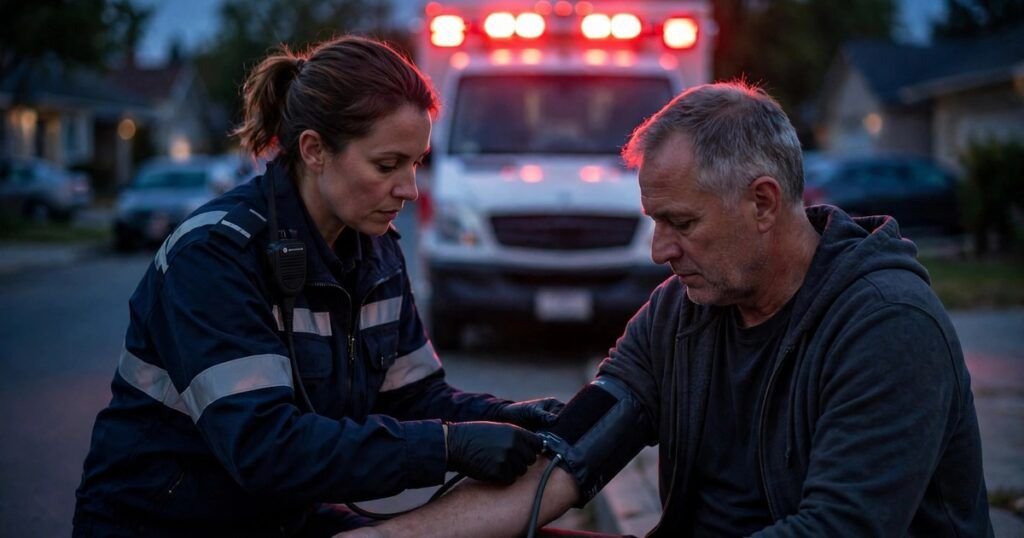
A hypertensive crisis is a sudden, severe rise in blood pressure to 180/120 mm Hg or higher — a medical emergency that can lead to a heart attack or stroke, according to the Mayo Clinic. There are two types: urgent, with no signs of organ damage, and emergency, with life-threatening damage to organs such as the heart, brain, or kidneys. Only a medical team can tell them apart.
Warning symptoms listed by the Mayo Clinic and the American Heart Association include severe headache, blurred vision, chest pain, shortness of breath, back pain, confusion, nausea and vomiting, anxiety, numbness, weakness, difficulty speaking, seizures, and not responding to stimulation. Numbness, weakness, and trouble speaking can also signal a stroke — never ignore them.
If your reading is higher than 180/120, the American Heart Association advises: wait at least 1 minute, take your blood pressure again, and if the second reading is just as high, check for the symptoms above. With no symptoms, contact your doctor the same day. With any warning symptom, call emergency services at once — 911 in the US, 999 in the UK, or your local number. Do not drive yourself, and do not take someone else’s blood pressure medicine, which can drop blood pressure too fast.
How High Blood Pressure Is Measured and Diagnosed
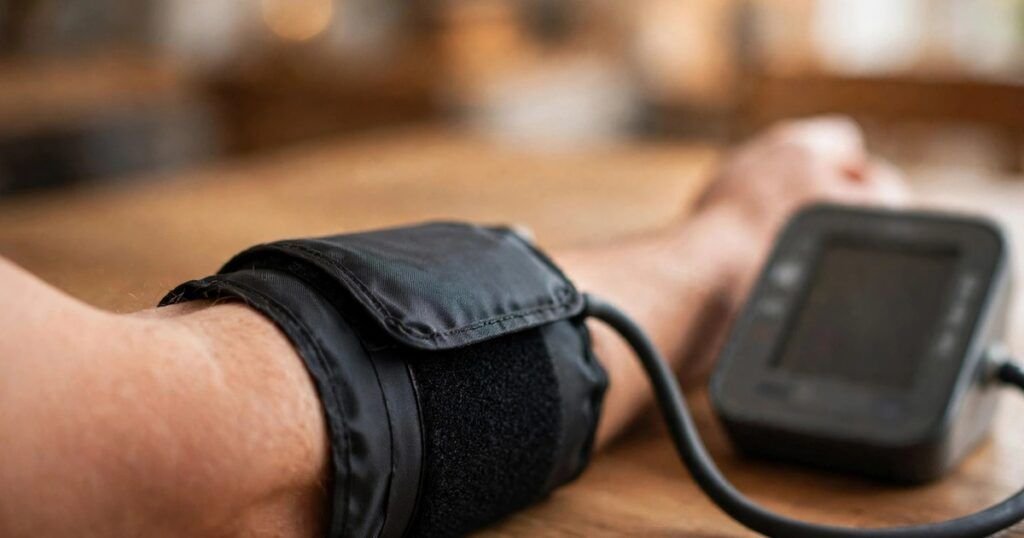
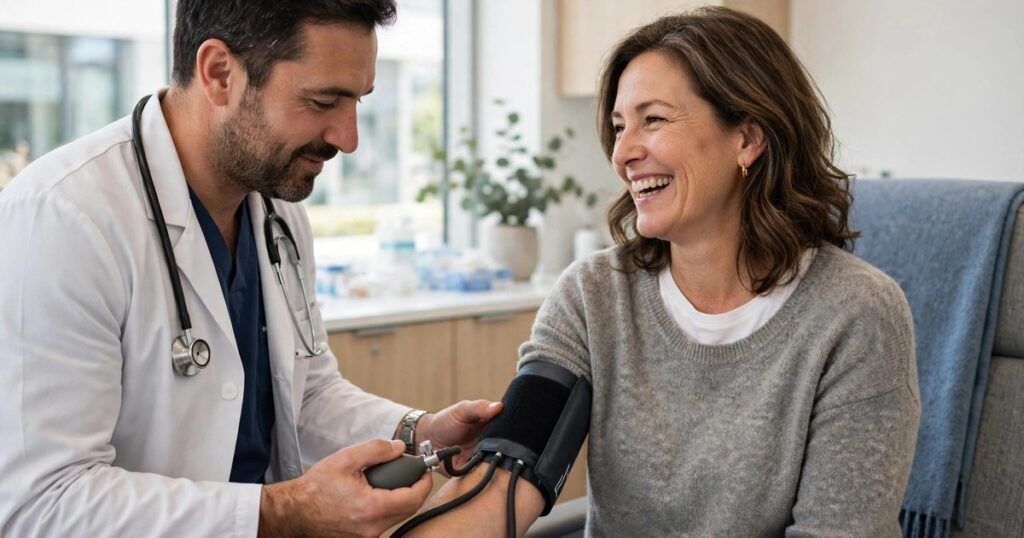
Blood pressure is measured with a cuff around the upper arm. The cuff inflates, squeezing the brachial artery and briefly stopping blood flow, then air is slowly released while the reading is taken with a stethoscope or an automated display.
One reading never diagnoses high blood pressure. The American Heart Association recommends an average based on two or more readings taken on two or more occasions by a healthcare professional. Blood pressure moves up and down all day, so doctors look for a pattern, not a single number — and some people read higher in a clinic than at home, the “white coat” effect.
The line that defines high blood pressure depends on the guideline. In the United States, the American College of Cardiology and the American Heart Association define hypertension as 130/80 mm Hg or higher, a threshold set in 2017 and kept in the 2025 update. The World Health Organization, the European Society of Cardiology, and the NHS use 140/90 mm Hg or higher. The US line starts follow-up earlier, because risk rises well below 140/90. The NHS also uses 135/85 mm Hg for home and 24-hour readings, which run a little lower than clinic readings.
How often should you be checked? The American Heart Association advises adults aged 20 and older with normal blood pressure (under 120/80) to have it checked once a year. The NHS advises adults over 40 to be checked at least once every 5 years, and more often with risk factors. For home readings, sit supported, feet flat, arm at heart level, after resting 5 minutes, and avoid caffeine, exercise, and smoking for 30 minutes before. Use a validated upper-arm cuff in the right size.
What Causes High Blood Pressure

For most adults, there is no single cause. The Mayo Clinic explains that primary hypertension, also called essential hypertension, develops gradually over many years from a mix of inherited traits and everyday habits. Plaque buildup in the arteries, called atherosclerosis, raises the risk further by narrowing the vessels.
The smaller group has secondary hypertension, caused by an underlying condition or medicine. It tends to appear suddenly and run higher than primary hypertension. Causes include kidney disease, obstructive sleep apnea, thyroid problems, adrenal gland tumors, and certain medicines, such as some pain relievers, decongestants, and birth control pills.
Risk factors fall into two groups. You cannot change age, family history, or ethnicity — the NHS notes that people of Afro-Caribbean or South Asian origin face higher risk. You can change the rest, listed by the NHS, the CDC, and the Mayo Clinic: too much salt, an unhealthy diet, too little activity, being overweight, drinking too much alcohol, smoking, ongoing stress, and chronic conditions such as kidney disease, diabetes, and sleep apnea. Salt makes the body hold water, and most of it comes from processed food, not the salt shaker.
What Lowers Blood Pressure

High blood pressure responds well to everyday changes. The steps below are the ones the American Heart Association, the CDC, and the NHS recommend first, and many people with mildly raised readings bring their numbers down with lifestyle changes alone. Never stop prescribed medicine without talking to your doctor.
Eat less salt. The American Heart Association advises no more than 2,300 mg of sodium a day, moving toward an ideal 1,500 mg a day. The average American eats about 3,400 mg a day — about 1,100 mg over the limit. The NHS advises no more than 6 grams of salt a day, about one level teaspoon. Most salt comes from processed food, so check labels: bread, cheese, sauces, soups, and ready meals are the usual sources.
Follow a blood-pressure-friendly eating pattern. The DASH eating plan — rich in vegetables, fruit, whole grains, beans, nuts, and low-fat dairy, and low in saturated fat, red meat, and added sugar — was designed to lower blood pressure. Potassium-rich foods such as bananas, potatoes, beans, and leafy greens help the body get rid of excess sodium. Ask your doctor before taking potassium supplements.
Move more, and lose extra weight. Aim for at least 150 minutes of moderate activity a week — brisk walking, cycling, or swimming — spread across the week, or 30 minutes on 5 days. If you are overweight, dropping 5 to 10 pounds (about 2 to 5 kg) can make a visible difference, and it also improves sleep apnea and blood sugar.
Drink less alcohol, quit smoking, and sleep well. The NHS advises no more than 14 units of alcohol a week, spread over three or more days; the American Heart Association advises no more than two drinks a day for men and one for women. Smoking damages arteries and sharply raises the risk of the heart attacks and strokes that high blood pressure can cause. Poor sleep and untreated sleep apnea raise blood pressure too — loud snoring with pauses in breathing is worth mentioning to your doctor.
Take medicine if your doctor prescribes it. Many people need medicine alongside lifestyle changes, especially at Stage 2 readings or with other risks such as diabetes or kidney disease. Common types include diuretics, ACE inhibitors, ARBs, calcium channel blockers, and beta blockers. The usual goal is under 130/80 in the United States, and under 140/90 in European guidance — under 130/80 for people at higher risk.
When to Talk to a Doctor
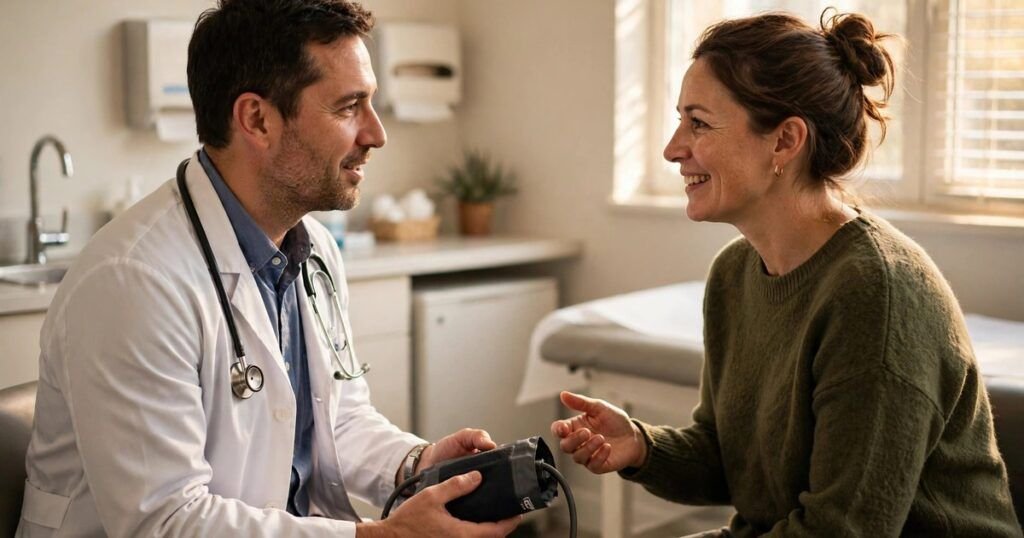
Book an appointment if your home readings are 130/80 or higher on several days (or 140/90 or higher if your doctor follows the WHO or NHS line); if a clinic reading came back high with no follow-up; if you have risk factors and no check in over a year; if your readings stay high on medicine; or if you notice severe headache, blurred vision, dizziness, or shortness of breath.
Bring your home readings: a week of readings with dates and times is far more useful than one surprising number. Bring a list of your medicines too — some can raise blood pressure. Get emergency care the same day — 911 in the US, 999 in the UK, or your local number — if a reading higher than 180/120 comes with chest pain, shortness of breath, back pain, numbness, weakness, vision changes, or difficulty speaking.
This article gives general information only. It is not medical advice, and it cannot diagnose or treat any condition. Your own target range and treatment depend on your age, your medicines, and your health, so ask your doctor what numbers are right for you.
Frequently Asked Questions
What are the first signs of high blood pressure?
There usually are none. High blood pressure rarely causes signs or symptoms, which is why it is called the “silent killer.” Most people find out only at a routine check — do not wait for a warning feeling.
Can high blood pressure cause headaches?
Only when it is very high. Readings in the 130s and 140s do not usually cause headaches. A severe headache can occur during a hypertensive crisis, when readings pass 180/120 mm Hg — and that needs same-day medical care.
What is a dangerously high blood pressure reading?
A reading of 180/120 mm Hg or higher is a hypertensive crisis. With symptoms such as chest pain, shortness of breath, or trouble speaking, it is an emergency — call 911 in the US, 999 in the UK, or your local number. Without symptoms, contact your doctor the same day.
Is 140/90 high blood pressure?
It depends on the guideline: the WHO, the European Society of Cardiology, and the NHS define hypertension as 140/90 mm Hg or higher, while the US bodies set the line lower, at 130/80 mm Hg. Either way, 140/90 deserves a conversation with your doctor.
Can you feel high blood pressure?
No. You cannot feel your blood pressure, and feeling well does not mean your numbers are normal. The only way to know is to measure it.
Conclusion
Symptoms of high blood pressure are usually absent — the most important fact in this guide. Most people feel well while it quietly strains their heart, brain, kidneys, and eyes; symptoms tend to appear only past 180/120, when it is an emergency. Know your numbers: get checked at least once a year if you are 20 or older, eat less salt, move for 150 minutes a week, and talk to your doctor if your readings sit at 130/80 or higher.
Related Guides
- Normal Blood Sugar After Eating: Healthy Range by Age
- What Food Lowers Blood Sugar Immediately? 12 Fast-Acting Foods
- A1C Average Blood Sugar Chart: Convert A1C to eAG (mg/dL)
- How to Lose Belly Fat in 30 Days at Home (No Gym Needed)
- Flour Tortilla Nutrition Facts & Calories (Chart)

Hi, I’m Michael Carter, I write simple, everyday size guides so you can picture any measurement in seconds.